Cucumbers are one of the most popular vegetables for home gardens. They are refreshing, nutritious, and perfect for salads, pickling, and smoothies. Growing cucumbers at home not only ensures fresh produce but also allows you to control the use of fertilizers and pesticides, providing healthier options for your family. While cucumbers are often seen as challenging due to their long vines and water requirements, with proper care, anyone can cultivate them successfully—even in small spaces or containers.
This guide provides a complete step-by-step approach to growing cucumbers at home, covering everything from selecting the right variety to harvesting, care tips, and common problems.
Step 1: Selecting the Right Cucumber Variety
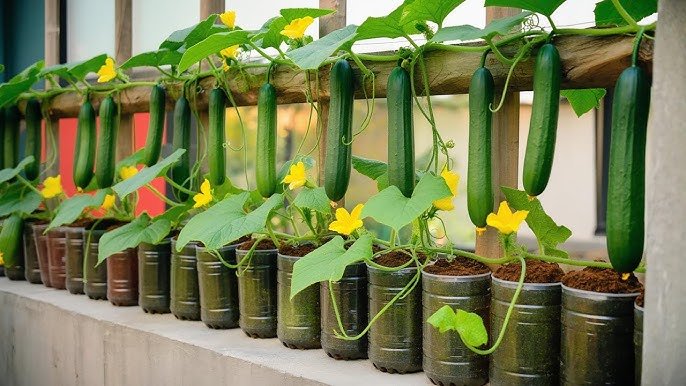
The first step to a successful home cucumber garden is selecting the right variety. Cucumbers come in two main types:
1. Slicing Cucumbers
- Larger, typically eaten fresh in salads.
- Smooth skin and crisp texture.
- Examples: Marketmore, Straight Eight, Long Green.
2. Pickling Cucumbers
- Smaller, ideal for pickling.
- Thicker skin and fewer seeds.
- Examples: Boston Pickling, National Pickling.
Tips
- For small spaces, choose bush varieties, which are compact and suitable for containers.
- Vining varieties are ideal for trellising or vertical gardening.
Step 2: Preparing the Planting Area
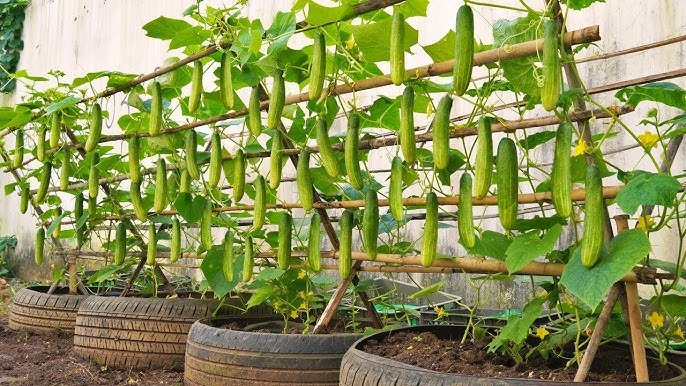
Cucumbers thrive in well-drained, fertile soil with plenty of sunlight.
Site Selection
- Choose a location with at least 6–8 hours of direct sunlight daily.
- Ensure proper air circulation to prevent fungal diseases.
Soil Preparation
- Loosen the soil to a depth of 12 inches (30 cm).
- Mix in compost or well-rotted manure to improve fertility.
- Maintain a slightly acidic to neutral soil pH (6.0–7.0).
Tip:
Raised beds or containers are excellent for cucumber plants, especially in small urban gardens or areas with heavy soil.
Step 3: Sowing Seeds or Transplanting Seedlings
Cucumbers can be grown from seeds directly sown in the garden or started indoors.
Direct Sowing
- Plant seeds 1 inch (2.5 cm) deep.
- Space bush varieties 12–18 inches apart and vining types 24–36 inches apart.
Starting Indoors
- Sow seeds 3–4 weeks before the last frost.
- Use seed trays or small pots with a seed-starting mix.
- Transplant seedlings when they have 2–3 true leaves and the weather is warm.
Tip:
Soaking cucumber seeds in water for 12–24 hours before planting speeds up germination.
Step 4: Watering and Mulching
Cucumbers require consistent moisture to grow healthy and produce crisp fruits.
Watering
- Water deeply 1–2 times per week, depending on weather conditions.
- Keep the soil evenly moist but avoid waterlogging.
- Water early in the morning to reduce evaporation and fungal issues.
Mulching
- Apply straw, leaves, or black plastic mulch around the plants.
- Mulch retains soil moisture, suppresses weeds, and regulates soil temperature.
Step 5: Fertilizing Cucumbers
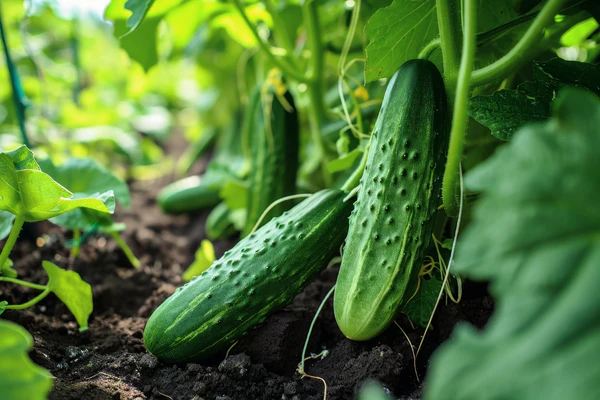
Cucumbers are heavy feeders and need proper nutrition for maximum yield.
Fertilizer Guidelines
- Incorporate compost or well-rotted manure at planting.
- Use a balanced NPK fertilizer (10-10-10) during vegetative growth.
- Apply fertilizer with higher phosphorus and potassium once flowering begins to encourage fruit development.
Tip:
Avoid excessive nitrogen, which promotes leafy growth at the expense of fruit production.
Step 6: Supporting the Vines
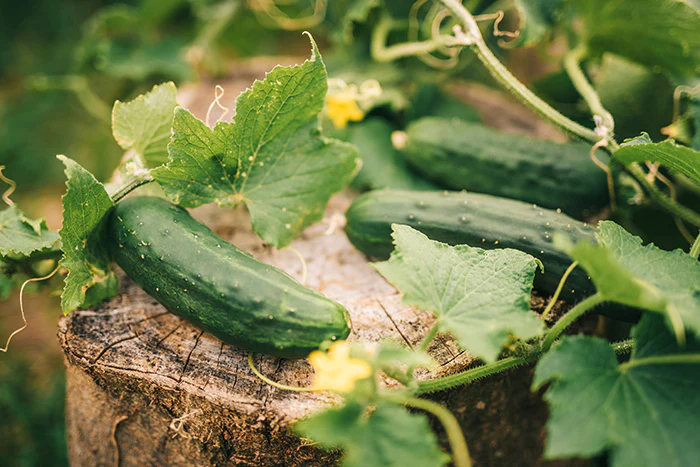
Vining cucumber varieties benefit from support systems, while bush varieties can grow without trellises.
Trellising Methods
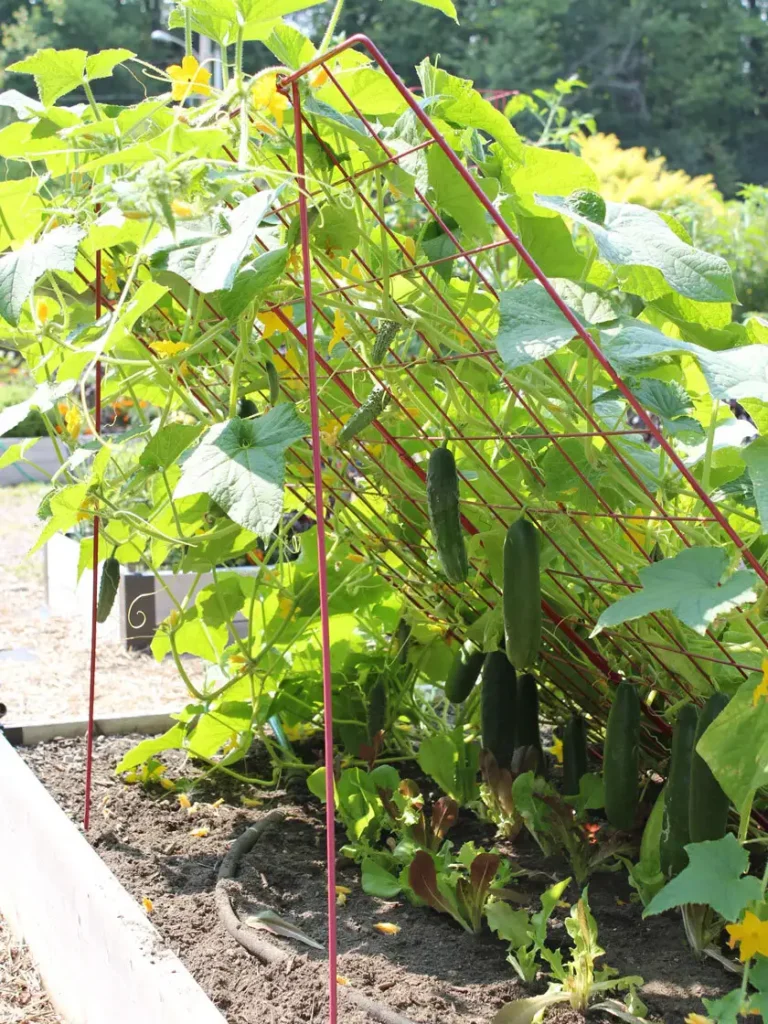
- Vertical trellis: Saves space and allows cleaner, straighter fruits.
- A-frame trellis: Strong and ideal for heavier vining cucumbers.
- Cages: Good for bush varieties to keep fruits off the soil.
Benefits
- Easier harvesting
- Improved air circulation
- Reduced risk of rot and pest damage
Tip: Train vines gently using soft ties to avoid damaging stems.
Step 7: Pruning and Maintenance
Pruning cucumbers is optional but can improve airflow and encourage fruit production.
Pruning Tips
- Remove yellow or damaged leaves promptly.
- Pinch the growing tips of vining plants to encourage branching.
- Avoid over-pruning; leaves are essential for photosynthesis.
Step 8: Pollination
Cucumber flowers require pollination to produce fruits.
Pollination Tips
- Bees and insects naturally pollinate cucumber flowers.
- For indoor or balcony gardens, hand-pollinate using a soft brush.
- Identify male flowers (thin stem) and female flowers (small swelling at the base) for effective pollination.
Step 9: Pest and Disease Management
Cucumbers are susceptible to certain pests and diseases, especially in home gardens.
Common Pests
- Aphids
- Spider mites
- Cucumber beetles
Control Methods
- Spray neem oil or insecticidal soap.
- Encourage beneficial insects like ladybugs.
- Remove and destroy affected leaves promptly.
Common Diseases
- Powdery mildew
- Downy mildew
- Bacterial wilt
Prevention Tips
- Provide good spacing between plants.
- Avoid overhead watering.
- Rotate crops each season to reduce soil-borne diseases.
Step 10: Harvesting Cucumbers
Timely harvesting ensures crisp, flavorful cucumbers and encourages continuous fruiting.
When to Harvest
- Slicing cucumbers: 6–8 inches long
- Pickling cucumbers: 3–5 inches long
- Harvest regularly to prevent oversized fruits, which become bitter.
Harvesting Tips
- Use scissors or gently twist to pick cucumbers without damaging the vines.
- Frequent harvesting stimulates more fruit production.
Step 11: Companion Planting
Cucumbers grow well alongside certain companion plants, which can improve growth and reduce pests.
Good Companions
- Beans, peas, corn, radishes
- Marigolds to repel pests
- Nasturtiums to attract beneficial insects
Plants to Avoid
- Potatoes or aromatic herbs that can interfere with growth
Step 12: Benefits of Growing Cucumbers at Home
- Fresh, Healthy Produce: Control over pesticides and fertilizers.
- Cost-Effective: Reduces grocery expenses.
- Easy Access: Enjoy cucumbers straight from your garden.
- Space Optimization: Suitable for small gardens, balconies, and containers.
- Therapeutic Hobby: Gardening promotes mental well-being and outdoor activity.
Step 13: Tips for Year-Round Cucumber Gardening
- Start seeds indoors during off-seasons.
- Grow in containers or self-watering pots for flexibility.
- Use succession planting every 2–3 weeks for continuous harvest.
- Protect plants from frost with covers or indoor relocation.
- Rotate cucumber varieties for variety in flavor and texture.
Conclusion: Master Growing Cucumbers at Home
Growing cucumbers at home is both rewarding and practical. By choosing the right variety, preparing fertile soil, providing consistent water and nutrients, supporting vines, and managing pests and diseases, anyone can cultivate crisp, fresh cucumbers successfully.
Whether you have a backyard, balcony, or even a small container garden, cucumbers can thrive with minimal effort and proper care. Regular harvesting, attention to pollination, and preventive care ensure a healthy, productive plant all season long. With these step-by-step techniques, you can enjoy the satisfaction of growing your own vegetables while promoting a healthier, more sustainable lifestyle.