Pollination is one of the most important steps in plant reproduction, but it’s often overlooked by home gardeners. Without proper pollination, flowers fall off, fruits stay small, yields reduce drastically, and plants fail to produce to their full potential. While nature usually handles this task through bees, butterflies, wind, and other pollinators, sometimes your plants need your help—and that’s where hand pollination becomes a game-changing technique.
Whether you grow vegetables, fruit trees, herbs, or flowers, knowing how to hand-pollinate can dramatically increase your harvest. And the best part? It’s simple, quick, and incredibly effective.
In this guide, you will learn the secrets of hand pollination that many gardeners overlook—techniques that can multiply fruiting, rescue weak crops, and ensure reliable yields every season.
🌱 1. What Is Hand Pollination?
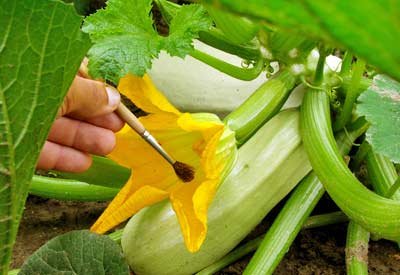
Hand pollination is the manual transfer of pollen from the male flower parts (anthers) to the female flower parts (stigma). Instead of relying on insects or wind, you take control of the process.
This technique is especially helpful when:
- There are no bees or natural pollinators around
- You grow plants indoors, on balconies, or in greenhouses
- The weather is rainy, hot, or windy—reducing insect activity
- Plants naturally struggle with pollination (like squash, papaya, or tomatoes)
Hand pollination ensures that every flower has the chance to produce fruit, with minimal effort.
🌼 2. Why Is Hand Pollination So Important?
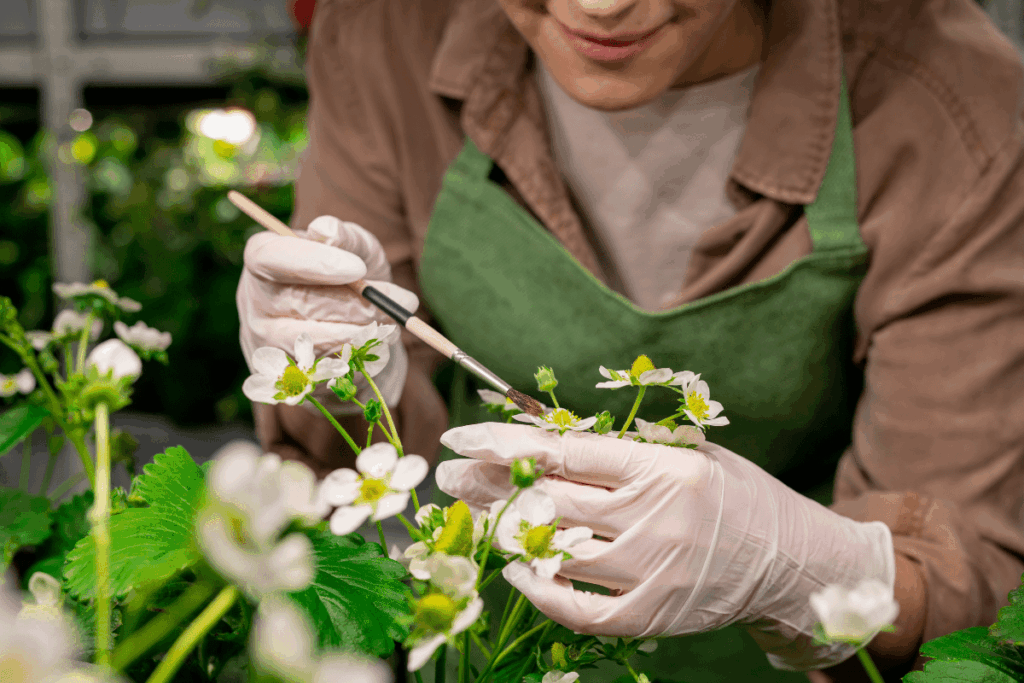
Many gardeners don’t realize how much fruit loss happens simply due to poor pollination. Flowers may bloom beautifully, but without pollen transfer, they drop off.
✔ Benefits of Hand Pollination:
- Increased fruit set
- Larger and more uniform fruits
- Faster development
- Higher yields
- Better shape and fewer deformities
- Control over cross-pollination
- Perfect solution for pollinator-scarce areas
In short: more pollination = more food on your plants.
🌸 3. Understanding Male and Female Flowers
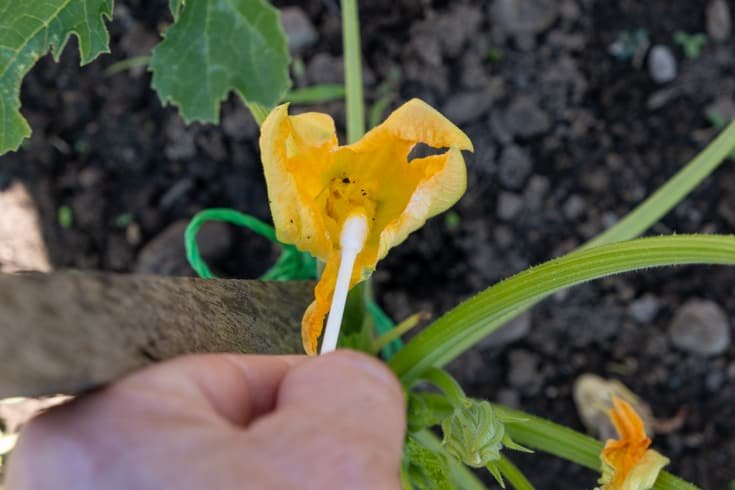
To hand-pollinate successfully, you must learn to identify male and female flowers.
🔹 Male Flowers
- Have slender stems
- Contain pollen-covered anthers
- Usually appear first
- More abundant
🔹 Female Flowers
- Have a tiny fruit at the base
- Contain a central stigma
- Less abundant
- Need pollen to grow into actual fruit
Plants like cucumber, pumpkin, watermelon, bottle gourd, ridge gourd, and zucchini have both male and female flowers separately on the same plant.
Fruit-bearing plants like tomatoes, peppers, eggplants, and beans have perfect flowers (both male & female parts in the same blossom), but still benefit from manual pollination.
🖐️ 4. Tools Needed for Hand Pollination
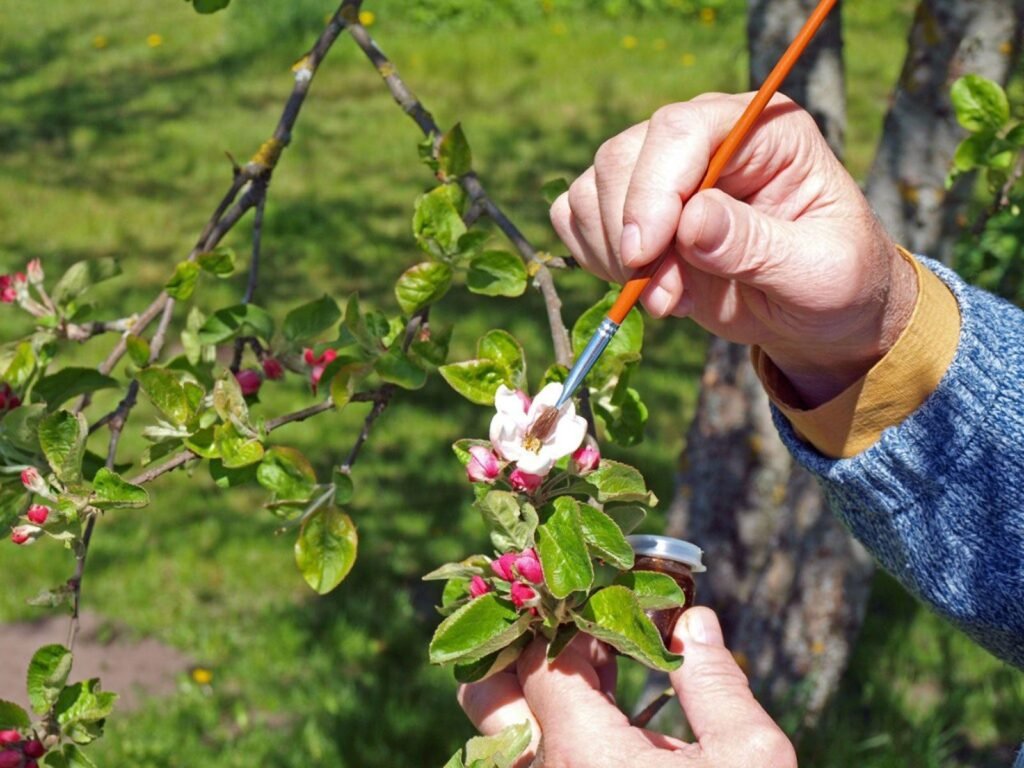
You don’t need anything fancy. Just simple, everyday tools:
✔ Soft paintbrush
For transferring pollen gently
✔ Cotton swab (earbud)
Works well for delicate flowers
✔ Vibrating device (like an electric toothbrush)
Perfect for tomatoes and peppers
✔ Tweezers or fingers
For removing petals from male flowers
✔ Small bowl or jar
To store pollen temporarily if needed
Most gardeners already have these at home.
🌺 5. How to Hand Pollinate Different Types of Plants
Not all plants are pollinated the same way. Let’s break it down by category.
🍅 A. Tomatoes, Peppers & Eggplants (Self-Pollinating Flowers)
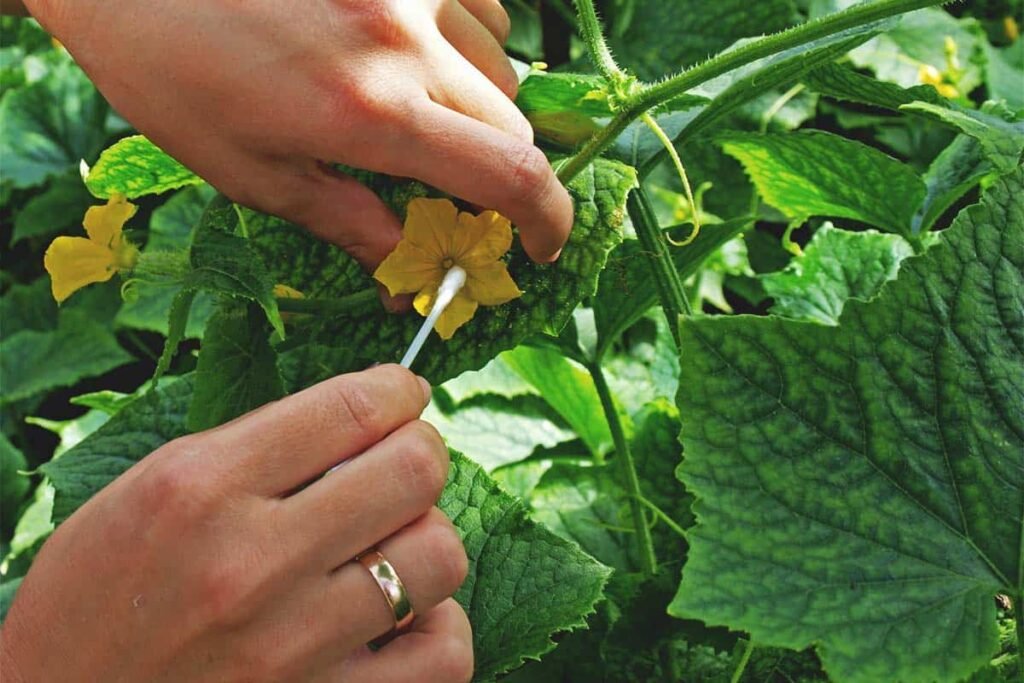
These plants have flowers containing both male and female parts. They naturally pollinate through vibration from wind or bees. But if pollination is poor, you can assist.
🌬 Method: Shake or Vibrate
- Tap the plant gently
- Shake branches lightly
- Use an electric toothbrush behind the flower to vibrate it
- Do this in the morning for best results
This helps pollen fall onto the stigma inside the flower.
🍉 B. Cucumbers, Zucchini, Melons & Squash (Separate Male/Female Flowers)
These depend heavily on pollinators. Without proper pollination, the small fruit at the base of the female flower shrivels and falls.
👇 Hand Pollination Steps:
- Identify a fresh male flower
- Remove its petals to expose the pollen-covered anther
- Gently dab it onto the stigma of a female flower
- Make sure pollen touches all parts of the stigma
- Repeat with several male flowers if needed
You can also use a paintbrush to transfer pollen from male to female.
🌺 C. Hibiscus, Pumpkin & Bottle Gourd
These have larger flowers with sticky stigmas.
✔ Method:
- Collect pollen from male flowers using a brush
- Apply generously onto the female flower
- Morning pollination works best
🥭 D. Fruit Trees (Mango, Guava, Papaya, Custard Apple)
Fruit trees often suffer from poor pollination due to weather or low insect activity.
✔ For Papaya (Male & Female Plants)
- Pick a fresh male flower
- Remove petals
- Touch anthers to female flower’s stigma
✔ For Mango or Guava
- Use a small brush
- Collect pollen gently
- Apply directly to flower stigma
These trees respond well to manual pollination and produce more fruits.
🌼 6. Best Time of Day for Hand Pollination
Timing is one of the biggest secrets many gardeners don’t know.
Most flowers open early in the morning and are most receptive between:
⏰ 6 AM – 10 AM
During this time:
- Pollen is fresh
- Flower fertility is at its peak
- Temperature is optimal
Avoid pollinating under scorching afternoon heat—it reduces pollen viability.
🌻 7. Signs That Pollination Was Successful
How do you know it worked?
✔ Female flower closes and stays attached
✔ Small fruit begins to grow within 2–3 days
✔ Flowers don’t fall prematurely
✔ Fruit appears fuller and doesn’t shrivel
If the fruit at the base of the female flower starts enlarging, your pollination was perfect.
🎯 8. Secret Tips to Boost Pollination Success
These lesser-known techniques can triple your results:
🌟 1. Use multiple male flowers for one female
Ensures complete pollen coverage.
🌟 2. Pollinate early morning only
Best pollen fertility.
🌟 3. Avoid watering flowers before pollinating
Wet flowers reduce pollen stickiness.
🌟 4. Provide mild shade on extremely hot days
Flowers become sterile above 35°C.
🌟 5. Keep plants healthy
Well-fed plants produce more male and female flowers.
🌟 6. Encourage natural pollinators
Plant marigolds, basil, zinnias, and sunflowers nearby.
🌟 7. Repeat pollination for important fruits
Pollinate the same flower 2–3 times, 2 hours apart.
These small adjustments can drastically boost fruit production.
⚠️ 9. Common Pollination Mistakes to Avoid
Avoid these beginner mistakes:
❌ Pollinating old flowers
Always choose freshly opened blooms.
❌ Pollinating in the afternoon
Heat reduces pollen fertility drastically.
❌ Overhandling flowers
You may damage the stigma or anthers.
❌ Using dirty tools
Contamination can affect flower health.
❌ Forgetting to support fruits afterward
Pollinated gourds, melons, and squash grow heavy—they need support.
🌸 10. Which Plants Benefit Most from Hand Pollination?
Some plants respond extremely well:
- Cucumbers
- Zucchini
- Pumpkin
- Bitter gourd
- Ridge gourd
- Bottle gourd
- Watermelon
- Muskmelon
- Papaya
- Passion fruit
- Tomatoes (in low airflow areas)
- Chilies
- Brinjal
- Guava
- Custard apple
If you grow any of these, hand pollination can significantly boost yield.
🌿 Final Thoughts
Hand pollination is one of those gardening secrets that transforms your results instantly. With just a small brush or a male flower, you can ensure your plants produce abundant fruits—regardless of pollinators, weather, or growing conditions.
This simple technique gives gardeners:
- More control
- Higher productivity
- Bigger fruits
- Consistent harvests
Whether you’re growing vegetables on a balcony or managing a backyard garden, mastering hand pollination is a skill that will reward you season after season.