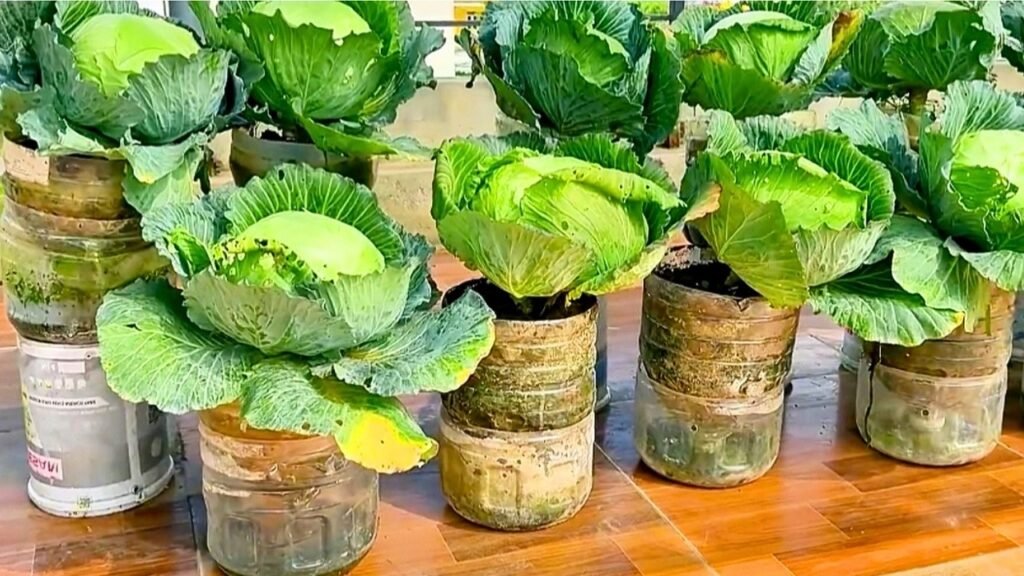
If you love gardening but struggle with limited space, you may be surprised to learn that cabbage—a leafy vegetable known for its large heads and deep root system—can thrive in something as simple as a plastic bottle. It sounds impossible at first, but the science behind it proves otherwise. With the right technique, soil structure, and nutrient balance, you can grow crisp, compact, and delicious cabbage in vertical or horizontal bottle systems, right on your balcony, terrace, or windowsill.
This guide explores the science, method, and secrets behind successfully growing cabbage in plastic bottles. Whether you’re a hobby gardener or a small-space experimenter, this method will open your eyes to a whole new world of creative gardening.
🌿 Why Grow Cabbage in Bottles?
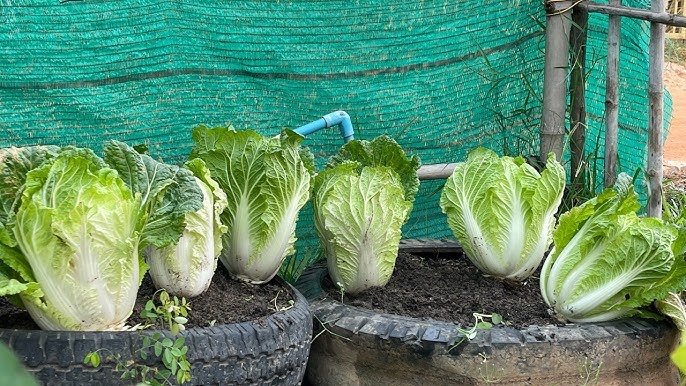
Before diving into the method, it’s important to understand why growing cabbage in bottles works so well. Despite its reputation as a heavy feeder, cabbage adapts beautifully to container culture when provided with:
- Adequate soil depth
- Regular nutrients
- Sufficient water
- Good root aeration
Plastic bottles—especially 2-liter or 5-liter bottles—offer the perfect compact environment for root health. They allow gardeners to:
✔ Grow food in small spaces
Ideal for balconies, rooftops, and indoor gardens.
✔ Reuse waste materials
Eco-friendly gardening that reduces plastic waste.
✔ Control soil quality
You control every nutrient and soil particle entering your plant.
✔ Better pest management
Containers lift the plant off the ground, helping avoid soil-borne pests and slugs.
The result? Perfectly formed cabbage heads in surprisingly small containers.
🌱 Understanding the Science Behind Bottle-Grown Cabbage
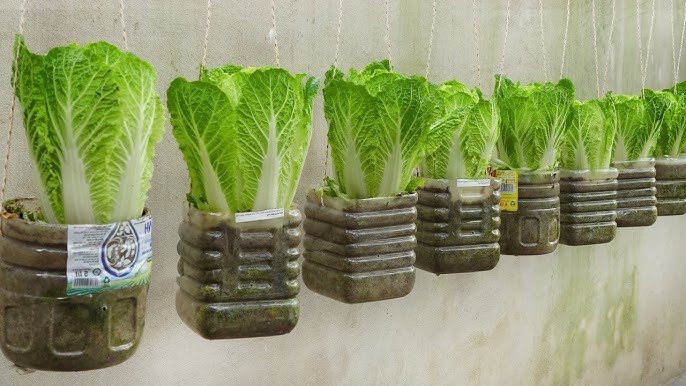
Cabbage has a shallow but wide root system. While these roots spread horizontally in the open garden, they can adapt and grow tighter when provided:
- Loose, nutrient-rich soil
- Continuous moisture
- Controlled temperature
Plastic bottles create a micro-environment where water retention, temperature, and nutrients are regulated more consistently than traditional beds.
Here’s why this matters:
1. Vertical Root Compression
Cabbage roots spread sideways naturally, but in containers, they shift downward, forming a compact but efficient root ball. This encourages faster head formation.
2. Microclimate Stability
Plastic containers warm up faster and retain heat, helping cabbage grow even in cooler climates.
3. Controlled Watering
Bottles prevent overwatering and allow gardeners to maintain moist (not soggy) soil—exactly what cabbage prefers.
4. Direct Nutrient Access
In bottles, fertilizers stay close to the root zone, improving nutrient uptake and producing firmer heads.
In simple terms: bottle gardening gives cabbage exactly what it needs, without the stress of external conditions.
🌿 Step-by-Step Guide: Growing Cabbage in Bottles
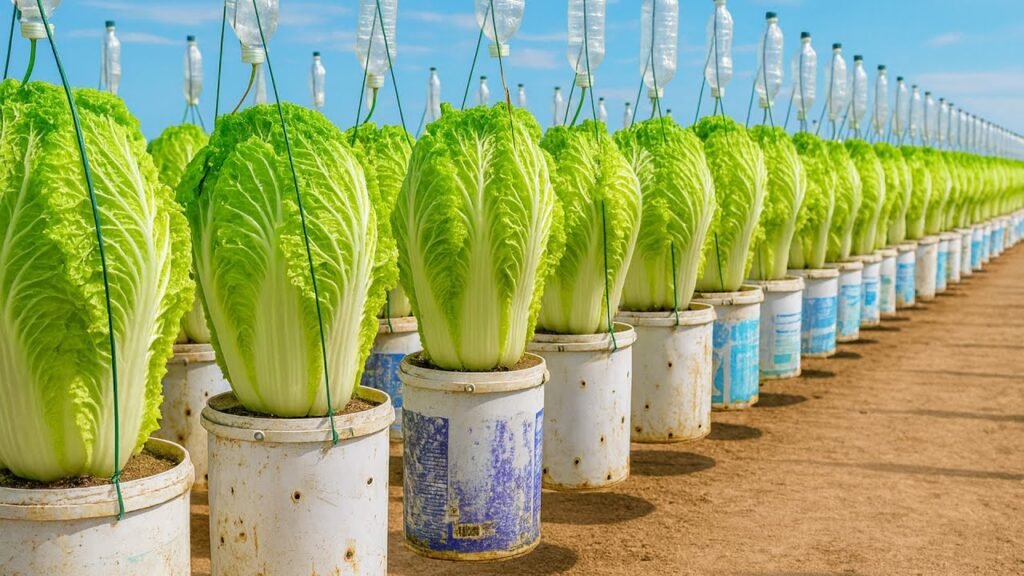
Let’s break down the process so you can start your own bottle cabbage garden right away.
🌱 Step 1: Choosing the Right Bottle
The type of bottle you choose impacts your cabbage size.
Best options:
- 2-liter soft drink bottles for small-headed cabbage varieties
- 5-liter water bottles for medium to full-sized heads
- 10-liter containers for large premium varieties
Transparent bottles are ideal because they allow you to monitor root health and soil moisture.
Prepare the bottle by:
- Cutting off the upper third to create a wide opening
- Making 8–10 drainage holes at the bottom
- Adding side holes for air circulation if desired
- Washing the bottle thoroughly
🌱 Step 2: Preparing the Perfect Soil Mix
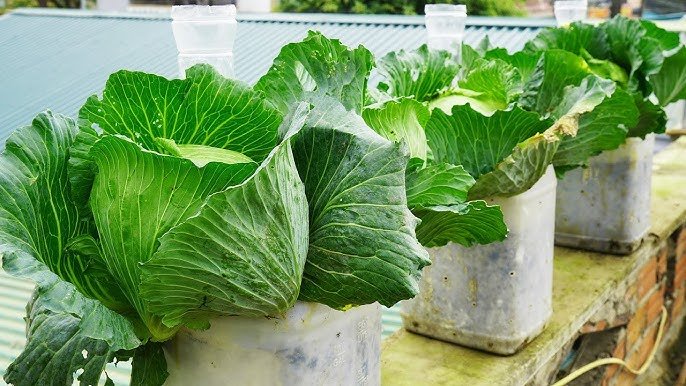
Cabbage thrives in soil that is:
- Loose
- Rich
- Slightly acidic to neutral (pH 6.0–6.8)
- Moist but well-draining
Ideal soil mix:
- 40% garden soil
- 30% compost or vermicompost
- 20% coco peat for moisture retention
- 10% perlite or sand for drainage
Boost fertility by adding:
- 1 tablespoon bone meal
- 1 tablespoon neem cake powder
- A pinch of dolomite lime if your soil is acidic
This mix ensures strong roots, thick leaves, and firm heads.
🌱 Step 3: Planting the Seedling
Cabbage grows best when transplanted, not direct-seeded.
Steps:
- Use 3–4 week old seedlings with 4–6 true leaves.
- Fill the bottle with the soil mix, leaving 2 inches at the top.
- Make a hole in the center and plant the seedling firmly.
- Water gently until the soil settles.
Make sure the bottle is placed in a sunny location—cabbage needs 5–6 hours of sunlight to form good heads.
🌿 Step 4: Watering Requirements
Cabbage is a heavy drinker. Bottle systems dry out faster, so proper watering is crucial:
- Keep the soil consistently moist
- Avoid waterlogging
- Water daily in summer, every 2–3 days in winter
- Use a spray bottle for young seedlings
Clear bottles let you see when water levels are low—an added advantage!
🌱 Step 5: Fertilizing for Rapid Growth
Cabbage requires nutrients throughout its lifecycle.
At planting:
Mix compost and slow-release fertilizers.
After 2 weeks:
Feed with a nitrogen-rich fertilizer (cow dung tea, fish emulsion, or diluted urea).
When head formation begins:
Switch to potassium and phosphorus-rich fertilizers such as:
- Banana peel fertilizer
- Wood ash
- Bone meal tea
- Seaweed extract
This promotes tight, heavy, and sweet cabbage heads.
🌿 Step 6: Managing Pests Naturally
Bottle gardening reduces pests, but cabbage can still attract:
- Aphids
- Caterpillars
- Whiteflies
- Moths
Natural Solutions:
- Spray neem oil weekly
- Use garlic + chili spray
- Handpick caterpillars
- Keep bottles elevated on racks or shelves
Healthy plants grown in rich soil naturally resist most pests.
🌱 Step 7: Harvesting Your Bottle-Grown Cabbage
Depending on the variety, cabbage takes 65–90 days to mature.
Signs it’s ready:
- The head feels firm and compact
- Outer leaves spread slightly
- Size reaches expected variety standard
Cut the head cleanly with a knife, leaving the lower leaves—you may get a second, smaller head from the stump.
🌿 Advantages of Growing Cabbage in Bottles
This method offers several special benefits:
✔ Saves space
Grow 10–20 bottle cabbages in the area needed for 2 garden cabbages.
✔ Saves water
Bottles retain moisture more effectively.
✔ Reduces pests
Elevated containers discourage crawling insects.
✔ Portable
Move the bottles to shade, sun, or indoors anytime.
✔ Faster growth
The micro-environment encourages quicker head formation.
✔ Eco-friendly
Turns waste into food-producing containers.
🌱 Tips for the Best Results
- Choose compact cabbage varieties
- Avoid overwatering
- Keep soil rich and loose
- Ensure full sun for faster head formation
- Add mulch on top to preserve moisture
- Fertilize regularly for optimal growth
🌿 Final Thoughts
“Cabbage in Bottles” may sound unusual, but it’s a scientifically backed, space-saving, and highly productive gardening technique. By understanding the root behavior, microclimate benefits, and nutrient needs of cabbage, you can grow beautiful, compact, and healthy cabbage heads right inside recycled plastic bottles.
This method is perfect for urban gardeners, beginners, and eco-lovers who want to grow more with less space. With just a few bottles, good soil, and simple care, you can enjoy fresh, organic cabbage from your balcony or kitchen window.