Basil is one of the most versatile and aromatic herbs you can grow at home. Its fragrant leaves are a staple in cooking, a natural remedy for health, and an excellent addition to indoor gardens. The great news is that basil is incredibly easy to grow indoors, even if you have limited space or no outdoor garden. With the right care, you can enjoy fresh basil leaves year-round, straight from your windowsill, balcony, or kitchen counter.
In this comprehensive guide, we will explore everything you need to know about growing basil indoors, including the best varieties, planting, watering, lighting, fertilizing, pruning, and harvesting.
🌱 Introduction: Why Grow Basil Indoors?
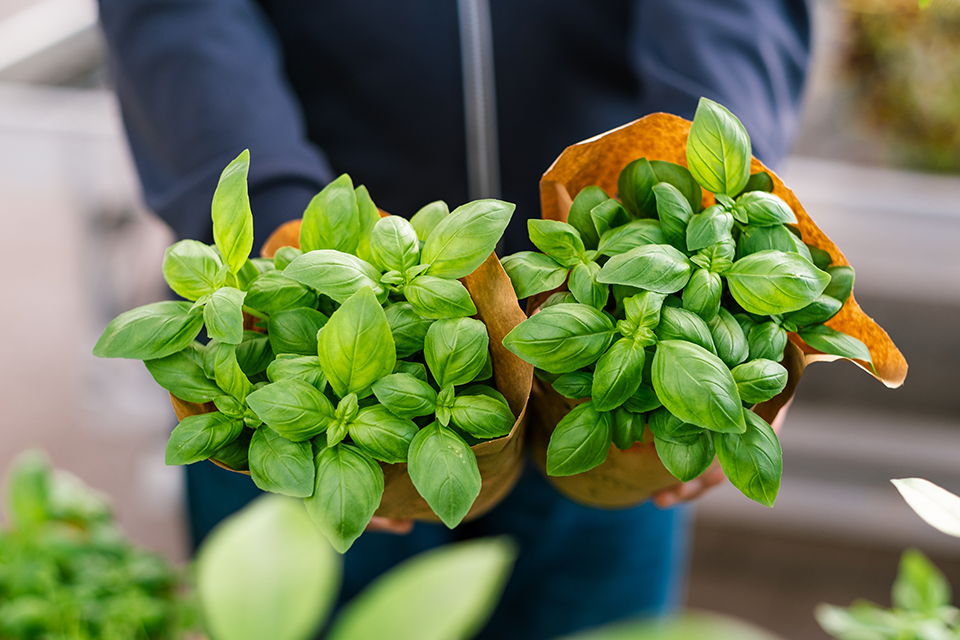
Indoor basil cultivation is ideal for several reasons:
- Freshness and flavor: Nothing beats freshly picked basil for cooking.
- Convenience: Have herbs available at your fingertips without running to the store.
- Health benefits: Basil is rich in antioxidants, vitamins, and essential oils that support immunity and digestion.
- Air purification: Like many indoor plants, basil contributes to cleaner indoor air.
- Compact and easy: Requires minimal space and can thrive in containers.
Growing basil indoors also eliminates the risk of pests and harsh weather, making it a low-maintenance, rewarding plant for beginners.
🌿 Step 1: Choosing the Right Basil Variety
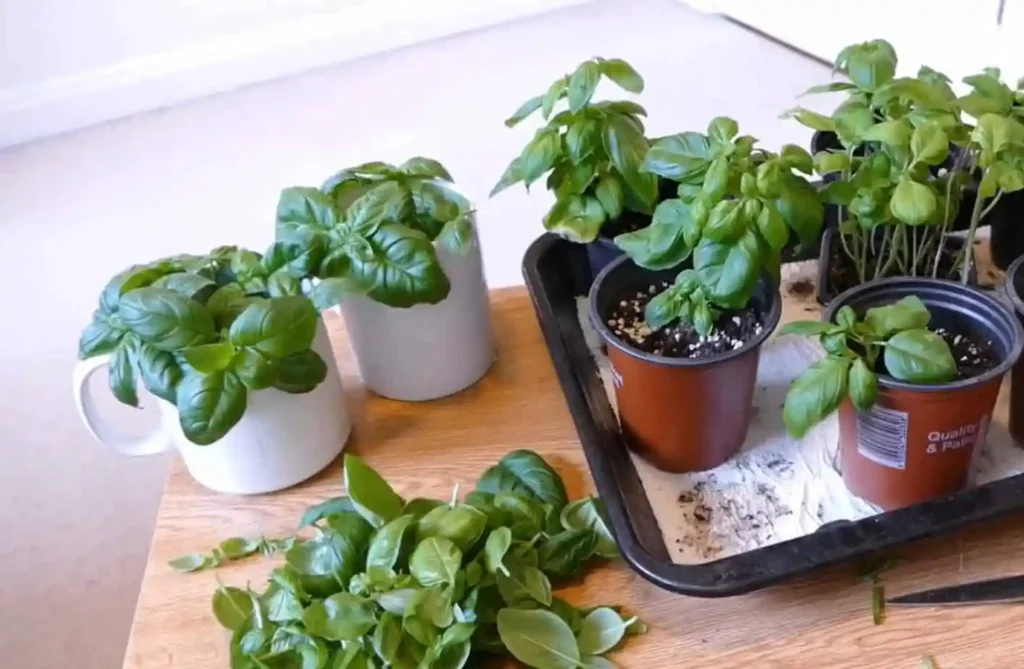
Basil comes in many varieties, each with unique flavors and aromas. Choosing the right variety depends on your taste and intended use.
Popular Indoor Basil Varieties:
- Genovese Basil
- Classic Italian variety
- Sweet aroma, ideal for pesto and pasta
- Sweet Basil
- Mild flavor, versatile for cooking
- Compact growth suitable for pots
- Thai Basil
- Spicy, licorice-like flavor
- Great for Asian cuisine
- Purple Basil
- Deep purple leaves, ornamental
- Slightly spicy flavor
- Lemon Basil
- Citrusy flavor, great for teas and desserts
- Compact growth for windowsills
Tip: Choose smaller varieties for indoor pots to save space.
🌱 Step 2: Selecting the Right Container
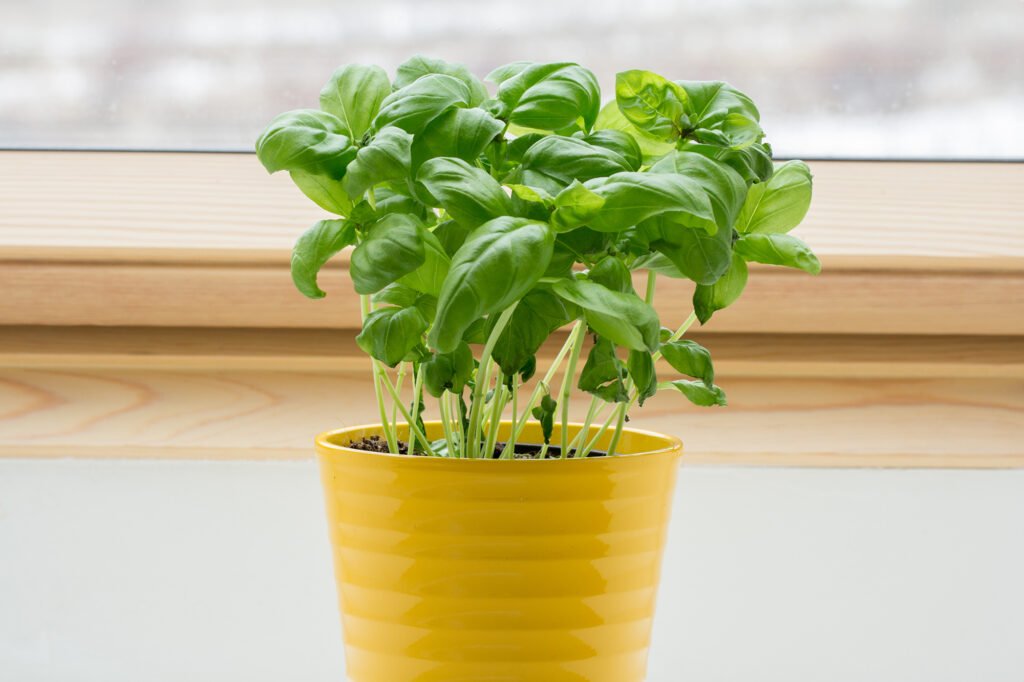
Basil grows best in well-draining containers.
Container Tips:
- Size: At least 6–8 inches deep for root development
- Material: Terracotta, ceramic, or plastic pots
- Drainage: Ensure holes at the bottom to prevent waterlogging
Using pots with saucers helps catch excess water and maintain a clean indoor space.
🌿 Step 3: Soil Requirements
Basil prefers loose, nutrient-rich, well-draining soil.
Ideal Soil Mix:
- 2 parts potting soil
- 1 part perlite or sand for drainage
- 1 part compost or organic matter for nutrients
Tip: Avoid heavy garden soil as it can retain too much water and cause root rot.
🌞 Step 4: Lighting Needs
Basil requires plenty of sunlight to thrive indoors.
Light Guidelines:
- 6–8 hours of direct sunlight per day
- South-facing windows are ideal
- If natural sunlight is insufficient, use grow lights (fluorescent or LED) for 12–16 hours per day
Tip:
Rotate the pot occasionally to ensure even growth on all sides.
💧 Step 5: Watering Basil Indoors
Basil has moderate water requirements, and overwatering can harm the plant.
Watering Tips:
- Keep soil consistently moist but not soggy
- Water when the top inch of soil feels dry
- Water at the base to avoid wetting leaves, which can lead to fungal problems
Tip: Use room-temperature water to avoid shocking the roots.
🌿 Step 6: Fertilizing Indoor Basil
Indoor basil benefits from regular feeding to maintain healthy growth.
Fertilizer Options:
- Liquid organic fertilizer (seaweed extract, fish emulsion)
- Balanced water-soluble fertilizer (10-10-10 NPK)
Feeding Schedule:
- Every 2–3 weeks for potted plants
- Reduce fertilization in winter when growth slows
Tip: Avoid over-fertilizing, as this can lead to lush foliage but reduced flavor.
🌱 Step 7: Pruning and Pinching for Maximum Growth
Pruning is essential to keep basil bushy, healthy, and productive.
Pruning Tips:
- Pinch off the top 1–2 inches of the stem regularly
- Remove flowers as they appear to encourage leaf growth
- Cut above a leaf node to promote branching
- Trim older leaves to maintain plant vigor
Tip: Frequent pinching encourages compact and bushy plants, ideal for indoor spaces.
🌿 Step 8: Managing Pests and Diseases
Although indoor basil is less prone to pests, you should still monitor for common issues:
Common Pests:
- Aphids
- Spider mites
- Whiteflies
Common Diseases:
- Fungal infections (downy mildew, powdery mildew)
- Root rot from overwatering
Solutions:
- Wipe leaves with a damp cloth or mild soap solution
- Use neem oil or insecticidal soap for pest control
- Ensure proper drainage and airflow to prevent fungal infections
Tip: Keep basil away from cold drafts or stagnant air to reduce stress.
🌞 Step 9: Harvesting Basil
Harvesting basil correctly ensures continuous production.
Harvesting Tips:
- Begin harvesting when plants are 6–8 inches tall
- Cut stems just above a leaf node to promote new growth
- Avoid removing more than one-third of the plant at a time
- Harvest leaves in the morning for best flavor
Tip:
Use fresh leaves in salads, pasta, soups, or teas. You can also freeze or dry excess leaves for later use.
🌿 Step 10: Propagating Basil Indoors
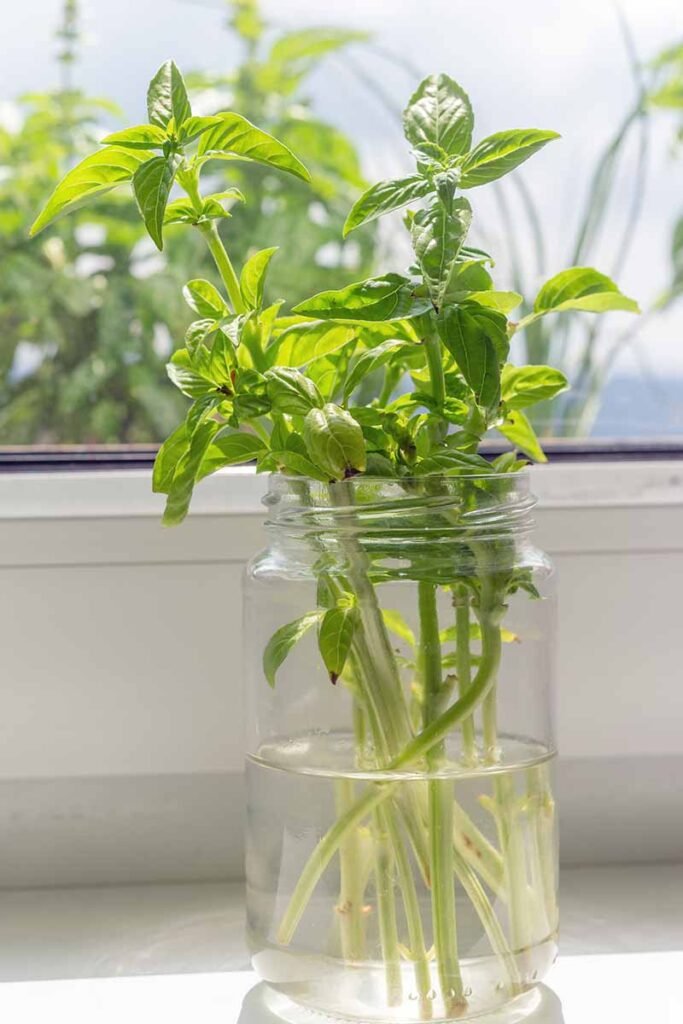
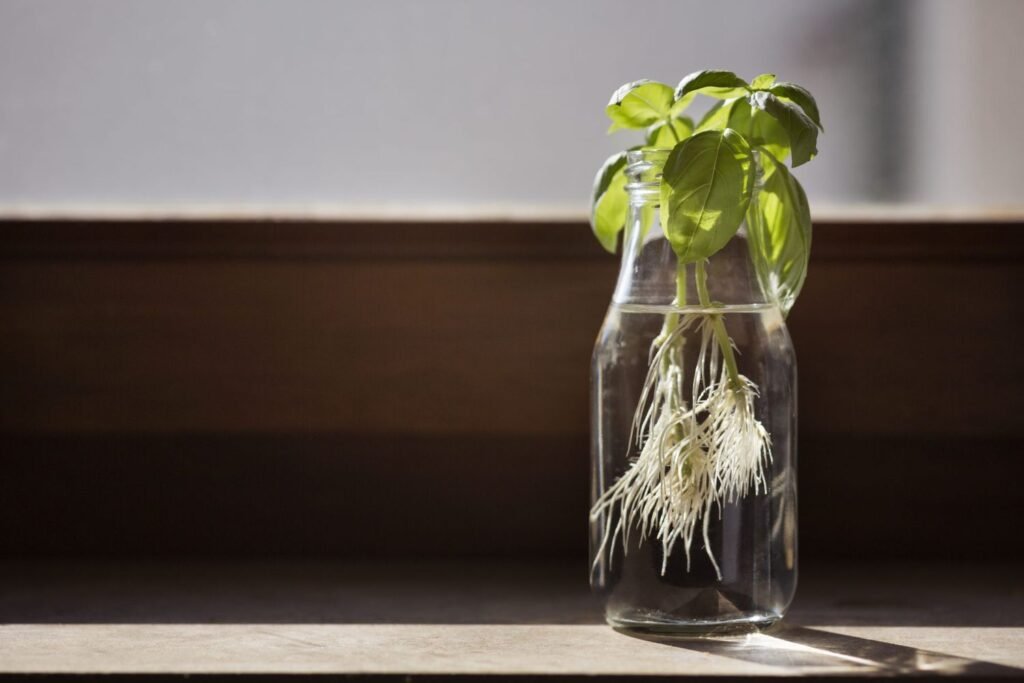
Basil is easy to propagate through cuttings, making it a never-ending indoor herb supply.
Propagation Steps:
- Take 3–4 inch cuttings from healthy stems
- Place in a glass of water until roots develop (1–2 weeks)
- Plant rooted cuttings in pots with fresh soil
- Keep in bright, indirect light until established
Tip: Propagation allows you to replace old plants or expand your indoor garden.
🌟 Step 11: Creative Uses for Indoor Basil
- Culinary: Fresh leaves for pasta, pizza, pesto, or salads
- Beverages: Infuse in teas, lemonades, or cocktails
- Aromatherapy: Crush leaves to release a calming scent
- Decorative: Use in small pots on windowsills or kitchen counters for aesthetic appeal
Indoor basil is not only practical but also enhances your living space with fragrance and greenery.
🌳 Conclusion: Why Basil Is the Perfect Indoor Plant
Basil is arguably the easiest and most rewarding indoor herb to grow. Its combination of low-maintenance care, aromatic leaves, culinary versatility, and natural beauty makes it ideal for beginners and experienced gardeners alike.
By providing adequate sunlight, proper soil, consistent watering, regular pruning, and occasional fertilization, you can enjoy a lush, fragrant basil plant year-round. Whether used in cooking, teas, or simply as a green accent, basil brings freshness, flavor, and wellness into your home.
Start your indoor basil garden today and experience the joy of harvesting fresh, flavorful leaves whenever you need them. 🌿🌱