Passionfruit is a tropical vine celebrated for its tangy, sweet flavor, and high nutritional value. Grown extensively for fresh consumption, juice, and desserts, passionfruit is a lucrative crop for home gardeners and commercial growers alike. However, growing passionfruit from seeds can be slow, unpredictable, and prone to disease. Seedlings often take longer to produce fruits and may not retain the quality of the parent plant.
The solution? Grafting passionfruit is a reliable and effective method to produce healthy, vigorous vines that bear high-quality fruits faster. In this article, we’ll share a great idea for grafting passionfruit, step-by-step instructions, and tips for successful cultivation, so you can enjoy early and abundant harvests.
🌿 Why Grafting Passionfruit Works
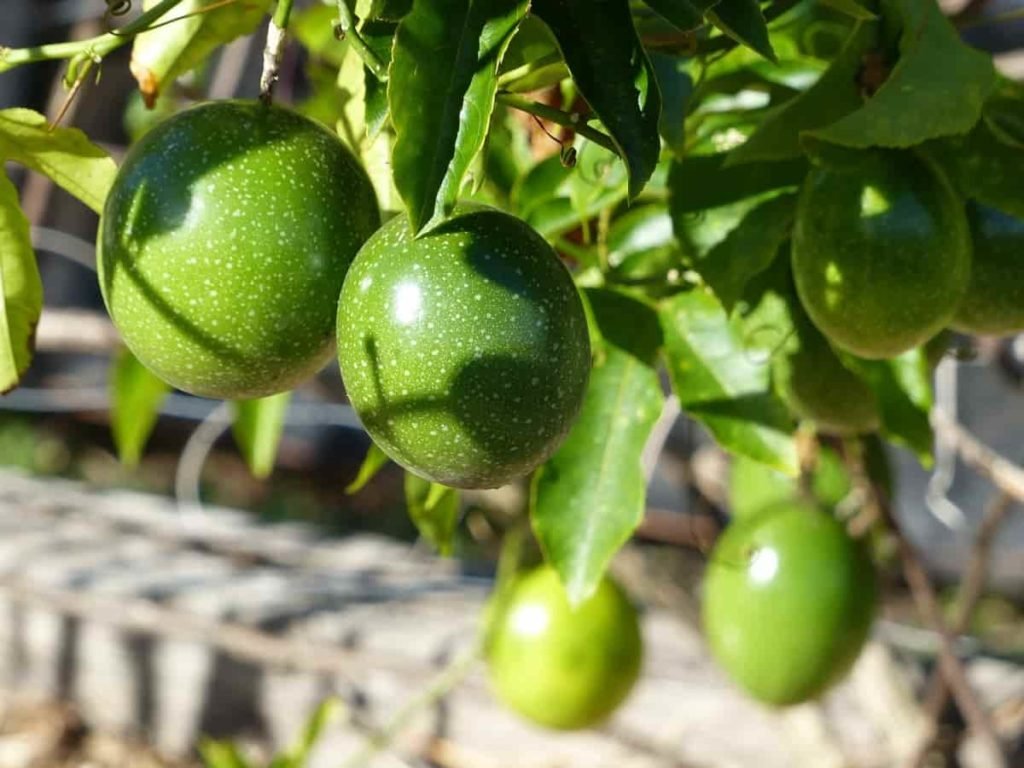
Grafting is the process of joining two plants:
- Rootstock: The base plant that provides a strong, disease-resistant root system.
- Scion: The top portion from a mature passionfruit vine that determines fruit quality, flavor, and yield.
The benefits of grafting passionfruit include:
1. Faster Fruit Production
- Seedlings can take 12–18 months to start fruiting.
- Grafted vines can produce flowers and fruits in 6–9 months, significantly reducing waiting time.
2. True-to-Type Fruits
- The scion maintains the flavor, color, and quality of the parent plant.
- This ensures uniform, marketable fruits for consumption or sale.
3. Disease Resistance
- Strong rootstocks provide resistance to soil-borne diseases, root rot, and nematodes.
4. Higher Yield
- Grafted vines grow vigorously, absorb nutrients more efficiently, and produce more flowers and fruits.
5. Stronger Vines
- Grafting strengthens the vine, making it more resilient to wind, drought, and heavy fruits.
✂️ Materials Needed for Passionfruit Grafting
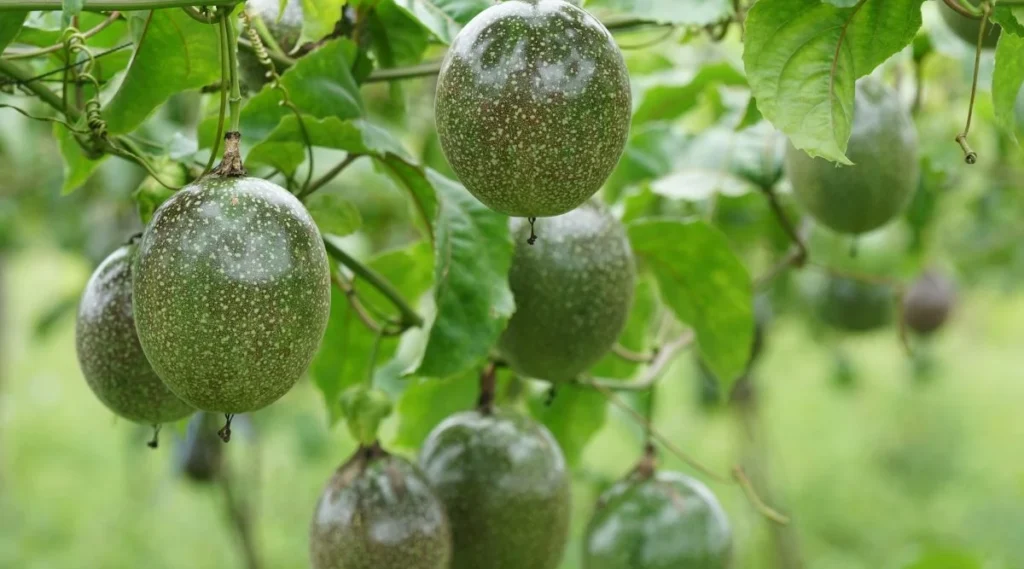
Before starting, gather:
- Healthy passionfruit rootstock (disease-free seedlings, 2–3 months old)
- Scion from a productive passionfruit vine
- Sharp grafting knife
- Grafting tape or cling film
- Aloe vera gel or rooting hormone (optional)
- Clean cloth
🌱 Step-by-Step Guide: Great Passionfruit Grafting Idea
The splice or cleft grafting method is most effective for passionfruit vines.
1. Select Healthy Rootstock and Scion
- Rootstock: Healthy, vigorous seedlings, 2–3 months old, disease-free.
- Scion: From a fruiting vine, about 5–8 cm long, containing 1–2 nodes.
- Ensure the stem diameter of rootstock and scion matches closely.
2. Prepare the Rootstock
- Make a clean diagonal or horizontal cut at the top of the rootstock.
- For cleft grafting, create a 2–3 cm vertical slit in the center to hold the scion securely.
3. Prepare the Scion
- Shape the base of the scion into a wedge to fit into the rootstock slit.
- Smooth the edges carefully to avoid splitting.
- Remove any lower leaves, leaving 1–2 top leaves to support photosynthesis.
4. Apply Aloe Vera or Rooting Hormone (Optional)
- Coat the cut surfaces with Aloe vera gel or rooting hormone.
- Benefits:
- Promotes faster callus formation
- Protects against infections
- Increases grafting success
5. Join Scion and Rootstock
- Insert the scion into the rootstock slit.
- Align cambium layers carefully to ensure a strong graft union.
- Tight alignment promotes faster healing and growth.
6. Wrap the Graft
- Secure the graft tightly with grafting tape or cling film.
- Protects against moisture loss, pests, and fungal infection.
- Allow some airflow for scion leaves.
7. Maintain Shade and Moisture
- Place the grafted vine in indirect sunlight for 7–10 days.
- Keep the soil evenly moist, avoiding waterlogging.
- Mist lightly if needed to maintain humidity around the graft.
8. Monitor for Success
- Signs of successful grafting:
- Leaves stay green and upright
- New growth emerges from the scion
- Scion remains firm and healthy
- Usually, new growth appears 2–3 weeks after grafting. Gradually expose the vine to full sunlight.
🌿 Post-Grafting Care for Passionfruit
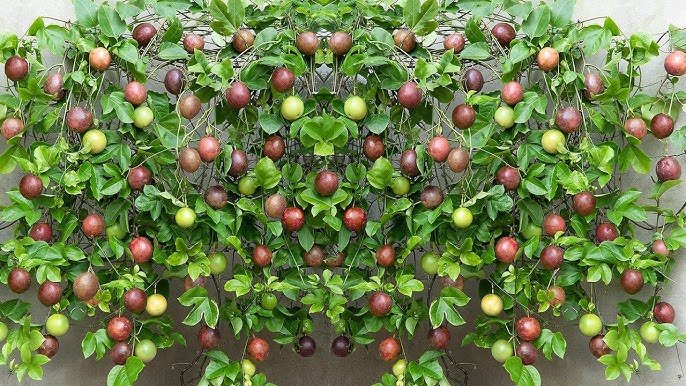
Proper care ensures healthy growth and maximum fruit production.
1. Watering
- Keep the soil slightly moist at all times.
- Avoid overwatering, especially around the graft union, to prevent root rot.
2. Fertilizing
- Apply organic compost or well-rotted manure every 3–4 weeks.
- Use a balanced fertilizer with potassium during flowering to improve fruit size and sweetness.
- Avoid excessive nitrogen, which can encourage leafy growth at the expense of fruits.
3. Sunlight
- Gradually acclimatize grafted vines to full sunlight after 7–10 days.
- Passionfruit thrives in 6–8 hours of sunlight daily.
4. Pruning and Trellising
- Remove weak, diseased, or damaged shoots.
- Train the vine along a sturdy trellis or support structure.
- Prune to maintain airflow and maximize light penetration for flower and fruit development.
5. Pest and Disease Management
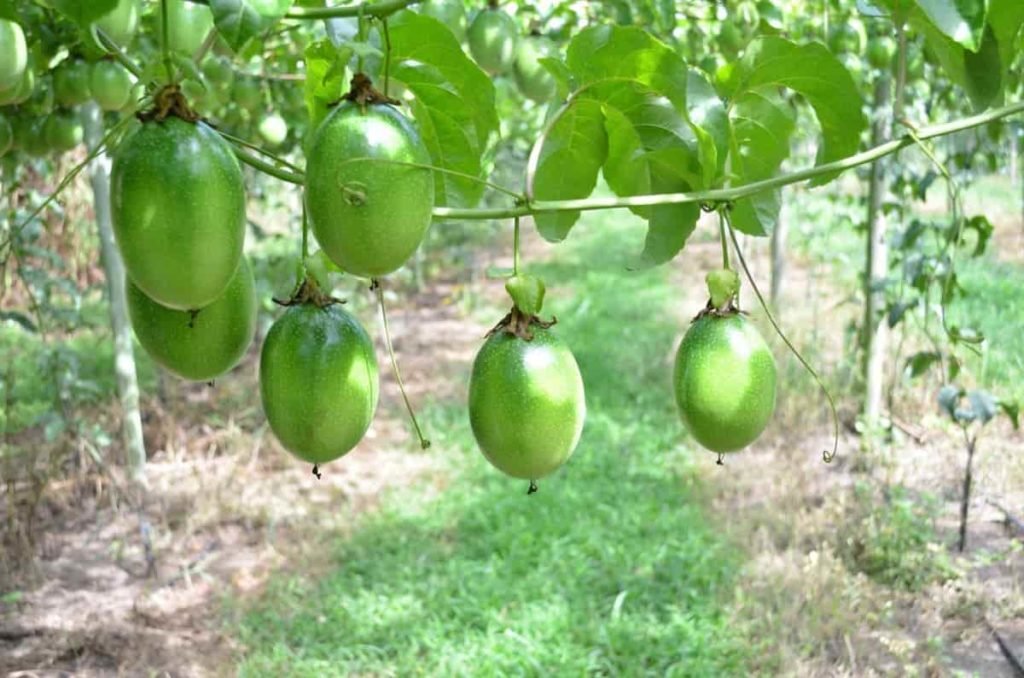
Common pests include:
- Aphids
- Fruit flies
- Mealybugs
Control tips:
- Spray neem oil or organic insecticides every 10–15 days.
- Remove infected leaves and fruits promptly.
- Keep the area clean to reduce fungal infections.
🍇 Expected Results from Grafted Passionfruit
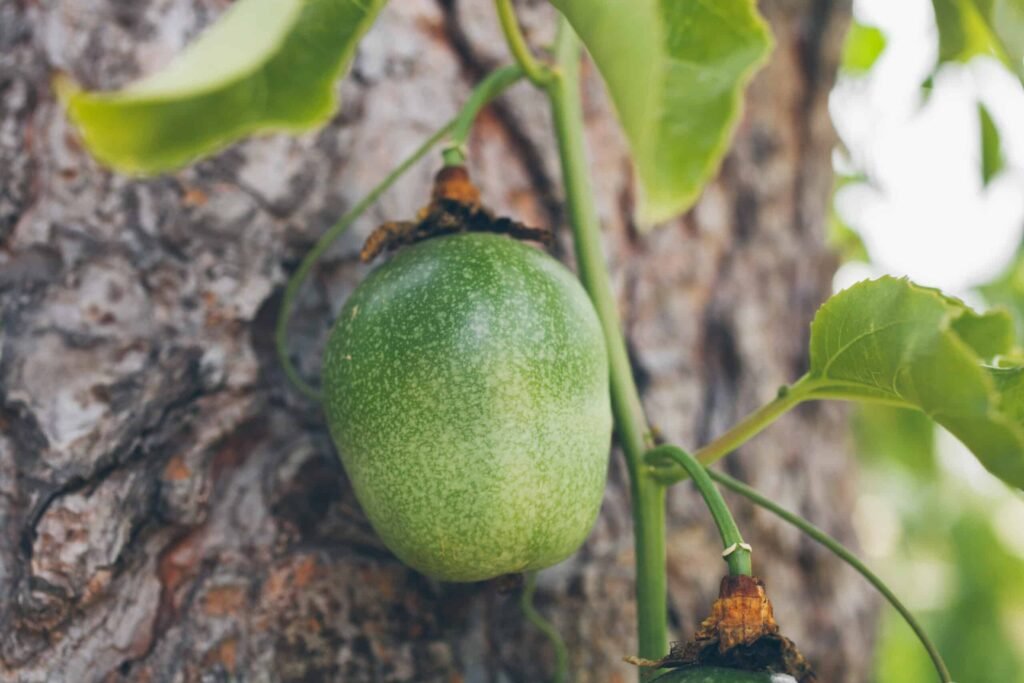
- Faster flowering and fruiting: within 6–9 months.
- Higher yield due to improved nutrient and water absorption.
- Stronger, disease-resistant vines.
- Fruits retain same taste, aroma, and quality as the parent scion.
Grafted passionfruit vines are ideal for home gardens, commercial farms, and small-scale orchards, providing reliable harvests and higher profitability.
🌟 Tips for Maximum Success
- Always use healthy, disease-free scions and rootstocks.
- Align cambium layers perfectly for the strongest graft union.
- Keep the graft shaded and moist for the first 7–10 days.
- Apply Aloe vera gel or rooting hormone to improve success rates.
- Remove shoots below the graft to focus energy on the scion.
🌱 Conclusion
Grafting passionfruit using this great idea technique is simple, effective, and highly rewarding. By combining a strong rootstock with a high-quality scion, you can grow vigorously healthy vines that produce early, abundant, and delicious fruits.
Whether you are a home gardener, hobbyist, or commercial grower, this grafting method ensures:
- Faster fruiting
- Consistent, high-quality fruits
- Disease-resistant, robust growth
- Higher yield and profitability
With proper care, grafted passionfruit vines will provide sweet, juicy harvests for years, transforming your garden or orchard into a productive tropical paradise.