Introduction to Modern Guava Cultivation
Guava is a hardy fruit plant, but traditional cultivation methods often result in delayed fruiting, uneven fruit size, and pest problems. The new technique for growing guava plants focuses on root-zone improvement, canopy management, and nutrient precision to achieve early fruiting and consistent high yields.
Selecting the Right Guava Variety
Choosing a high-yielding and disease-resistant guava variety is the foundation of success. Dwarf and semi-dwarf varieties perform exceptionally well with modern techniques, especially in small gardens and high-density orchards.
Soil Improvement and Preparation
Guava thrives in well-drained soil rich in organic matter. Compost, sand, and aged manure are mixed thoroughly to improve aeration, drainage, and microbial activity, which promotes strong root growth.
Root Zone Activation Technique
Before planting, roots are treated with beneficial microorganisms. This enhances nutrient absorption and reduces transplant shock, allowing the plant to establish quickly.
Proper Planting Depth and Spacing
Plants are positioned so that the root collar remains above soil level. Adequate spacing ensures sufficient sunlight and airflow, reducing disease pressure and improving canopy development.
Smart Water Management
Deep watering at longer intervals encourages deep root systems. Overwatering is avoided to prevent root diseases and nutrient leaching.
Nutrient Scheduling for Balanced Growth
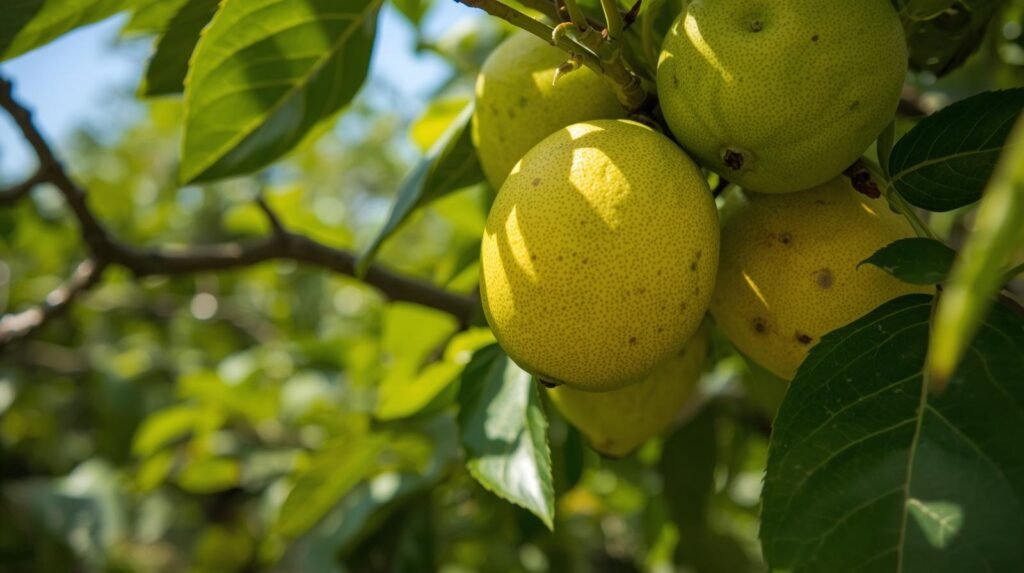
Nutrients are applied according to growth stages. Nitrogen supports vegetative growth, phosphorus strengthens roots, and potassium enhances flowering and fruit quality.
Canopy Training and Pruning
Regular pruning helps maintain an open canopy. Removing overcrowded and weak branches directs energy toward productive shoots.
Flower Regulation Technique
Selective pruning and nutrient balance help regulate flowering, leading to uniform fruit development and improved fruit size.
Organic Pest and Disease Control
Neem-based sprays and orchard sanitation effectively manage pests like fruit flies and leaf miners without chemical residues.
Fruit Quality Enhancement
Calcium and potassium applications improve fruit firmness, sweetness, and shelf life, increasing market value.
Harvesting and Long-Term Maintenance
Guava fruits are harvested at physiological maturity. Seasonal pruning and soil enrichment ensure consistent productivity year after year.
Guava Growing Technique Comparison Table
| Method | Fruiting Time | Fruit Quality | Yield |
|---|---|---|---|
| Traditional Method | Late | Moderate | Average |
| New Technique | Early | High | High |