Introduction: Why Proper Basil Harvesting Is Important
Harvesting basil correctly ensures a healthy plant and continuous leaf production throughout the growing season. Many gardeners unintentionally damage basil plants by cutting incorrectly. Improper harvesting weakens the plant and shortens its lifespan. Basil responds quickly to correct harvesting techniques. When harvested properly, basil becomes bushier and more productive. Understanding how basil grows is essential. This guide explains safe harvesting methods. Proper technique results in endless fresh basil. Healthy harvesting keeps plants alive longer.
Understanding Basil Growth Patterns
Basil grows upward with a central stem and side branches. Leaves emerge in pairs opposite each other. When left unharvested, basil produces flowers, which slows leaf growth. Harvesting encourages branching. Each cut creates two new stems. Understanding this pattern helps guide cutting decisions. Growth speed depends on light and warmth. Regular harvesting prevents flowering. Knowledge improves productivity. Growth awareness ensures success.
Best Time to Start Harvesting Basil
Basil can be harvested once the plant reaches six to eight inches tall. Early harvesting encourages bushy growth. Waiting too long leads to leggy plants. Morning is the best time to harvest. Essential oils are strongest then. Avoid harvesting during extreme heat. Gentle early cuts strengthen stems. Consistent harvesting improves yield. Timing affects flavor. Early action benefits plant health.
How Much Basil You Can Harvest Safely
Never harvest more than one-third of the plant at a time. Removing too much stresses the plant. Leave enough leaves for photosynthesis. Gradual harvesting maintains energy balance. Frequent small harvests work best. Overharvesting weakens growth. Balanced cutting encourages recovery. Plant health depends on moderation. Controlled harvesting ensures longevity. Less is more.
Where to Cut Basil for Regrowth
Always cut above a leaf node where two leaves emerge. This stimulates branching. Avoid cutting the main stem at the base. Clean cuts prevent damage. Use sharp scissors or fingers. Cutting at nodes doubles growth. Avoid tearing stems. Strategic cuts create bushier plants. Proper placement ensures fast regrowth. Precision improves yield.
Harvesting Basil Leaves vs Stems
Leaves can be harvested individually or as stem tips. Stem harvesting promotes branching. Leaf-only harvesting is suitable for light use. Stem cuts are better for long-term growth. Avoid stripping lower leaves completely. Balanced harvesting preserves structure. Choose method based on need. Both methods are effective. Understanding difference improves control. Flexibility is useful.
How Often to Harvest Basil
Basil can be harvested every one to two weeks. Frequent harvesting prevents flowering. Monitor growth speed. Faster growth allows more frequent cutting. Avoid harvesting stressed plants. Consistency improves plant shape. Regular harvesting maintains flavor. Overharvesting slows recovery. Balanced frequency ensures productivity. Observation guides timing.
Preventing Basil from Flowering
Flowering reduces leaf production. Pinch off flower buds early. Regular harvesting delays flowering. Warm temperatures encourage flowering. Maintain consistent moisture. Fertilize lightly. Removing flowers redirects energy. Flower prevention extends harvest season. Early action is key. Continuous care ensures leaves.
Harvesting Basil Indoors vs Outdoors
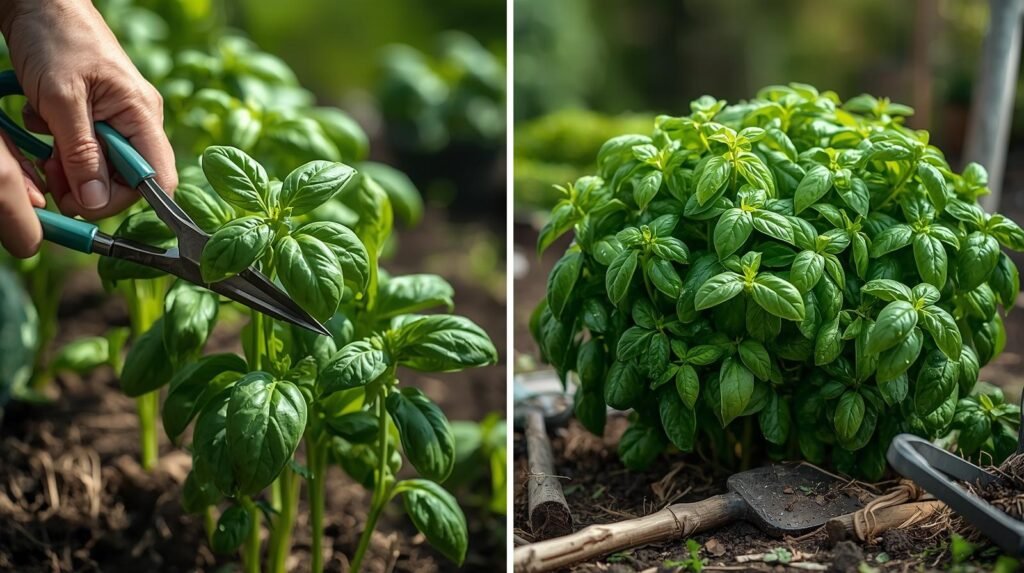
Indoor basil grows slower than outdoor basil. Harvest indoor plants less frequently. Outdoor basil tolerates frequent cutting. Light intensity affects regrowth. Indoor plants need bright light. Outdoor plants need protection from heat. Adjust harvesting accordingly. Environment influences growth. Adapt methods as needed. Flexibility ensures success.
Tools Needed for Basil Harvesting
Sharp scissors or garden snips work best. Clean tools prevent disease. Avoid dull blades. Hands can be used for pinching. Sanitize tools regularly. Clean cuts heal faster. Proper tools improve precision. Avoid crushing stems. Equipment matters. Small tools are sufficient.
Harvesting Basil for Continuous Supply
Plan harvesting in stages. Rotate cuts around the plant. Avoid cutting one side repeatedly. Balanced harvesting maintains shape. Leave central growth intact. Continuous supply requires strategy. Patience improves yield. Planning prevents stress. Even harvesting promotes balance. Thoughtful approach works best.
Washing and Storing Fresh Basil
Wash basil gently in cool water. Pat dry carefully. Store at room temperature in water. Avoid refrigeration if possible. Refrigeration causes blackening. Short-term storage preserves flavor. Long-term storage requires drying or freezing. Proper handling maintains quality. Gentle care prevents damage. Storage affects taste.
Common Basil Harvesting Mistakes
Cutting too low damages the plant. Harvesting during flowering reduces yield. Overharvesting weakens growth. Ignoring nodes limits regrowth. Using dirty tools spreads disease. Neglecting watering stresses plants. Mistakes reduce productivity. Awareness prevents errors. Learning improves results. Avoid rushing.
Reviving a Weak Basil Plant
Reduce harvesting temporarily. Improve watering consistency. Provide adequate sunlight. Remove damaged leaves. Apply light fertilizer. Allow recovery time. Basil rebounds quickly with care. Patience is important. Support encourages regrowth. Recovery restores productivity.
Harvesting Basil in Different Seasons
Summer offers fastest growth. Spring harvesting is moderate. Fall harvesting slows down. Winter indoor harvesting is minimal. Adjust frequency by season. Growth rate varies. Seasonal awareness improves care. Do not overharvest in cold months. Adapt strategy accordingly. Timing ensures success.
Using Harvested Basil Efficiently
Fresh basil enhances flavor in cooking. Use immediately for best aroma. Dry excess leaves for storage. Freeze basil for sauces. Efficient use prevents waste. Harvest based on need. Culinary planning improves enjoyment. Basil versatility adds value. Fresh herbs elevate meals. Smart use matters.
Encouraging Long-Term Basil Production
Consistent harvesting encourages long-term growth. Prevent flowering diligently. Maintain soil fertility. Provide full sunlight. Avoid stress conditions. Balanced care extends lifespan. Basil thrives with attention. Long-term care rewards effort. Healthy plants last longer. Commitment pays off.
Table: Basil Harvesting Guidelines
Harvest Stage
Begin harvesting when basil reaches six inches tall
Cutting Location
Always cut above leaf nodes for branching
Harvest Frequency
Every one to two weeks for best growth
Maximum Removal
No more than one-third of the plant