Introduction: Why Overwintering Fig Trees Matters
Overwintering a fig tree properly is essential for ensuring healthy growth and abundant fruit the following season. Fig trees are sensitive to cold temperatures, especially young or container-grown plants. Without protection, winter frost can damage branches and roots. Proper overwintering preserves energy stored in the tree. This results in stronger growth during spring. Gardeners who protect fig trees enjoy earlier fruiting. Overwintering also extends the life of the plant. Understanding winter care is crucial for success.
Understanding Fig Tree Cold Sensitivity
Fig trees thrive in warm climates but struggle in freezing conditions. Temperatures below freezing can damage buds and stems. Roots are especially vulnerable in containers. Different fig varieties have different cold tolerances. Knowing your variety helps plan protection. Cold damage often appears as dieback in spring. Preventing exposure reduces recovery time. Understanding sensitivity helps avoid loss.
Best Time to Prepare Fig Trees for Winter
Preparation should begin in late autumn before the first frost. Waiting too long increases risk of damage. Gradually reduce watering as temperatures drop. Stop fertilizing in early fall. This signals the tree to enter dormancy. Proper timing ensures smooth transition. Preparation improves winter survival. Early planning reduces stress. Consistency is important.
Overwintering Fig Trees in the Ground
In-ground fig trees need insulation around roots and branches. Mulch heavily with straw or leaves around the base. Wrap the trunk with burlap or frost cloth. In colder regions, bending the tree and covering it is effective. Protection prevents frost damage. Air circulation should remain adequate. Avoid plastic wraps directly on bark. This method preserves branches.
Overwintering Fig Trees in Containers
Container-grown fig trees require extra care. Move containers to a sheltered location such as a garage or basement. The area should remain cool but above freezing. Minimal light is acceptable during dormancy. Water sparingly to prevent drying. Container roots freeze faster than ground roots. Indoor protection is essential. This method ensures survival.
Choosing the Right Overwintering Location
An ideal location is frost-free with stable temperatures. Garages, sheds, or unheated basements work well. Avoid heated indoor spaces that break dormancy early. Sudden warmth causes weak growth. Consistent cold helps the tree rest. Darkness is acceptable. Proper location ensures balance. Temperature stability is key.
Watering Fig Trees During Winter
Overwatering during winter causes root rot. Water only when soil becomes dry. Dormant trees need very little moisture. Check soil monthly. Excess moisture encourages fungal growth. Proper watering prevents stress. Minimal care is best. Balance prevents damage. Consistency matters.
Pruning Before Winter Dormancy
Light pruning helps manage size and remove damaged branches. Avoid heavy pruning before winter. Severe pruning encourages growth at wrong time. Remove dead or diseased wood only. Pruning improves airflow. It also simplifies protection. Proper pruning supports health. Timing is critical.
Mulching Techniques for Fig Trees
Mulching insulates roots from freezing temperatures. Use organic materials such as straw, leaves, or wood chips. Apply thick layers around the base. Keep mulch away from the trunk. Mulching retains moisture and warmth. It also improves soil health. This method is simple and effective. Mulching is essential.
Wrapping Fig Trees for Cold Protection
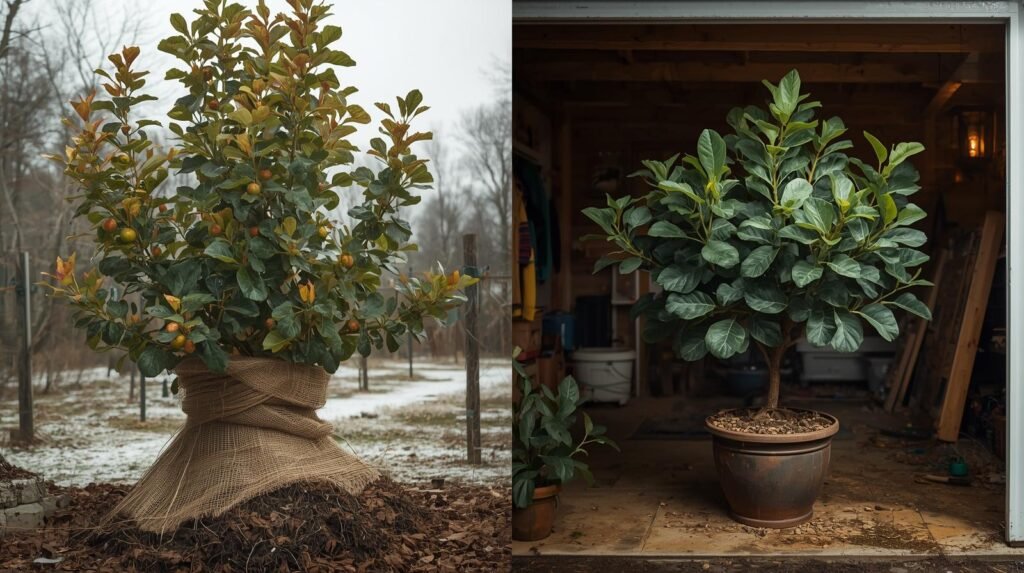
Wrapping protects branches from frost and wind. Use breathable materials like burlap. Avoid plastic coverings. Wrap loosely to allow airflow. Secure wraps gently. Wrapping reduces temperature fluctuations. It also prevents bark cracking. Proper wrapping ensures protection. Remove wraps in spring.
Protecting Fig Trees from Frost
Frost can damage buds and young wood. Cover trees during severe cold nights. Use frost cloth or blankets. Remove covers during the day. This prevents moisture buildup. Frost protection improves survival. Monitoring weather forecasts helps. Timely action is important.
Monitoring Dormant Fig Trees
Check trees periodically during winter. Look for mold, pests, or excessive dryness. Address issues early. Minimal disturbance is best. Monitoring prevents surprises. Healthy dormancy ensures spring growth. Avoid unnecessary watering. Observation is key.
Common Winter Problems and Solutions
Root rot results from excess moisture. Dieback occurs due to insufficient protection. Mold indicates poor airflow. Address issues immediately. Adjust conditions as needed. Prevention is easier than recovery. Proper care avoids problems. Knowledge improves outcomes.
Bringing Fig Trees Out of Dormancy
Gradually reintroduce light and warmth in early spring. Increase watering slowly. Avoid sudden exposure to cold. Gradual transition prevents shock. Buds will swell naturally. Patience ensures success. Early care influences fruiting. Timing matters.
Fertilizing After Winter
Begin fertilizing once new growth appears. Use balanced fertilizer sparingly. Overfeeding causes excessive leaf growth. Nutrients support recovery. Proper feeding boosts fruit production. Slow release options work well. Balanced nutrition is important. Avoid early fertilization.
Encouraging Fruit Production After Winter
Healthy overwintering leads to better fruiting. Provide full sunlight in spring. Maintain proper watering. Prune lightly if needed. Fruit forms on healthy wood. Good care ensures yield. Overwintering success shows results. Patience pays off.
Indoor vs Outdoor Overwintering Comparison
Indoor overwintering offers better temperature control. Outdoor methods suit mild climates. Choose based on local conditions. Both methods work effectively. Understanding environment is key. Flexibility improves success. Adapt methods as needed.
Table: Fig Tree Overwintering Methods
Method Description
Mulching insulates roots using organic materials
Best Climate
Mild to moderately cold regions
Protection Level
Moderate to high depending on method
Ideal Location
Garage, basement, or garden bed
Long-Term Benefits of Proper Overwintering
Overwintered fig trees grow stronger each year. Fruit production increases over time. Healthy trees resist disease better. Proper care extends lifespan. Gardeners enjoy consistent harvests. Overwintering becomes easier with experience. Long-term success is rewarding. Care pays off.