Watermelon is one of the most widely consumed fruits in the world due to its refreshing taste, high water content, and nutritional value. Although many countries grow watermelons domestically, international trade plays a crucial role in meeting year-round demand. Seasonal production gaps, climate limitations, and rising urban consumption have increased reliance on imports. Global watermelon trade has expanded steadily over the past decade. Importing countries depend heavily on efficient supply chains and exporting partners. Trade data reveals interesting trends about consumption patterns and economic strength. Understanding the largest watermelon-importing country helps farmers, exporters, and policymakers plan better strategies. This article examines global trade statistics to identify the world’s leading watermelon importer.
Understanding the Global Watermelon Trade
The global watermelon trade is driven by demand from urban populations and regions with limited agricultural capacity. Many developed countries prefer importing fresh fruits rather than expanding domestic cultivation. Watermelon production is concentrated in warm regions, creating a strong export market. International trade ensures stable supply during off-seasons. Advances in cold storage and transportation have boosted watermelon exports. Import volumes fluctuate based on weather, crop yield, and consumer demand. Trade agreements also influence import levels. Watermelon has become an important commodity in fresh fruit trade.
Key Factors That Influence Watermelon Imports
Several factors determine how much watermelon a country imports each year. Climate conditions play a major role, especially in colder regions where production is limited. Population size and consumption habits strongly affect demand. Higher income levels often lead to increased fruit consumption. Availability of local alternatives also influences imports. Trade policies and tariffs can encourage or restrict watermelon imports. Transportation infrastructure ensures fruit freshness. Seasonal demand peaks during summer months, driving import surges.
Global Leaders in Watermelon Imports
Several countries rank high in watermelon imports, including the United States, Germany, Canada, and the United Kingdom. These countries have strong consumer demand and reliable supply chains. Import volumes are measured in both quantity and value. European nations import heavily during colder months. North American markets depend on imports during winter and early spring. Asian markets also show rising import demand. Trade data helps identify the consistent leader among them.
The United States as the Largest Watermelon Importer
Based on global trade data, the United States is the largest watermelon importer in the world. The country imports millions of tons annually to meet consumer demand. Despite domestic production, seasonal gaps require imports. The U.S. relies heavily on neighboring countries for fresh supply. Import volumes increase significantly during winter months. High population and strong purchasing power drive demand. Retail chains require year-round availability. Trade data consistently places the United States at the top.
Why the United States Imports So Much Watermelon
The United States has a diverse climate, but watermelon production is seasonal. Consumers expect fresh watermelon throughout the year. Domestic farms cannot supply consistent volumes year-round. Imports ensure stable prices and quality. Urbanization has increased fruit consumption. The popularity of healthy diets also boosts demand. Food service industries rely on steady supply. Imports fill the gap between domestic harvest seasons.
Major Watermelon Exporters to the United States
Mexico is the largest supplier of watermelons to the United States. Its favorable climate allows year-round production. Guatemala and Honduras are also key exporters. Proximity reduces transportation time and cost. Trade agreements support smooth import processes. Quality standards are strictly maintained. These countries benefit economically from strong export demand. The U.S. market remains highly attractive for exporters.
Seasonal Trends in Watermelon Imports
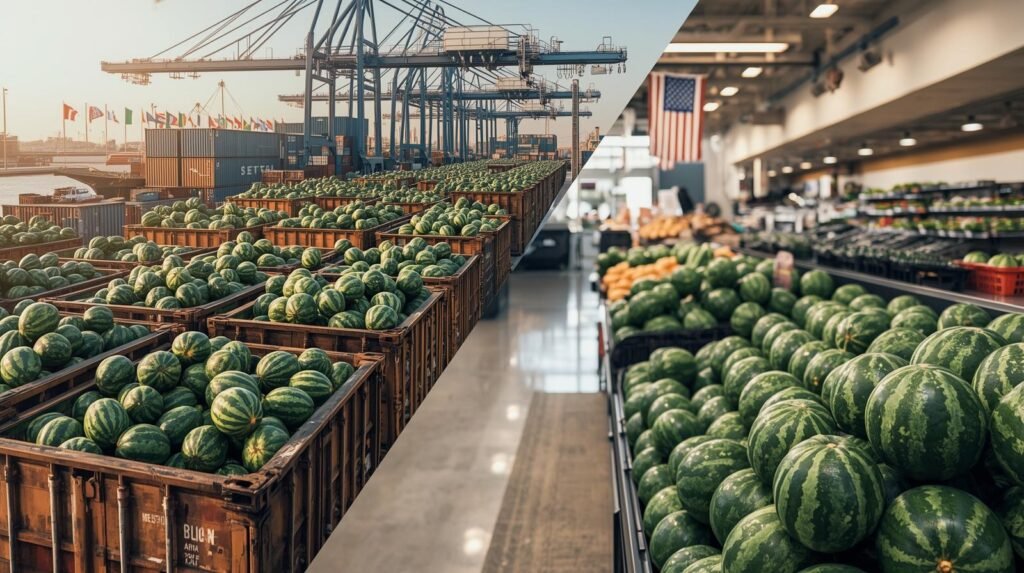
Watermelon imports peak during winter and early spring in the United States. Domestic production dominates summer months. Import volumes decline during peak harvest season. Retail demand remains steady throughout the year. Seasonal pricing affects import quantities. Importers plan shipments carefully to avoid oversupply. Weather disruptions can cause sudden spikes. Seasonal trends strongly influence trade data.
Comparison with Other Major Importing Countries
Germany ranks among the top watermelon importers in Europe. Canada imports heavily due to limited production. The United Kingdom also depends on imports year-round. However, none match the volume imported by the United States. Population size gives the U.S. a significant advantage. Consumption rates are higher in North America. Trade data clearly separates the U.S. from others. The gap continues to widen annually.
Watermelon Import Data Overview Table
| Country Name | Import Volume Level | Main Import Reason | Key Suppliers |
|---|---|---|---|
| United States | Very high | Year-round demand | Mexico, Guatemala |
| Germany | High | Climate limitation | Spain, Italy |
| Canada | High | Short growing season | United States, Mexico |
| United Kingdom | Medium to high | Limited domestic farming | Spain, Morocco |
| Netherlands | Medium | Re-export hub | Spain, Brazil |
Economic Impact of Watermelon Imports
Watermelon imports contribute significantly to the retail and logistics sectors. Import activities create jobs in transportation and distribution. Stable imports help control market prices. Consumers benefit from consistent availability. Retailers maintain profit margins through reliable supply. Importers invest heavily in cold chain infrastructure. The trade supports cross-border economic relationships. Watermelon imports play a role in food security.
Trade Policies and Regulations
Import regulations ensure food safety and quality standards. The United States enforces strict inspection procedures. Trade agreements reduce tariffs and encourage imports. Compliance with pesticide regulations is mandatory. Exporters must meet labeling requirements. Policy changes can affect import volumes. Strong regulatory frameworks protect consumers. Trade data reflects the impact of these policies.
Future Outlook of Global Watermelon Imports
Global watermelon imports are expected to grow steadily. Rising health awareness boosts fruit consumption. Climate change may affect domestic production. Imports will help stabilize supply chains. Technological advancements improve storage life. Emerging markets may increase imports. The United States is likely to remain the top importer. Trade data supports continued growth trends.