Introduction: Why Companion Planting Works Naturally
Companion planting is an ancient gardening practice. Certain plants protect others from pests. Natural plant interactions confuse insects. Strong scents repel harmful bugs. Beneficial insects are attracted. Chemical pesticides become unnecessary. Experts recommend companion planting widely. Vegetable gardens benefit significantly.
How Companion Plants Reduce Pest Damage
Some plants mask vegetable scents. Others release repellent compounds. Certain flowers attract predatory insects. Roots influence soil health. Canopies provide shade. Companion planting disrupts pest cycles. Balance forms naturally. Understanding relationships improves success.
Importance of Diversity in Vegetable Gardens
Monoculture attracts pests easily. Diverse gardens confuse insects. Different scents interrupt pest navigation. Beneficial insects find shelter. Disease spread reduces naturally. Soil health improves. Biodiversity strengthens resilience. Experts stress diversity importance.
Companion Plant One: Marigolds for Pest Control
Marigolds repel nematodes naturally. Their scent deters insects. They protect tomatoes and peppers. Marigolds attract beneficial insects. Easy to grow anywhere. Experts recommend French marigolds. Their roots release protective compounds. Pest damage reduces significantly.
Growing Marigolds Alongside Vegetables
Plant marigolds near vegetable rows. Full sun promotes strong scent. Water moderately. Deadhead flowers regularly. Avoid overcrowding. Marigolds bloom continuously. Their presence benefits soil. Vegetables thrive nearby.
Companion Plant Two: Basil for Insect Repellence
Basil repels aphids and flies. It enhances tomato flavor. Strong aroma confuses pests. Basil attracts pollinators too. Experts recommend basil near tomatoes. Easy maintenance suits beginners. Fresh harvests are a bonus.
Best Way to Grow Basil with Vegetables
Plant basil in warm soil. Full sun encourages growth. Water consistently. Pinch tips for bushiness. Avoid overcrowding. Basil thrives in containers. Pests stay away naturally.
Companion Plant Three: Nasturtiums as Trap Crops
Nasturtiums attract aphids away. They protect vegetables indirectly. Pests prefer nasturtiums. Leaves and flowers are edible. Experts call them sacrificial plants. They thrive easily. Bright blooms enhance gardens.
How to Use Nasturtiums Effectively
Plant near susceptible vegetables. Allow space to spread. Minimal fertilization is needed. Water regularly. Remove heavily infested plants. Nasturtiums grow quickly. Pest pressure decreases significantly.
Companion Plant Four: Garlic for Natural Pest Defense
Garlic repels insects naturally. Strong smell deters pests. Protects carrots lettuce and cabbage. Garlic improves soil health. Experts recommend border planting. Low maintenance suits gardens. Dual harvest benefits gardeners.
Growing Garlic as a Companion Plant
Plant garlic in well drained soil. Full sun ensures growth. Water moderately. Allow foliage to mature. Harvest bulbs when ready. Garlic suppresses pests continuously. Vegetables remain healthier.
Companion Plant Five: Dill for Beneficial Insects
Dill attracts ladybugs and wasps. These predators eat pests. Dill supports biological control. Experts recommend dill near cucumbers. It flowers quickly. Adds culinary value too. Pest populations decrease naturally.
Best Practices for Growing Dill
Plant dill in full sun. Avoid transplanting. Water lightly. Allow some plants to flower. Beneficial insects will arrive. Harvest leaves regularly. Dill supports garden balance.
Designing a Companion Planting Layout
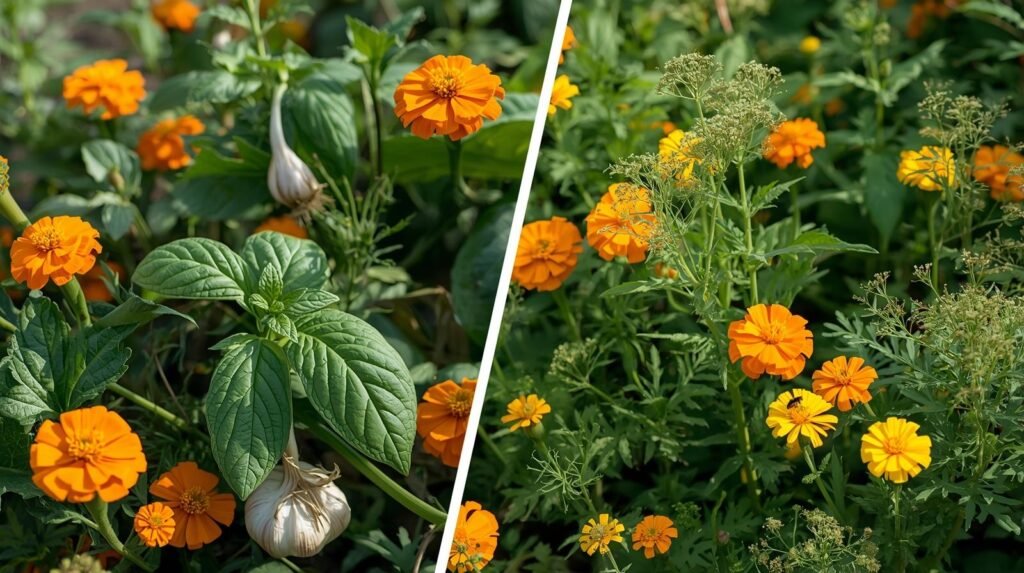
Place companions strategically. Alternate rows for coverage. Use borders effectively. Mix herbs and flowers. Observe pest patterns. Adjust placement annually. Planning improves outcomes.
Seasonal Companion Planting Strategies
Spring companions deter early pests. Summer plants manage populations. Fall companions support soil. Continuous coverage is essential. Experts suggest rotation. Seasonal planning improves protection.
Common Companion Planting Mistakes
Incorrect pairings reduce benefits. Overcrowding causes competition. Ignoring plant needs causes stress. Poor timing reduces effectiveness. Lack of diversity limits success. Learning improves results.
Benefits Beyond Pest Control
Vegetable yields increase. Pollination improves naturally. Soil health strengthens. Garden aesthetics improve. Chemical use reduces. Sustainability increases. Companion planting supports ecosystems.
Expert Tips for Pest Free Vegetable Gardens
Observe insect behavior regularly. Encourage beneficial insects. Avoid pesticides completely. Use healthy soil practices. Rotate crops annually. Trust natural systems.
Table: Companion Plants and Their Benefits
Companion Plant
Marigold repels soil pests
Companion Plant
Basil deters flies and aphids
Companion Plant
Nasturtium attracts aphids away
Companion Plant
Garlic repels insects naturally
Companion Plant
Dill attracts beneficial predators