Introduction: Cashew Farming as a Village Tradition
Cashew cultivation in my village is more than agriculture; it is a way of life passed down through generations. Families depend on cashew orchards for seasonal income, daily employment, and community bonding. The red laterite soil and warm coastal climate create ideal conditions for cashew trees to thrive naturally. Farmers rely on monsoon rains, organic manure, and local knowledge rather than heavy machinery. Each stage of cultivation involves manual care, patience, and observation of nature. Cashew trees grow slowly, teaching farmers the value of long-term planning. The orchards also support biodiversity by sheltering birds and small animals. This deep connection between land and people defines village cashew farming.
Climate and Soil Conditions Suitable for Cashew Trees
Cashew trees prefer tropical climates with moderate rainfall and plenty of sunshine throughout the year. In my village, temperatures remain warm without extreme cold, which protects young saplings. The soil is sandy-loam with good drainage, preventing waterlogging during monsoon season. Farmers prepare the land minimally, preserving natural soil structure and beneficial organisms. Cashew trees tolerate slightly acidic soils, making them ideal for coastal and semi-arid regions. Good air circulation reduces fungal diseases and improves flowering. The dry season helps nuts mature properly before harvest. These natural conditions reduce the need for artificial inputs.
Selection of Cashew Varieties Grown Locally
Local farmers choose cashew varieties based on yield, nut size, and resistance to pests. Traditional varieties adapted to village conditions often outperform hybrid plants in long-term health. Grafted saplings are sometimes used to ensure early fruiting and uniform production. Farmers exchange planting material within the community, preserving local genetic diversity. Some trees produce larger apples, useful for juice and local beverages. Nut shell hardness also influences market price and processing ease. Over time, farmers observe which trees perform best in drought years. This experience-based selection improves orchard resilience.
Land Preparation and Planting Methods
Before planting, farmers clear weeds while keeping natural vegetation around borders. Pits are dug during summer to expose soil pests to heat and predators. Organic compost and farmyard manure are mixed into the pits before monsoon planting. Saplings are planted with proper spacing to allow canopy spread and airflow. Mulching with dry leaves conserves moisture and improves soil fertility. Initial shading protects young plants from intense sunlight. Regular inspection ensures saplings establish strong roots. This careful start determines future productivity.
Traditional Irrigation and Water Management Practices
Cashew trees in my village mostly depend on rain-fed irrigation. During prolonged dry spells, farmers use well water sparingly to avoid root stress. Earthen bunds help retain rainwater around tree bases. Mulching reduces evaporation and keeps soil cool. Overwatering is avoided, as cashew roots dislike stagnant moisture. Farmers observe leaf color and growth to judge water needs. Simple water management practices keep costs low. This sustainable approach suits small-scale farmers.
Organic Manure and Nutrient Management
Village farmers prefer organic inputs such as cow dung, compost, and green manure. These materials improve soil structure and microbial activity over time. Chemical fertilizers are used minimally to avoid soil degradation. Neem cake is added to deter soil pests naturally. Nutrient application is timed before flowering and nut formation. Fallen leaves are left to decompose and enrich the soil. This cycle maintains long-term fertility. Healthy soil ensures consistent yields year after year.
Pest and Disease Control Using Local Knowledge
Common pests include tea mosquito bugs and stem borers, managed through traditional methods. Farmers use neem oil sprays and ash applications to reduce infestations. Regular pruning improves air circulation and reduces disease spread. Diseased branches are removed and burned to prevent contamination. Birds play a natural role in controlling insects. Chemical pesticides are avoided to protect beneficial insects. This eco-friendly approach preserves orchard health. Knowledge is shared during village meetings.
Flowering and Fruit Development Stages
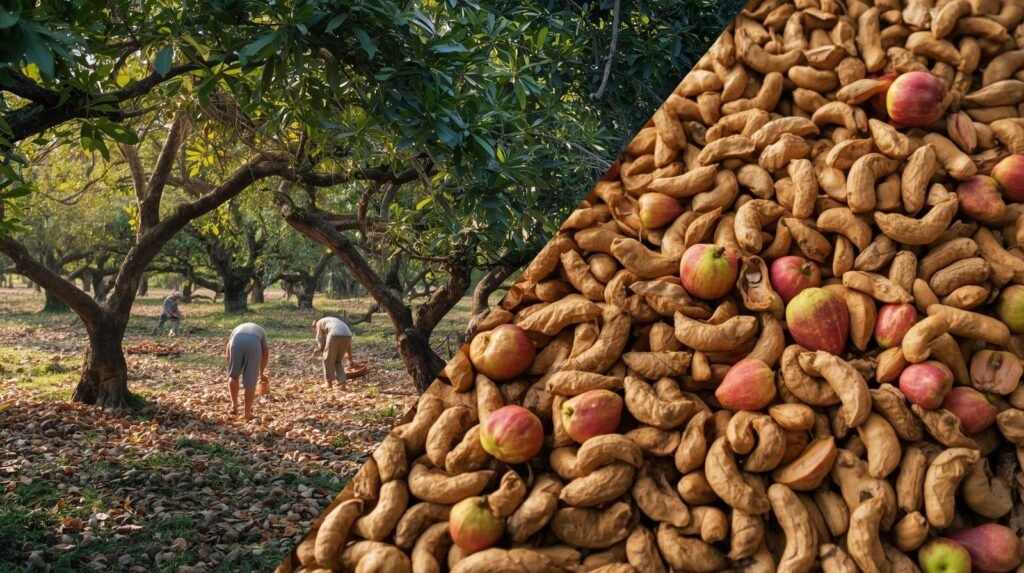
Cashew trees flower during the dry season, producing delicate pinkish-white blossoms. Pollination occurs naturally through insects and wind. Successful flowering leads to the formation of cashew apples with attached nuts. Farmers monitor trees closely during this stage for pest attacks. Adequate sunlight improves fruit set and nut quality. Each tree produces hundreds of fruits over several weeks. Uneven flowering ensures staggered harvesting. This reduces labor pressure.
Cashew Nut Harvesting Season in My Village
Harvesting usually begins in late summer when nuts mature and fall naturally. Farmers collect fallen nuts daily to prevent spoilage. The cashew apple is separated manually from the nut. Apples are used locally or composted. Harvesting is labor-intensive but creates seasonal employment. Families often work together in orchards. Careful handling prevents shell damage. Harvest season brings economic activity to the village.
Post-Harvest Handling and Drying Process
Freshly harvested nuts contain moisture and must be dried properly. Nuts are sun-dried on clean mats for several days. Regular turning ensures uniform drying and prevents mold growth. Proper drying improves storage life and kernel quality. Farmers test dryness by shaking nuts and listening for sound. Dried nuts are stored in jute bags. Good ventilation prevents moisture buildup. This step is crucial for market value.
Traditional Cashew Processing Methods
Some villagers process cashew nuts locally using traditional roasting techniques. Nuts are roasted to loosen shells before cracking. Manual shelling requires skill to avoid kernel breakage. Kernels are dried again before peeling thin skins. Grading is done based on size and appearance. Local processing adds value and creates jobs. However, safety precautions are necessary due to shell oil. Experience ensures quality output.
Marketing and Selling Cashew Nuts
Farmers sell raw nuts to local traders or cooperatives. Prices fluctuate based on demand and quality. Collective selling helps farmers negotiate better rates. Some households store nuts to sell later at higher prices. Processed kernels fetch premium prices in urban markets. Transparent weighing builds trust between farmers and buyers. Income supports education and household needs. Cashew farming sustains rural livelihoods.
Economic Importance of Cashew Farming
Cashew cultivation provides seasonal and year-round income opportunities. It requires relatively low investment compared to other cash crops. Trees remain productive for decades once established. Women play a significant role in harvesting and processing. Cashew income supports small businesses in the village. The crop also boosts regional export earnings. Stability makes cashew a preferred crop. It strengthens rural economies.
Environmental Benefits of Cashew Orchards
Cashew trees prevent soil erosion with their extensive root systems. They thrive on marginal lands unsuitable for other crops. Orchards improve microclimates and increase green cover. Fallen leaves enrich soil organic matter. Trees support wildlife and pollinators. Minimal chemical use protects ecosystems. Cashew farming aligns with sustainable agriculture. Environmental balance benefits future generations.
Challenges Faced by Village Cashew Farmers
Irregular rainfall affects flowering and nut set. Pest outbreaks can reduce yields significantly. Market price volatility creates income uncertainty. Labor shortages during peak harvest pose difficulties. Climate change introduces new risks. Limited access to modern processing facilities restricts profits. Farmers adapt through cooperation and innovation. Resilience is built through experience.
Community Cooperation and Knowledge Sharing
Village farmers share techniques through informal gatherings. Elders guide younger generations in orchard management. Collective labor reduces workload during harvest. Shared resources lower individual costs. Training programs improve awareness of best practices. Cooperation strengthens social bonds. Knowledge transfer ensures continuity. Community spirit sustains cashew farming.
Future of Cashew Cultivation in My Village
Improved varieties and better processing can increase income. Sustainable practices will protect soil and water resources. Youth involvement is key to modernization. Government support can enhance market access. Value-added products offer new opportunities. Technology can assist in pest monitoring. Balanced development ensures long-term success. Cashew farming has a promising future.
Table: Cashew Cultivation Stages and Key Activities
| Stage | Main Activities | Time Period | Key Benefits | | Land Preparation | Pit digging and manure application | Summer | Healthy root establishment | | Planting | Sapling planting and mulching | Monsoon | Strong early growth | | Flowering | Pest monitoring and pruning | Winter | Better fruit set | | Harvesting | Nut collection and drying | Summer | Quality produce |