Introduction to Litchi Fruit Evolution
Litchi fruit development is a fascinating process. From tiny flowers to juicy fruits, each stage requires care. Understanding fruit evolution helps improve yield. Many gardeners lose fruits due to lack of knowledge. This guide explains each stage clearly. Proper care during fruit development prevents drop. Observing changes improves management. Learning fruit evolution is essential for success.
Litchi Flowering Stage Explained
Litchi flowers appear in clusters called panicles. These flowers are small and delicate. Flowering usually occurs in spring. Healthy trees produce more flowers. Environmental conditions affect flowering. Cool and dry periods encourage blooms. Flowering marks the beginning of fruit cycle. Proper care is crucial now.
Pollination Process in Litchi
Pollination is necessary for fruit set. Bees and insects play a major role. Natural pollination is usually sufficient. Poor weather affects pollination. Hand pollination can help in small gardens. Good airflow improves pollination success. Healthy flowers convert to fruits. Pollination determines fruit number.
Fruit Set Stage
After pollination, tiny fruits begin forming. Not all flowers turn into fruits. Natural fruit drop occurs initially. Adequate moisture supports fruit set. Nutrient deficiency reduces fruit retention. Stress causes heavy fruit drop. Proper care minimizes losses. Fruit set indicates success.
Early Fruit Development
Young litchi fruits are small and green. They grow slowly during early stage. Consistent watering is essential. Sudden dry conditions cause fruit drop. Nutrients support cell division. Fruits are sensitive at this stage. Avoid any stress. Early care determines final yield.
Mid-Stage Fruit Growth
Fruits increase in size rapidly during mid-stage. The skin starts thickening. Adequate potassium improves fruit quality. Tree energy shifts to fruit growth. Leaves support photosynthesis. Balanced watering is critical. Stress reduces size. Care ensures uniform fruits.
Color Change in Litchi Fruits
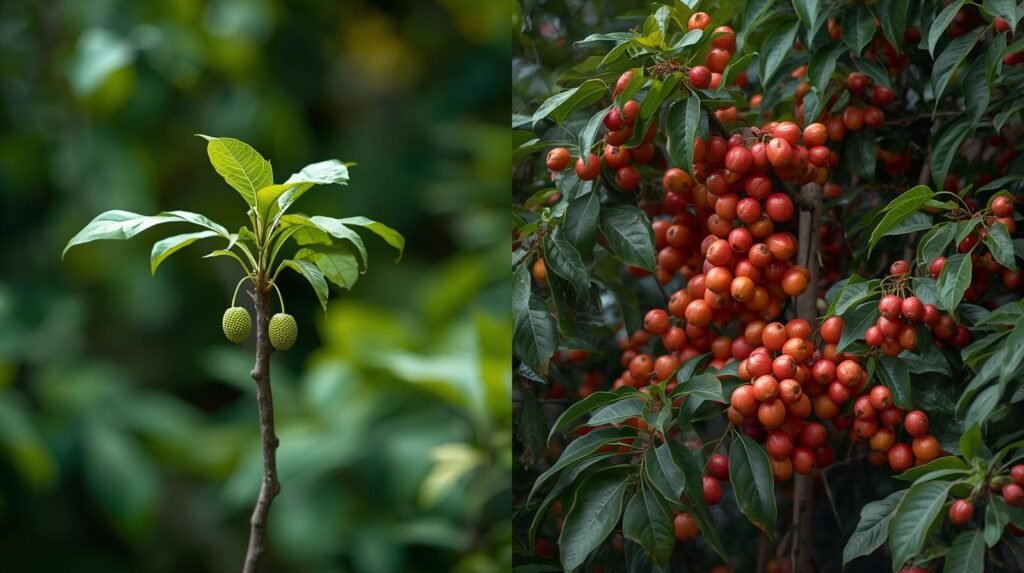
As fruits mature, color changes occur. Green turns into light red. Color development depends on sunlight. Shaded fruits color poorly. Nutrient balance affects color intensity. Proper care improves appearance. Color change indicates maturity stage. Observation helps harvesting decisions.
Seed and Flesh Development
Inside the fruit, seed develops fully. Flesh thickens and becomes juicy. Sugar content increases gradually. Adequate nutrition improves sweetness. Stress affects taste. Healthy trees produce better quality fruits. Internal development is crucial. Taste depends on care.
Water Management During Fruit Growth
Water stress causes cracking or drop. Consistent soil moisture is required. Overwatering leads to poor quality. Balanced irrigation supports fruit size. Avoid water fluctuations. Proper watering improves sweetness. Moisture stability is important. Careful management is necessary.
Role of Nutrients in Fruit Evolution
Potassium supports fruit size and sweetness. Calcium improves skin strength. Organic nutrients work best. Excess nitrogen reduces fruit quality. Balanced feeding supports development. Nutrient timing matters. Proper nutrition ensures healthy fruits. Soil health plays a key role.
Preventing Fruit Drop
Fruit drop is a common problem. Stress is the main cause. Irregular watering increases drop. Nutrient deficiency also contributes. Protect trees from strong winds. Maintain stable conditions. Organic sprays help. Prevention improves yield.
Pest Management During Fruit Stage
Fruits attract pests occasionally. Birds may damage fruits. Use netting if required. Neem oil controls insects. Avoid chemicals during fruiting. Clean garden reduces pest pressure. Healthy fruits resist damage. Organic protection is safest.
Fruit Maturation Process
Litchi fruits take several weeks to mature. Skin becomes fully red. Aroma increases. Fruits stop increasing in size. Sugar content peaks. Proper timing ensures best taste. Over-ripening reduces quality. Observation guides harvesting.
Harvesting Litchi Fruits
Harvest fruits with small branches attached. Avoid pulling fruits individually. Harvest in morning hours. Gentle handling prevents damage. Fruits are delicate after harvest. Correct harvesting improves shelf life. Timing affects sweetness. Harvesting is rewarding.
Post-Harvest Fruit Handling
Fresh litchi spoils quickly. Store in cool conditions. Avoid direct sunlight. Consume soon for best taste. Proper handling extends freshness. Homegrown fruits are best eaten fresh. Storage care matters. Quality depends on handling.
Seasonal Influence on Fruit Evolution
Weather affects fruit development. Excess rain causes cracking. Dry spells increase drop. Temperature influences sweetness. Seasonal planning improves results. Adapt care to climate. Observation helps adjustment. Nature plays a role.
Table: Litchi Fruit Evolution Stages
| Stage | Description |
|---|---|
| Flowering | Panicle formation |
| Pollination | Insect assisted |
| Fruit set | Initial fruit formation |
| Growth | Size and flesh development |
| Maturity | Color and sweetness |
Importance of Patience in Litchi Growing
Litchi fruiting takes time. Rushing causes mistakes. Each stage requires patience. Long-term care brings success. Trees improve with age. Experience builds confidence. Learning never stops. Patience rewards gardeners.
Benefits of Understanding Fruit Evolution
Better yield control. Reduced fruit drop. Improved fruit quality. Timely care decisions. Higher sweetness levels. Better harvesting timing. Increased confidence. Knowledge improves gardening success.
Conclusion
Understanding the evolution of litchi fruit helps growers achieve better harvests. Each stage from flower to fruit needs attention. Balanced care prevents problems. Observation and patience are key. Homegrown litchi is highly rewarding. Apply proper methods consistently. Enjoy the journey of growing litchi fruits.