Introduction to Growing Kiwi in Containers
Kiwi is a nutritious and exotic fruit that can be grown successfully in containers. Many people think kiwi needs large farms, but that is not true. With the right pot, soil, and support, kiwi thrives in small spaces. Container gardening allows better control over growth and health. Kiwi vines grow fast and produce attractive foliage. This guide explains complete kiwi growing in pots. It also answers the common question about kiwi being a berry. Beginners can grow kiwi confidently with this guide.
Understanding the Kiwi Plant Growth Habit
Kiwi is a vigorous climbing vine, not a tree. It requires strong support to grow properly. The vine produces long shoots that need training. Kiwi plants are perennial and long-living. Growth is rapid during warm seasons. Container growth controls excessive spreading. Understanding vine behavior helps manage space. Proper training improves fruiting success.
Is Kiwi a Berry or Not? Explained Simply
Botanically, kiwi is classified as a berry. Despite its fuzzy skin and large size, it fits berry definition. Berries develop from a single flower with one ovary. Kiwi seeds are embedded inside flesh. Unlike strawberries, kiwi meets true berry criteria. Scientifically, banana and kiwi are berries. This surprises many gardeners. Knowing this adds interesting knowledge. Kiwi’s classification does not affect cultivation.
Choosing the Right Kiwi Variety for Containers
Not all kiwi varieties suit containers. Dwarf and hardy kiwi varieties are ideal. Hardy kiwi grows smaller fruits but fruits faster. Self-fertile varieties simplify pollination. Some varieties require male and female plants. Container gardeners should prefer self-fertile types. Variety selection impacts yield. Climate compatibility is important. Choose wisely for best results.
Selecting the Perfect Container for Kiwi
Large and deep containers are necessary for kiwi. Minimum pot size should support root spread. Strong containers prevent tipping. Drainage holes are essential. Heavy pots provide stability for vines. Container size affects fruit production. Bigger pots mean healthier roots. Good container choice ensures long-term success.
Soil Preparation for Container Kiwi
Kiwi prefers loose, fertile, and well-draining soil. A mix of garden soil, compost, and sand works best. Soil should retain moisture lightly. Heavy soil causes root problems. Organic matter improves fertility. Proper soil supports flowering and fruiting. pH should be slightly acidic. Healthy soil equals healthy vines.
Planting Kiwi in a Container
Plant kiwi at the same depth as nursery pot. Do not bury the stem deeply. Water thoroughly after planting. Place container in bright location. Avoid disturbing roots initially. Allow plant to settle for a few weeks. Early stability promotes strong growth. Gentle care improves establishment.
Sunlight Requirements for Kiwi Fruiting
Kiwi vines need full sunlight for fruiting. Six to eight hours of sunlight is ideal. Insufficient light results in poor flowering. Morning sunlight is especially beneficial. Too much shade reduces fruit quality. Container placement matters greatly. Rotate pot for uniform exposure. Sunlight drives fruit sweetness.
Watering Needs of Container-Grown Kiwi
Kiwi requires consistent moisture. Soil should remain slightly moist. Overwatering leads to root rot. Underwatering causes flower drop. Deep watering encourages root growth. Drain excess water properly. Water more during summer. Balanced watering ensures fruit development.
Fertilizing Kiwi Plants Organically
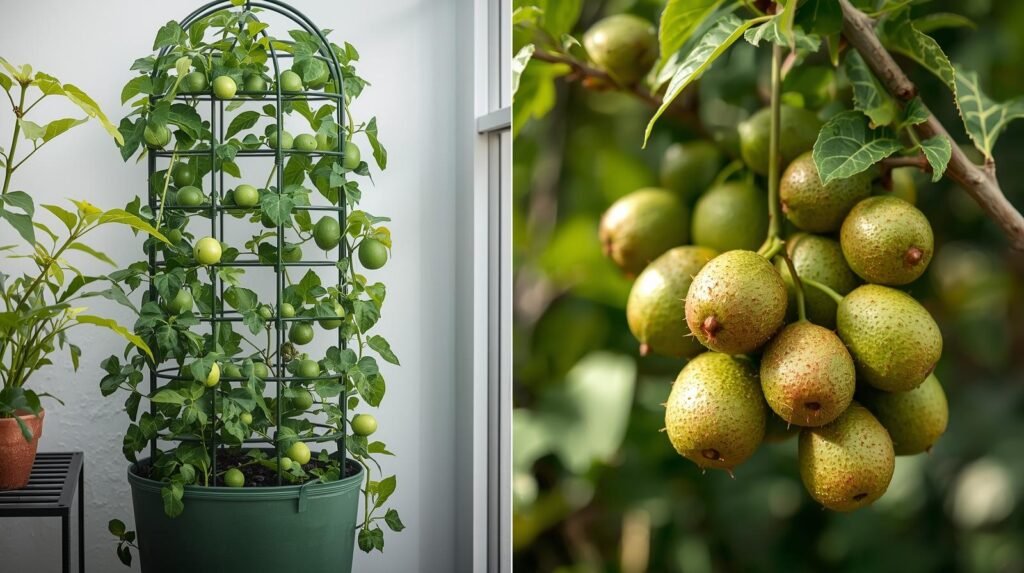
Organic fertilizers work best for kiwi. Compost and vermicompost improve soil health. Apply fertilizer every four weeks. Potassium supports fruit development. Avoid excessive nitrogen. Nitrogen promotes leaf growth over fruiting. Balanced feeding improves yield. Organic nutrition is sustainable.
Supporting and Training Kiwi Vines
Strong support is mandatory for kiwi. Trellises or stakes work well. Train vines horizontally for better fruiting. Remove unnecessary shoots. Proper training improves airflow. Sunlight reaches inner vines. Support prevents damage. Well-trained vines fruit better.
Pruning Kiwi for Better Fruiting
Pruning controls growth and improves yield. Remove weak and overcrowded branches. Kiwi fruits on new growth. Prune after harvesting season. Summer pruning controls excess growth. Proper pruning improves air circulation. Pruned vines produce better fruits. Regular pruning is essential.
Flowering and Pollination in Containers
Kiwi flowers appear in spring. Self-fertile varieties set fruit easily. Other varieties need male pollinators. Bees assist natural pollination. Hand pollination improves fruit set. Healthy flowers convert to fruits. Stress reduces flowering. Care during flowering is critical.
Fruit Development and Growth Stage
Fruits develop gradually after pollination. Consistent watering is essential. Nutrient supply supports fruit size. Avoid stress during fruiting. Fruits grow over several months. Container vines may produce fewer but larger fruits. Quality improves with care. Patience is necessary.
Harvesting Kiwi from Containers
Kiwi is harvested when firm but mature. Fruits ripen off the vine. Harvest carefully to avoid vine damage. Aroma increases near maturity. Harvest timing affects sweetness. Homegrown kiwi tastes superior. Proper harvesting improves storage life. Gentle handling preserves quality.
Seasonal Care for Container Kiwi
Summer requires frequent watering. Winter needs frost protection. Reduce watering during dormancy. Mulching protects roots. Seasonal adjustments prevent stress. Fertilize according to growth phase. Observation ensures health. Seasonal care boosts longevity.
Common Problems and Solutions
Yellow leaves indicate nutrient issues. Poor fruiting suggests low sunlight. Root rot occurs from poor drainage. Pest attacks are rare but manageable. Neem oil works organically. Early detection prevents damage. Healthy vines resist problems. Regular monitoring helps.
Table: Kiwi Container Growing Guide
| Aspect | Requirement |
|---|---|
| Pot size | Large and deep |
| Sunlight | Full sunlight |
| Soil | Fertile and well-draining |
| Watering | Moderate and regular |
| Fruiting time | Three to four years |
Benefits of Growing Kiwi in Containers
Container kiwi saves space. Fruits are chemical-free. Gardening improves mental health. Kiwi is rich in vitamin C. Container control improves quality. Decorative vines enhance beauty. Sustainable food production increases. Home gardening becomes rewarding.
Conclusion
Growing kiwi in containers is practical and productive. With correct variety, soil, and care, fruiting is achievable. Kiwi is botanically a berry, adding interest. Container growing allows control and convenience. Patience is essential for fruiting. Consistent care brings success. Start your kiwi growing journey today.