Paragraph 1: Introduction to Chrysanthemum Propagation
Chrysanthemum is one of the most popular flowering plants known for its vibrant colors and long blooming season. It is widely grown in home gardens and commercial flower farms. Growing chrysanthemum from cuttings is the fastest and most reliable method. Using garlic as a natural rooting booster enhances success. Garlic has antifungal and antibacterial properties. This method is organic and cost-effective. Gardeners prefer it for healthy root development. This article explains the complete process in detail.
Paragraph 2: Why Use Cuttings for Chrysanthemum
Cutting propagation produces identical plants to the parent. Flower color, size, and quality remain consistent. Seed propagation is slow and unpredictable. Cuttings establish faster and bloom earlier. This method ensures uniform growth. It is suitable for beginners and professionals. High survival rate makes it popular. Commercial growers rely on this method. It saves time and resources.
Paragraph 3: Role of Garlic in Rooting
Garlic acts as a natural growth enhancer. It prevents fungal infections in cuttings. Garlic extract stimulates root formation. It improves overall plant health. Unlike chemical hormones, garlic is safe and eco-friendly. It is easily available at home. Gardeners prefer organic solutions. Garlic protects cuttings from rot. This natural method is highly effective.
Paragraph 4: Best Season for Chrysanthemum Cuttings
Cool to moderate weather is ideal for chrysanthemum cuttings. Early spring and post-monsoon seasons are best. Avoid extreme heat and heavy rains. Morning hours are preferred for cutting collection. Moderate temperature supports rooting. Seasonal timing improves success rate. Environmental stability is important. Choosing correct season reduces losses.
Paragraph 5: Selecting Healthy Mother Plant
Choose a disease-free chrysanthemum plant with strong growth. The plant should be actively growing. Avoid flowering stems for cuttings. Healthy shoots root faster. Mother plant quality affects cuttings. Regularly pruned plants provide better material. Avoid pest-infected plants. Strong parents produce strong plants. Selection is crucial.
Paragraph 6: Preparing Chrysanthemum Cuttings
Cuttings should be taken from soft to semi-hard stems. Remove lower leaves carefully. Keep two or three leaves at the top. Use sharp and clean tools. Make clean cuts below nodes. Fresh cuttings root better. Proper preparation reduces moisture loss. Correct handling increases success rate. Cleanliness is important.
Paragraph 7: Preparing Garlic Solution
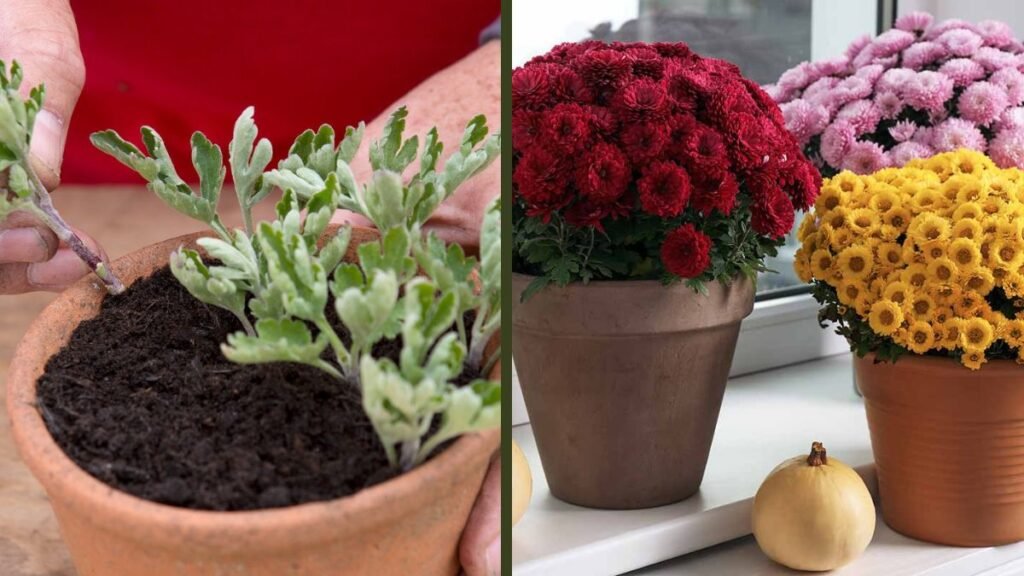
Crush fresh garlic cloves thoroughly. Mix with clean water. Let the solution rest for some time. Strain before use. Dip cuttings in garlic solution briefly. This protects against infection. Garlic solution acts as a rooting stimulant. Avoid strong concentration. Natural treatment improves survival. Simple preparation is effective.
Paragraph 8: Soil and Pot Preparation
Use well-drained and loose soil. Mix garden soil, sand, and compost. Avoid heavy or sticky soil. Good drainage prevents rot. Pots should have drainage holes. Sterilized soil prevents fungal growth. Moist soil supports rooting. Medium quality affects plant health. Preparation is important.
Paragraph 9: Planting the Cuttings
Insert treated cuttings gently into soil. Ensure at least one node is buried. Press soil lightly around cutting. Water lightly after planting. Avoid deep planting. Provide spacing for airflow. Place pots in shaded area. Correct planting ensures stability. Careful handling improves results.
Paragraph 10: Maintaining Moisture and Shade
Keep soil moist but not wet. Mist leaves regularly. Provide partial shade initially. Avoid direct sunlight. Humidity supports root formation. Reduce moisture after rooting. Gradual exposure strengthens plants. Controlled environment is beneficial. Consistency is necessary.
Paragraph 11: Rooting Timeline
Roots usually develop within two to three weeks. New leaf growth is a positive sign. Avoid disturbing cuttings early. Rooting speed depends on temperature. Garlic treatment accelerates rooting. Some cuttings may take longer. Patience is required. Successful rooting ensures healthy growth. Observation helps.
Paragraph 12: Transplanting Rooted Cuttings
Transplant rooted cuttings carefully. Use nutrient-rich soil. Avoid damaging roots. Water immediately after transplanting. Keep plants in shade initially. Gradual sunlight exposure is important. Proper transplanting reduces stress. Growth improves after establishment. Handle gently.
Paragraph 13: Fertilization for Chrysanthemum
Apply light fertilizer after establishment. Organic compost works well. Avoid excess nitrogen initially. Balanced nutrition supports flowering. Monthly feeding is sufficient. Healthy soil promotes strong growth. Overfeeding causes weak stems. Fertilization should be controlled. Organic methods are preferred.
Paragraph 14: Sunlight Requirement
Chrysanthemum plants require good sunlight. Full sun encourages flowering. Young plants need gradual exposure. Avoid harsh midday sun initially. Proper sunlight improves bloom quality. Lack of light reduces flowers. Choose open location. Balanced exposure is important. Sun management affects yield.
Paragraph 15: Pruning and Pinching
Pinching promotes bushy growth. Remove top shoots early. This increases branch formation. Pruning improves airflow. It also supports uniform flowering. Avoid late pinching. Proper timing is important. Regular maintenance improves plant shape. Healthy structure supports blooms.
Paragraph 16: Pest and Disease Prevention
Chrysanthemums are prone to aphids and mites. Inspect plants regularly. Garlic solution also acts as pest deterrent. Neem oil spray is effective. Remove infected parts quickly. Good hygiene reduces disease risk. Healthy plants resist pests. Early action prevents spread. Organic control is recommended.
Paragraph 17: Flowering Period
Chrysanthemums bloom seasonally. Flowering begins after proper vegetative growth. Balanced nutrition supports bloom size. Stress reduces flowering. Regular care ensures healthy buds. Garlic treatment improves plant strength. Flowers appear vibrant and long-lasting. Bloom quality depends on maintenance. Patience brings beauty.
Paragraph 18: Table – Benefits of Garlic in Cuttings
Table: Garlic Advantages
Row One: Natural antifungal protection
Row Two: Improves root development
Row Three: Easily available and cost-effective
Row Four: Eco-friendly and safe method
Row Five: Enhances overall plant health
Paragraph 19: Common Mistakes to Avoid
Using flowering stems reduces rooting success. Overwatering causes stem rot. Strong garlic solution damages cuttings. Poor soil delays growth. Direct sunlight stresses young cuttings. Early transplanting harms roots. Ignoring pests weakens plants. Avoiding mistakes improves results. Careful handling is key.
Paragraph 20: Conclusion
Growing chrysanthemum from cuttings with garlic is a natural and effective method. It ensures healthy root development and strong plants. This organic technique is easy for beginners. It reduces dependence on chemicals. With proper care, success rate is high. Chrysanthemums add vibrant beauty to gardens. Practice improves skills. Start with small batches. Gardening becomes more sustainable and rewarding.