Introduction to Rose Plant Bud Grafting
Rose bud grafting is one of the most popular and successful propagation methods used worldwide. Roses are valued for their beauty, fragrance, and commercial importance in gardens and flower markets. Bud grafting helps gardeners and nursery growers multiply high-quality rose varieties efficiently. This method ensures uniform flower color, size, and plant vigor. Compared to growing roses from seeds, grafting produces faster and more reliable results. Bud grafting also improves disease resistance when suitable rootstock is used. It is widely practiced in professional nurseries. Understanding the correct technique ensures high success rates.
What Is Rose Bud Grafting
Rose bud grafting is a vegetative propagation method where a single bud from a desired rose variety is inserted into a rootstock plant. The bud later develops into a new shoot that produces flowers identical to the parent plant. This technique is commonly known as T-budding or shield budding. It allows rapid multiplication of superior rose varieties. Bud grafting is preferred because it uses minimal plant material. The rootstock provides strong roots and adaptability. The scion bud determines flower quality. Proper alignment ensures successful union.
Importance of Grafting in Rose Cultivation
Grafting plays a crucial role in commercial rose production. It ensures consistent flower quality and uniform growth. Grafted roses flower earlier than seed-grown plants. Strong rootstocks improve nutrient uptake and drought tolerance. Disease-resistant rootstocks reduce losses. Grafting also allows delicate varieties to grow in difficult soils. Nursery owners depend on grafting for large-scale production. It supports year-round rose supply. Overall productivity and profitability increase significantly.
Best Rose Varieties for Bud Grafting
Almost all hybrid tea, floribunda, and climber roses are suitable for bud grafting. Popular varieties include red, pink, yellow, and white hybrid roses. Selection depends on market demand and climate. Buds should be taken from healthy, disease-free mother plants. Varieties with strong flowering performance are preferred. Local adapted varieties perform better. Color stability is maintained through grafting. Using elite varieties ensures commercial success.
Selection of Rootstock for Rose Grafting
Rootstock selection determines plant strength and longevity. Common rose rootstocks include Rosa indica, Rosa multiflora, and local wild rose species. Rootstock should have strong roots and straight stems. It must be disease-free and actively growing. Age of rootstock is usually six to eight months. Compatibility between rootstock and scion is essential. Strong rootstock supports better flowering. Poor rootstock reduces graft success.
Best Season for Rose Bud Grafting
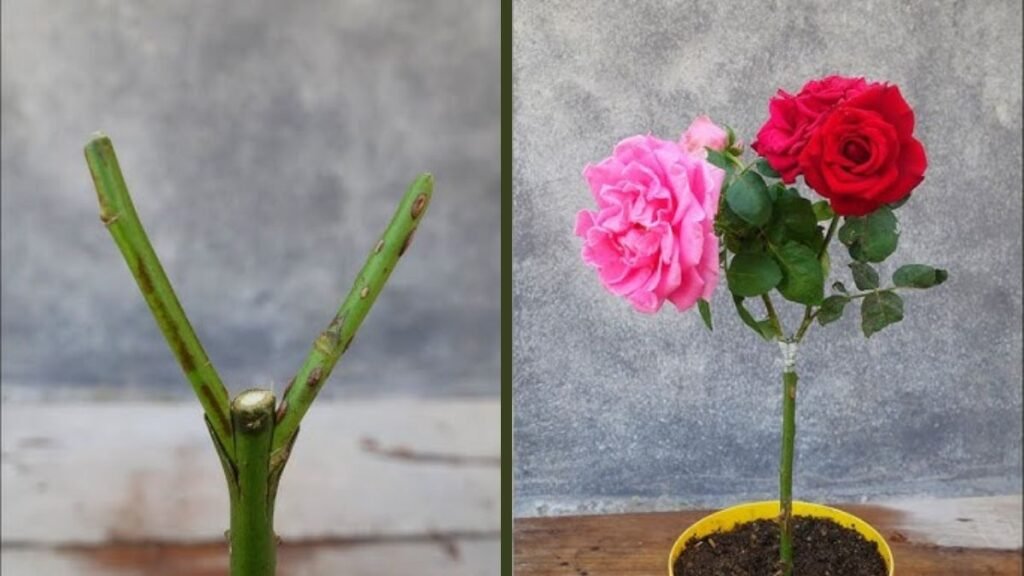
Seasonal timing greatly affects grafting success. The best time for rose bud grafting is when bark slips easily. In tropical regions, mild winter and early spring are ideal. Moderate temperature and humidity support healing. Avoid extreme heat or cold. Early morning grafting gives best results. Active sap flow helps bud union. Proper season selection can achieve very high success rates.
Tools Required for Rose Bud Grafting
Clean and sharp tools are essential for grafting. A budding knife is used to cut the bud and bark. Pruning shears help prepare rootstock. Plastic strips or budding tape are used for tying. Alcohol or disinfectant is required for tool sterilization. Labels help variety identification. Clean tools prevent infection. Proper equipment ensures precise cuts. Good tools improve success.
Preparation of Bud Scion
Bud preparation is a critical step. Select mature buds from healthy shoots. Buds should be dormant and well-developed. Leaves are removed, leaving a small petiole. Cut the bud carefully with a thin layer of bark. Avoid damaging the bud eye. Fresh buds give best results. Keep buds moist until use. Proper preparation ensures quick union.
Step-by-Step Rose Bud Grafting Process
First, make a T-shaped cut on the rootstock bark. Gently lift the bark edges. Insert the prepared bud into the cut. Ensure cambium layers touch properly. Tie the graft securely with plastic strip. Leave the bud exposed. Do not tie too tightly. Place the plant in shade. Regular monitoring is essential.
Aftercare of Bud Grafted Rose Plants
After grafting, plants should be kept in partial shade. Water regularly but avoid waterlogging. Remove shoots growing below the graft. Loosen ties after two to three weeks. Bud swelling indicates success. Protect plants from pests. Apply mild fungicide if needed. Gradual sunlight exposure improves growth.
Bud Sprouting and Growth Stage
Successful buds sprout within three to four weeks. New shoots emerge from the bud eye. Once sprouting begins, cut back the rootstock above the bud. This directs energy to the grafted bud. Support young shoots with sticks. Healthy growth indicates strong union. Weak buds should be removed. Proper care ensures strong plant development.
Training and Pruning of Grafted Roses
Training shapes the rose plant. Remove unwanted shoots. Encourage balanced branching. Pruning improves air circulation. Dead and weak branches should be removed. Proper pruning increases flower size. Grafted roses respond well to pruning. Training ensures long-term productivity. Well-shaped plants look attractive.
Nutrient Management for Grafted Roses
Balanced nutrition supports healthy growth. Organic compost improves soil health. Nitrogen supports leaf growth. Phosphorus strengthens roots. Potassium improves flowering. Micronutrients prevent deficiencies. Avoid excessive fertilizer early. Gradual feeding improves results. Healthy nutrition leads to better blooms.
Common Problems in Rose Bud Grafting
Bud drying is a common issue. Poor cambium contact causes failure. Overwatering leads to rot. Pest attack damages buds. Wrong season reduces success. Poor rootstock selection weakens plants. Regular monitoring prevents losses. Correct techniques reduce problems.
Advantages of Rose Bud Grafting
Bud grafting produces uniform plants. Flower quality remains consistent. Plants flower earlier. Less scion material is required. Success rate is high. Suitable for mass production. Cost-effective technique. Widely accepted worldwide.
Economic Benefits for Growers
Grafted roses fetch higher market prices. Uniform quality improves demand. Early flowering increases turnover. Nursery businesses benefit greatly. Reduced plant loss improves profit. Export quality flowers are possible. Long-term productivity increases income.
Comparison: Seed Roses vs Grafted Roses
| Aspect | Seed Grown Roses | Bud Grafted Roses |
|---|---|---|
| Flower Quality | Variable | Uniform |
| Time to Bloom | Long | Short |
| Disease Resistance | Low | Better |
| Commercial Value | Low | High |
| Reliability | Uncertain | Very Reliable |
Rose Bud Grafting for Home Gardens
Home gardeners prefer grafted roses. Plants establish quickly. Less waiting time for flowers. Maintenance is easy. Suitable for pots and gardens. Wide variety choices available. Grafted roses perform well in limited space. Ideal for beginners.
Long-Term Care of Grafted Rose Plants
Regular watering is essential. Prune after flowering. Apply organic manure periodically. Protect from pests. Maintain soil drainage. Replace weak plants early. Proper care ensures years of blooming. Healthy plants reward with abundant flowers.
Conclusion
Rose bud grafting is a proven and efficient propagation method. It ensures early flowering, uniform quality, and strong plant growth. With correct technique and care, success rates are high. This method benefits both home gardeners and commercial growers. Grafting preserves superior rose varieties. Adopting bud grafting improves productivity and profitability. It remains the backbone of modern rose cultivation.