Introduction to High-Yield Melon Growing
Melons are loved for their sweet flavor, refreshing taste, and high market value, yet many gardeners struggle with low yields. The secret to harvesting more melons lies not only in good seeds but also in modern planting methods. Traditional ground planting often wastes space and energy. New planting techniques improve root health, airflow, and nutrient absorption. These methods are simple, affordable, and suitable for home gardens. By understanding plant behavior and growth habits, gardeners can dramatically increase melon production. This guide reveals proven secrets used by successful growers.
Understanding Melon Growth Habits
Melon plants are vigorous vines with spreading growth. They require warm temperatures, sunlight, and fertile soil. Flowers appear early, but fruit development depends on strong roots. Poor root systems result in fewer melons. Understanding how vines grow helps in planning better planting layouts. Healthy vines mean more female flowers. More flowers result in higher fruit yield. Growth habit knowledge is the foundation of success.
Importance of Root Strength
Roots determine how much water and nutrients a plant can absorb. Shallow or weak roots limit fruit size and number. New planting methods focus on deep, aerated soil. Strong roots support heavy fruits without stress. Healthy roots also increase resistance to disease. Improving root conditions is one of the biggest yield secrets. Roots grow best in loose, organic soil.
Raised Bed Planting for Melons
Raised beds improve drainage and soil temperature. Warm soil accelerates early growth. Raised beds prevent waterlogging during rains. Roots expand freely in loose soil. This method increases plant vigor significantly. Raised beds also reduce weed pressure. More energy goes into fruit production instead of survival.
Pit Planting Technique
Pit planting involves digging deep pits and filling them with compost. This creates a nutrient-rich zone for roots. Melon roots grow deep and strong. Pits retain moisture longer. Plants suffer less during hot weather. This method is excellent for dry regions. Pit planting consistently improves yield.
Spacing Secrets for More Fruit
Overcrowding is a common mistake. Each melon plant needs space to breathe. Proper spacing improves airflow and sunlight penetration. Better airflow reduces fungal diseases. Sunlight improves flowering and sweetness. Correct spacing ensures each plant gets enough nutrients. Fewer plants can actually produce more fruit.
Vertical Support for Vines
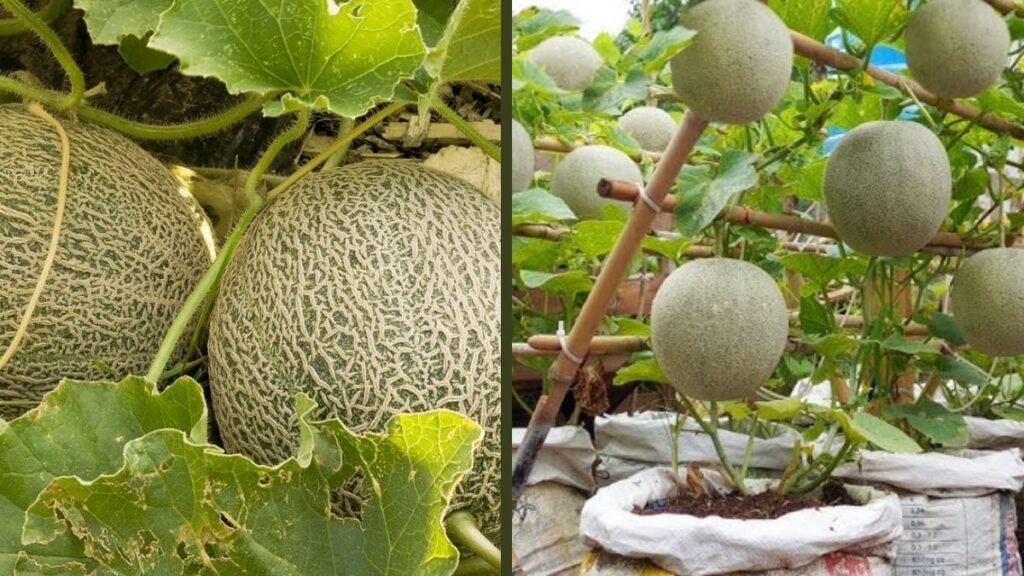
Allowing vines to spread on the ground causes rot and pest damage. Supporting vines vertically improves fruit quality. Trellising keeps fruits clean and healthy. Air circulation improves dramatically. Plants become easier to manage. Vertical growth saves space and increases harvest density.
Hand Pollination for Higher Yield
Natural pollination may be inconsistent. Hand pollination ensures fruit set. Gently transferring pollen increases success rate. Especially useful in urban gardens. Pollinated flowers develop into uniform fruits. This simple practice boosts yield without cost.
Pruning for Productivity
Removing excess side shoots directs energy to fruits. Controlled pruning balances growth. Too many vines reduce fruit size. Strategic pruning improves sweetness and uniformity. Healthy pruning increases overall yield. This is a key secret used by experienced growers.
Mulching to Support Growth
Mulch conserves moisture and controls weeds. Organic mulch improves soil structure. It regulates soil temperature. Roots remain cool in summer. Mulching reduces water stress. Healthy plants produce more melons.
Natural Fertilization Methods
Compost and vermicompost work best. Banana peel water adds potassium. Wood ash supplies micronutrients. Organic fertilizers release nutrients slowly. This steady feeding supports continuous fruit growth. Chemical overuse reduces fruit quality.
Watering Techniques That Increase Yield
Deep watering encourages deep roots. Frequent shallow watering weakens plants. Morning watering reduces disease risk. Drip irrigation is ideal. Consistent moisture prevents fruit cracking. Proper watering directly impacts yield.
Pest Control Without Chemicals
Healthy plants resist pests better. Neem oil controls insects naturally. Removing infected leaves prevents spread. Crop diversity reduces pest pressure. Chemical-free control protects pollinators. Balanced ecology supports higher yield.
Selecting High-Yield Varieties
Choose varieties adapted to local climate. Hybrid or improved open-pollinated varieties yield more. Disease-resistant types perform better. Seed quality matters greatly. Good genetics combined with new planting methods maximize output.
Supporting Heavy Fruits
Large melons need support when grown vertically. Net slings or cloth support fruits. This prevents vine damage. Fruits develop evenly. Quality improves significantly. Support is essential for vertical success.
Harvest Timing for Continuous Production
Harvesting at the right stage encourages new flowering. Overripe fruits reduce plant energy. Timely harvesting improves sweetness. Regular picking extends production period. Proper timing maximizes total harvest.
Table: Traditional vs New Planting Methods
| Aspect | Traditional Ground Planting | New Planting Methods |
|---|---|---|
| Root Strength | Moderate | Strong |
| Space Usage | High | Efficient |
| Disease Risk | Higher | Lower |
| Yield | Moderate | High |
| Fruit Quality | Average | Superior |
| Maintenance | Difficult | Easier |
Common Mistakes to Avoid
Overcrowding plants reduces yield. Ignoring soil health limits growth. Poor pollination leads to flower drop. Overwatering causes root problems. Avoiding these mistakes ensures success.
Long-Term Soil Health Benefits
Organic methods improve soil fertility over time. Beneficial microbes increase. Soil structure improves. Future crops benefit automatically. Sustainable practices lead to consistent yields.
Conclusion
Harvesting more melons is not about luck but smart planting. New methods like raised beds, pit planting, pruning, and vertical growth transform results. With simple changes, gardeners can enjoy abundant, sweet melons every season.