Introduction: Growing Luffa Without Land
Luffa, also known as sponge gourd, is a fast-growing and highly productive vegetable. Many people believe luffa requires large garden space and strong soil beds. This idea stops many urban families from growing it at home. Plastic tub gardening changes this completely. With simple tubs, luffa can grow vigorously even on balconies or rooftops. This method allows anyone to enjoy fresh vegetables without land. With proper care, plastic tub luffa plants give long, healthy fruits.
Why Luffa Is Perfect for Container Growing
Luffa plants have strong climbing vines and adaptable roots. They perform well in deep containers when supported properly. Their fast growth makes results visible quickly. Luffa also thrives in warm climates and needs basic care. Container growing helps control soil quality and watering. Pest issues are reduced significantly. This makes luffa an excellent choice for home gardeners with limited space.
Advantages of Using Plastic Tubs
Plastic tubs are affordable and easily available. They retain moisture better than clay pots. Large tubs provide enough root space for vigorous growth. Tubs can be moved easily to manage sunlight. Drainage holes can be customized easily. Reusing tubs promotes eco-friendly gardening. This method saves money and space while increasing yield.
Choosing the Right Plastic Tub
Select tubs with a depth of at least eighteen inches. Wider tubs provide better stability. Ensure multiple drainage holes at the bottom. Clean tubs thoroughly before use. Avoid cracked or weak tubs. Proper container selection directly affects root health. Strong tubs support healthy vine growth and fruit development.
Preparing the Best Soil Mix
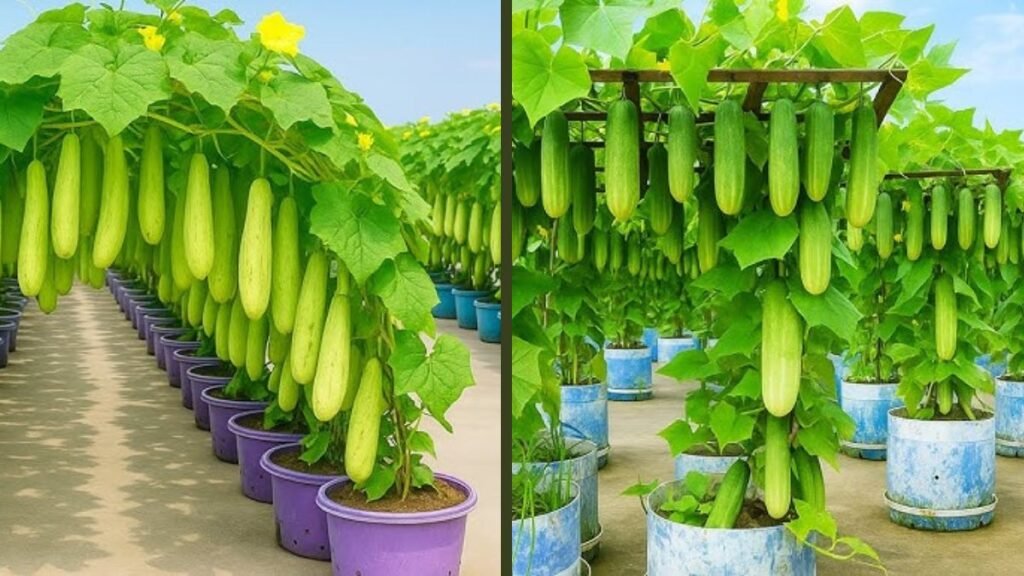
Luffa needs loose and fertile soil. Mix garden soil, compost, and cocopeat evenly. Add vermicompost for extra nutrition. Sand improves drainage and prevents compaction. Avoid heavy clay soil. Healthy soil encourages deep root growth. Good soil preparation results in faster flowering and fruiting.
Seed Selection and Germination
Choose high-quality luffa seeds from reliable sources. Soak seeds in warm water overnight. This softens the seed coat and improves germination. Sow seeds directly in tubs or nursery trays. Germination usually occurs within a week. Healthy seedlings grow vigorously. Good seed quality ensures strong plants.
Transplanting Seedlings into Tubs
Transplant seedlings when they have three to four leaves. Handle roots gently during transplanting. Place seedlings in the center of the tub. Cover roots firmly but do not compact soil. Water immediately after planting. Keep tubs in partial shade for two days. This prevents transplant shock.
Providing Proper Support for Luffa Vines
Luffa plants need strong vertical support. Use bamboo poles, trellises, or ropes. Secure supports firmly in the tub. Guide vines upward regularly. Proper support improves airflow and sunlight exposure. Hanging fruits develop straight and healthy. Strong support prevents vine damage.
Sunlight Requirements
Luffa needs six to eight hours of direct sunlight daily. Place tubs in sunny rooftop or balcony areas. Rotate tubs if sunlight is uneven. Insufficient light delays flowering. Good sunlight ensures strong vines and healthy fruits. Balanced exposure leads to higher yield.
Watering Schedule
Water luffa plants regularly, especially during hot weather. Ensure excess water drains out easily. Avoid waterlogging, which causes root rot. Morning watering is ideal. Consistent moisture supports fast vine growth. Balanced watering improves fruit quality.
Organic Fertilization for Heavy Yield
Apply liquid compost every ten days. During flowering, use potassium-rich organic fertilizer. Avoid excessive nitrogen. Organic feeding improves soil life and fruit taste. Regular nutrition ensures continuous flowering. Proper feeding results in long, tender luffa fruits.
Pollination Tips for Better Fruit Set
Luffa plants produce male and female flowers. Natural pollination occurs easily with insects. In small spaces, hand pollination helps. Transfer pollen gently using a brush. Morning pollination works best. Good pollination ensures proper fruit shape.
Pruning and Vine Management
Remove weak side shoots occasionally. Trim excess leaves for better airflow. Pruning directs energy toward fruit production. Well-managed vines remain healthy. Proper pruning reduces disease risk. Healthy vines produce more fruits.
Pest and Disease Control
Common pests include aphids and fruit flies. Neem oil spray once a week is effective. Remove infected leaves immediately. Good airflow prevents fungal diseases. Clean surroundings keep plants healthy. Preventive care works best.
Harvesting Luffa at the Right Stage
Harvest luffa when fruits are tender and green. Do not allow fruits to overmature. Use scissors to cut fruits gently. Regular harvesting encourages new flowers. Timely harvest ensures better taste. Continuous picking increases yield.
Using and Storing Luffa
Fresh luffa can be cooked immediately. Store short-term in a cool place. Avoid washing before storage. Homegrown luffa tastes fresher and softer. Regular harvest keeps supply steady.
Common Mistakes to Avoid
Using shallow tubs limits growth. Overwatering causes root problems. Poor support damages vines. Lack of sunlight reduces yield. Avoiding these mistakes ensures success.
Table: Plastic Tub Luffa Growing Guide
Tub depth – At least eighteen inches
Sunlight – Six to eight hours daily
Soil mix – Loose, compost-rich, well-drained
Watering – Regular but moderate
Support – Strong vertical trellis
Harvest time – Fifty to sixty days
Why Plastic Tub Growing Works
Controlled soil improves growth. Roots remain healthy. Pests are reduced. Space is optimized. Maintenance becomes easier. Yield increases naturally.
Conclusion
Growing luffa in plastic tubs is simple and productive. No garden is needed to enjoy fresh vegetables. With proper care, anyone can turn their home green. This method is ideal for urban families and beginners. Start today and enjoy homegrown luffa.