Cucumbers are a refreshing addition to any garden, perfect for salads, pickles, and snacks. But what if you don’t have a backyard garden? Bucket gardening makes growing cucumbers at home simple, space-efficient, and highly productive. With just a few buckets and some basic care, homeowners across the US can enjoy fresh, crisp cucumbers right from their terraces, balconies, or patios.
This guide will take you through a step-by-step method for growing cucumbers in buckets, ensuring maximum yield with minimal effort.
Why Grow Cucumbers in Buckets?
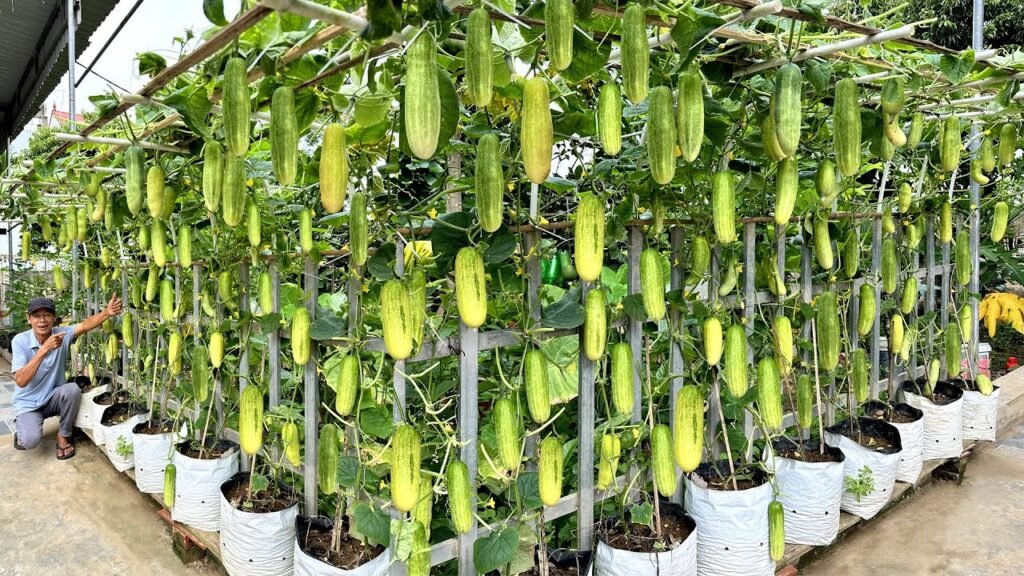
Bucket gardening is perfect for homeowners who want fresh produce without a traditional garden. Here’s why cucumbers thrive in buckets:
- Space-saving: Ideal for patios, balconies, or small yards
- Portability: Move buckets to capture sunlight or shelter plants from extreme weather
- Soil control: Manage fertility, moisture, and drainage easily
- Reduced pests: Elevating plants minimizes soil-borne diseases
- High yield: Even one bucket can produce a significant harvest
Whether you’re a seasoned gardener or a beginner, bucket gardening offers a simple, efficient solution for growing cucumbers.
Step 1: Choosing the Right Bucket
Selecting the proper bucket is the first step to a successful cucumber harvest.
Bucket Guidelines
- Size: Minimum 5–7 gallons (20–25 liters) per plant
- Material: Plastic, metal, or any sturdy container
- Drainage: Drill 4–6 holes at the bottom to prevent waterlogging
- Shape: Tall buckets allow better root development and support
Pro Tip: Paint metal buckets white to reflect heat or use fabric grow bags to improve aeration and reduce overheating.
Step 2: Preparing the Bucket
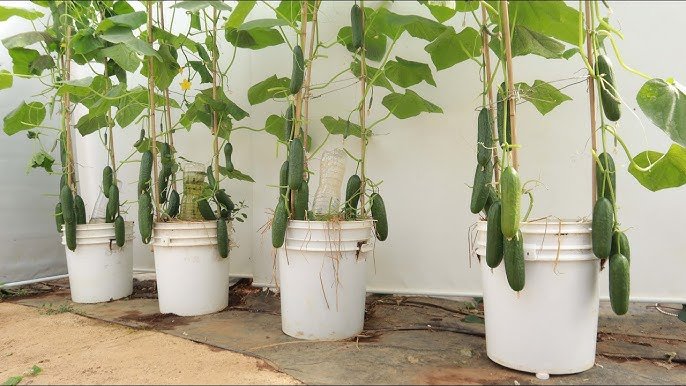
- Clean the bucket thoroughly to remove dirt or residues.
- Add a layer of gravel or broken pottery at the bottom for drainage.
- Place the bucket in a sunny spot receiving 6–8 hours of sunlight daily.
- Fill the bucket with fertile, well-draining soil (see next step).
Proper preparation ensures that cucumber roots grow strong and healthy, resulting in bigger fruits.
Step 3: Preparing the Soil Mix
Cucumbers are heavy feeders, so soil preparation is key to a juicy, high-yield harvest.
Ideal Soil Mix
- 50% garden soil
- 30% compost or vermicompost
- 20% cocopeat or sand for drainage
Optional Additives
- Bone meal for strong root development
- Neem cake to deter pests
- Wood ash or potash to boost flowering and fruiting
Mix thoroughly to create a loose, nutrient-rich medium that retains moisture yet drains well.
Step 4: Choosing the Right Cucumber Variety
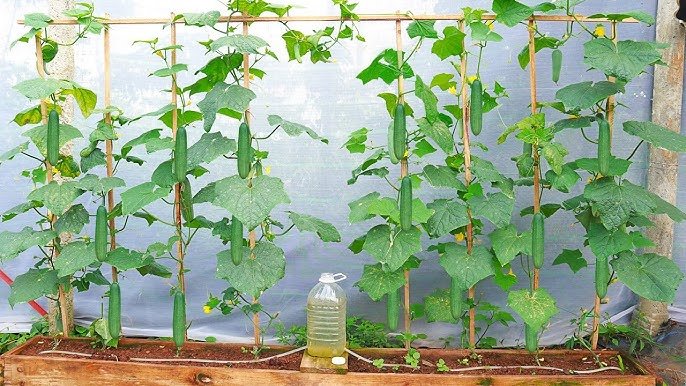
The right variety ensures fast growth and high yield in buckets.
Recommended Varieties for Bucket Gardening
- Bush cucumbers: Compact and ideal for small spaces
- Mini cucumbers: Produce quickly and prolifically
- Persian cucumbers: Crisp, flavorful, and container-friendly
- Determinate varieties: Limited growth, perfect for bucket constraints
Select container-friendly varieties for optimal fruit production.
Step 5: Planting Cucumbers in Buckets
Cucumbers can be grown from seeds or seedlings, with seedlings providing a faster harvest.
From Seeds
- Sow 2–3 seeds per bucket, 1 inch deep in soil.
- Keep soil moist until germination (7–10 days).
- Thin to the strongest plant after 2–3 weeks.
From Seedlings
- Transplant seedlings with 4–6 true leaves.
- Plant deeply to encourage root growth.
- Water gently to settle soil.
Spacing: One plant per 5–7 gallon bucket is ideal for optimal yield.
Step 6: Providing Support
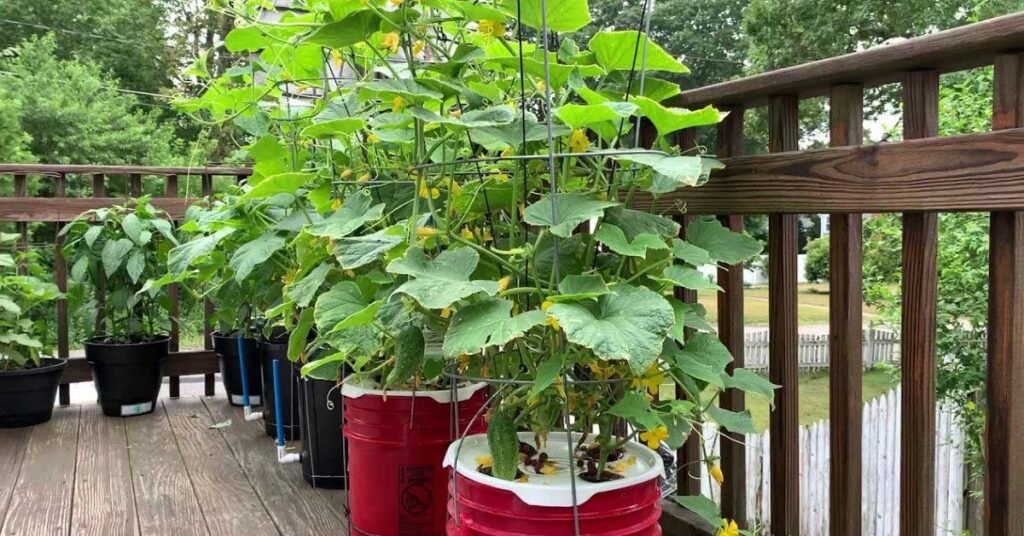
Cucumbers are climbers and need support for vertical growth:
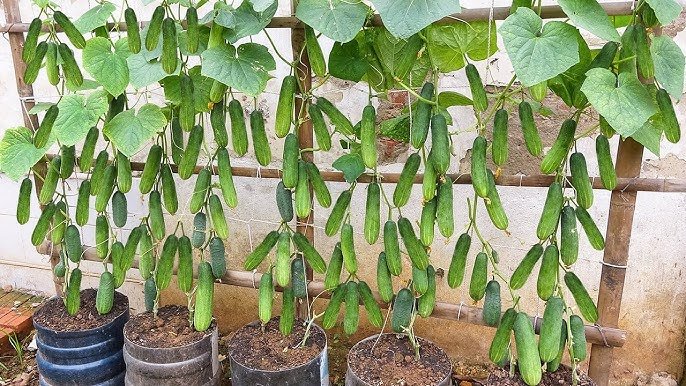
- Bamboo stakes, trellis nets, or PVC pipe frames
- Tie vines loosely with soft cloth as they grow
- Vertical support prevents leaves from touching the soil, reducing disease
Supporting cucumbers encourages straighter fruits and higher yields.
Step 7: Sunlight Requirements
Cucumbers thrive in full sun, which is critical for fruit development:
- Minimum: 6 hours/day
- Optimal: 7–8 hours/day
- Provide partial shade during extreme afternoon heat
Good sunlight ensures strong stems, lush foliage, and crisp fruits.
Step 8: Watering Cucumbers
Consistent moisture is crucial for juicy, flavorful cucumbers.
Watering Guidelines
- Keep soil evenly moist but not waterlogged
- Water at the base to avoid leaf diseases
- Summer: Water daily or every other day
- Cooler months: Water every 2–3 days
- Mulch with straw or leaves to retain moisture
Pro Tip: Uneven watering can cause bitter or misshapen cucumbers.
Step 9: Fertilizing for High Yield
Cucumbers are heavy feeders and need regular nutrients for maximum fruiting.
Fertilizer Schedule
- Every 2 weeks: Add compost or vermicompost around the plant
- Every 10 days: Use liquid fertilizer (cow dung water, compost tea, or seaweed extract)
- Every 20 days: Apply potash (banana peel, wood ash) to encourage flowering and fruit size
Balanced feeding ensures continuous flowering and bountiful harvests.
Step 10: Pollination Tips
Cucumber flowers are mostly female and require pollination.
- Gently shake flowers to transfer pollen
- Hand-pollinate with a small brush if pollinators are scarce
- Plant flowering companion plants nearby to attract bees
Proper pollination ensures higher fruit set and larger cucumbers.
Step 11: Pest and Disease Management
Even bucket-grown cucumbers can encounter pests:
Common Issues
- Aphids and whiteflies
- Caterpillars
- Powdery mildew
Solutions
- Spray neem oil or organic insecticides weekly
- Remove affected leaves immediately
- Ensure good spacing and airflow
- Avoid overhead watering
Healthy plants produce clean, disease-free cucumbers consistently.
Step 12: Harvesting Cucumbers
Cucumbers grow fast and should be harvested regularly for continuous production.
Harvesting Tips
- Pick fruits when firm, dark green, and fully grown
- Harvest every 2–3 days
- Overripe cucumbers reduce overall yield and affect plant energy
Expected Yield: Each bucket can produce 10–20 cucumbers per season, depending on variety and care.
Advantages of Bucket Cucumber Gardening
- No garden required; perfect for urban homeowners
- Space-efficient and portable
- Control over soil, water, and nutrients
- Reduced exposure to pests and diseases
- Quick, continuous harvests
- Ideal for terraces, balconies, and patios
Even a few buckets can supply fresh cucumbers for the entire family all season long.
Final Thoughts: Juicy Harvest from Simple Buckets
Growing cucumbers in buckets is easy, cost-effective, and highly rewarding. With the right bucket, soil, sunlight, watering, fertilization, and support, even small spaces can yield abundant, crisp cucumbers.
This method transforms urban patios and balconies into productive mini cucumber farms, providing fresh, organic vegetables right at home. By following these simple steps, homeowners across the US can enjoy juicy, high-yield cucumbers with minimal effort.