Growing vegetables at home is a dream for many, but what if you don’t have a backyard, terrace, or garden space? Does that mean you have to give up on fresh, homegrown vegetables? Absolutely not! With a little creativity, everyday materials, and a smart setup, you can grow cabbage and other leafy greens right at home, even in small spaces.
This article will show you how to turn plastic bottles into a fully functional cabbage garden, step by step. You’ll learn how to set it up, maintain it, and harvest crisp, healthy cabbages without the need for soil beds, large pots, or expensive equipment.
Why Plastic Bottle Gardening Works
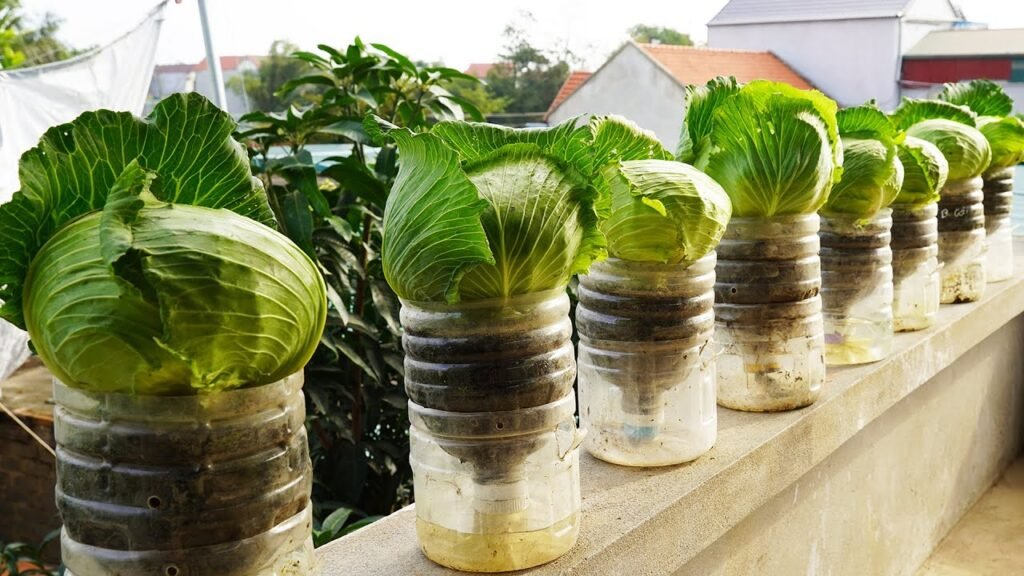
Plastic bottle gardening is one of the simplest and most effective urban gardening methods. Here’s why it works so well:
1. Space-Saving
Vertical arrangement allows you to grow multiple plants in a small area, such as a balcony, window sill, or kitchen ledge.
2. Reuses Waste
Instead of throwing away plastic bottles, you repurpose them into planters, making your garden eco-friendly.
3. Controlled Growth
Bottles help maintain moisture levels and prevent soil-borne diseases, ensuring healthier plants.
4. Portable and Flexible
You can move bottles to optimize sunlight or protect plants from heavy rain or harsh winds.
Materials Needed

To start your plastic bottle cabbage garden, you’ll need:
- Empty plastic bottles (1.5–2 liters work best)
- Sharp knife or scissors
- Lightweight potting mix (50% compost, 50% cocopeat or garden soil)
- Cabbage seeds or seedlings
- Rope or strong string for vertical setup
- Watering can or bottle for irrigation
- Optional: Fertilizer (organic is best, e.g., compost or vermicompost)
Step 1: Prepare the Bottles
- Wash the bottles thoroughly to remove any residues.
- Cut a rectangular opening on the side of each bottle. This will serve as the planting area.
- Punch small drainage holes at the bottom to prevent waterlogging.
- Optional: If you plan a vertical garden, make holes on the sides for threading ropes through to hang bottles.
Your bottles are now ready to hold soil and seedlings.
Step 2: Arrange Your Vertical Garden
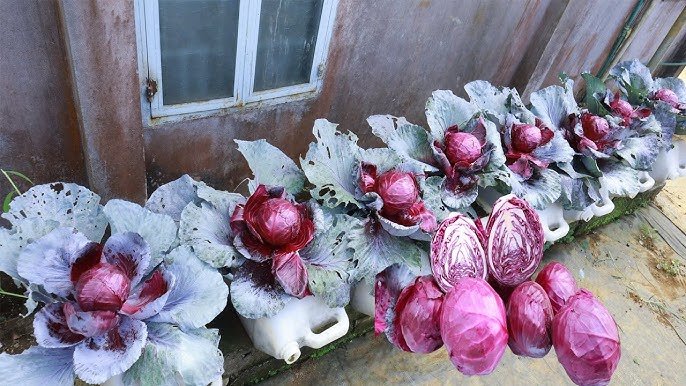
If you have limited space, vertical gardening is ideal:
- Choose a sunny wall, balcony railing, or sturdy frame.
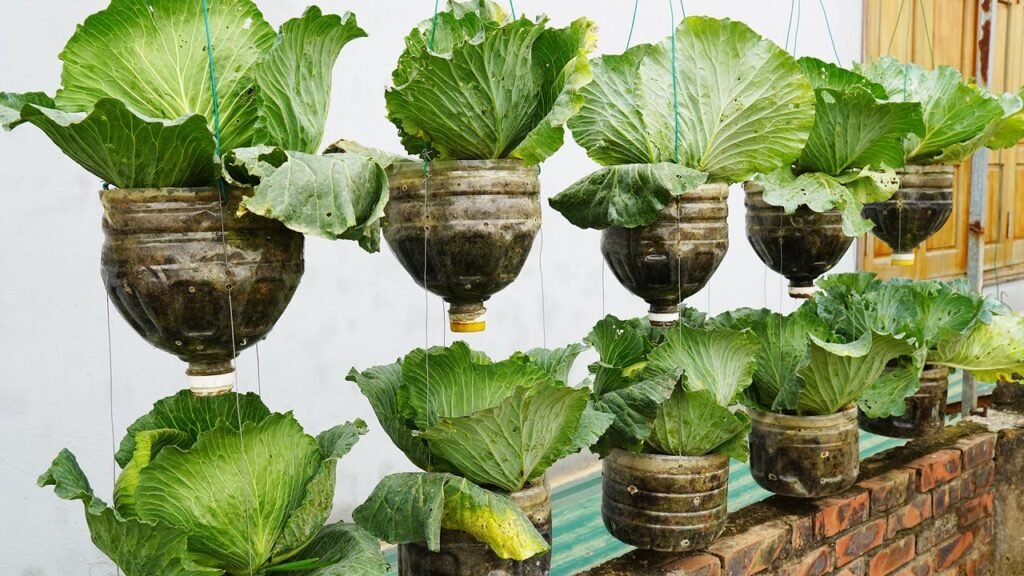
- Thread a strong rope through the holes in the bottles.
- Space bottles evenly to ensure airflow and sunlight reaches each plant.
- Alternatively, place bottles side by side on a windowsill or ledge for a horizontal arrangement.
Step 3: Add Soil and Plant the Cabbage
- Fill each bottle with the potting mix, leaving 1–2 cm from the top.
- Plant cabbage seeds or seedlings in the soil.
- If using seeds, plant 2–3 per bottle; thin to 1 strong plant after germination.
- If using seedlings, plant carefully to avoid damaging roots.
- Gently press soil around the base to stabilize the plant.
- Water lightly immediately after planting.
Step 4: Watering and Fertilizing
Cabbage plants need consistent moisture but not soggy soil.
Watering Tips
- Water bottles once a day in hot weather or every 2–3 days in cooler weather.
- Use a small watering can or bottle to pour water slowly, allowing soil to absorb moisture.
- Ensure excess water drains from the bottom holes.
Fertilizing Tips
- Add organic fertilizer every 2–3 weeks.
- Use vermicompost tea or diluted compost water for strong, leafy growth.
- Avoid over-fertilizing with nitrogen; too much encourages leaves but reduces head formation.
Step 5: Sunlight and Placement
Cabbage thrives in cool to moderate sunlight.
- Ensure 4–6 hours of sunlight daily.
- If indoors, place near a sunny window or under a grow light.
- Rotate bottles occasionally to allow even growth on all sides.
Step 6: Protecting Your Plants
Even in bottles, cabbages can face:
- Pests – Aphids, caterpillars, and whiteflies can attack.
- Fungal diseases – Overwatering or poor airflow can cause rot.
Preventive Measures
- Spray organic neem oil weekly to repel pests.
- Maintain airflow by spacing bottles and pruning leaves if necessary.
- Avoid overhead watering; water directly into the soil opening.
Step 7: Harvesting Your Cabbage
Cabbages are usually ready to harvest in 70–90 days, depending on the variety.
- Check for firm, well-formed heads.
- Cut the cabbage at the base using a clean knife.
- Side leaves can be trimmed as the head grows to ensure healthy development.
- With proper care, some cabbages may regrow smaller secondary heads.
Tips for Bigger, Healthier Cabbages in Bottles
1. Choose Compact Varieties
- Some cabbage varieties grow better in containers or small spaces. Examples: ‘Golden Acre’ or ‘Green Jersey’.
2. Rotate Water and Fertilizer
- Avoid stagnant water at the bottom; rotate watering times.
- Use organic fertilizers every 2–3 weeks for nutrient-rich leaves.
3. Thin Seedlings
- When multiple seeds are planted, thin weaker plants to allow one strong cabbage per bottle.
4. Support the Bottles
- Ensure vertical bottles are securely hung to prevent falling as the plant grows heavier.
5. Companion Planting
- Grow herbs like mint or basil in nearby bottles to repel pests naturally.
Advantages of a Plastic Bottle Cabbage Garden
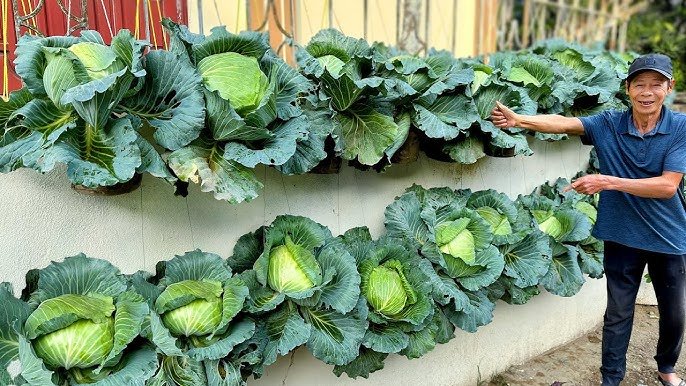
- No need for a traditional garden – perfect for apartments.
- Recycles waste – good for the environment.
- Reduces pests – elevated bottles minimize soil-borne issues.
- Portable – easy to move if weather conditions change.
- Low maintenance – simple watering and fertilizing are enough.
Creative Ideas to Expand Your Bottle Garden
- Multi-tiered vertical wall – grow several layers of cabbages, lettuce, and herbs.
- Mixed vegetables – plant radishes, spinach, or green onions in alternating bottles.
- Decorative arrangement – paint bottles or wrap with jute for a garden aesthetic.
- Rooftop mini-garden – create an urban oasis with colorful vegetables in bottles.
Final Thoughts
You don’t need a backyard, a garden, or expensive tools to grow fresh vegetables. Plastic bottle gardening makes it possible for anyone—urban dwellers, beginners, or busy individuals—to enjoy homegrown, fresh, and healthy cabbage.
With a simple setup, minimal maintenance, and consistent care, these humble bottles can produce a thriving, sustainable garden. Not only do you get nutritious vegetables, but you also contribute to reducing plastic waste and creating an eco-friendly home environment.
Start today—turn ordinary plastic bottles into a bountiful cabbage garden, and you’ll never look at waste the same way again!