Introduction to Home Almond Cultivation
Almonds are highly nutritious nuts traditionally grown in orchards, but with modern gardening techniques, almond plants can be successfully grown at home. With the right variety, soil preparation, and climate management, home gardeners can enjoy both ornamental beauty and nut harvests.
Choosing the Right Almond Variety
Selecting a suitable almond variety is crucial. Dwarf and grafted almond plants are ideal for home gardens because they fruit earlier and remain manageable in size compared to seed-grown trees.
Climate and Sunlight Requirements
Almond trees prefer mild winters and warm summers. Full sunlight for at least six to eight hours daily is essential for flowering, nut formation, and overall plant health.
Container or Ground Planting
Almond plants can be grown in large containers or directly in the ground. Containers are ideal for small spaces, while ground planting allows deeper root development and stronger growth.
Soil Preparation for Strong Root Development
Well-drained loamy soil enriched with organic compost provides essential nutrients. Proper drainage is critical, as almond roots are sensitive to waterlogged conditions.
Planting Technique for Successful Establishment
Plant the sapling upright, ensuring the graft union remains above soil level. Gently firm the soil around the roots and water thoroughly to eliminate air pockets.
Watering Practices for Almond Plants
Young plants need regular watering to establish roots. Mature almond trees require deep watering during flowering and nut development stages.
Nutrient Management for Growth and Fruiting
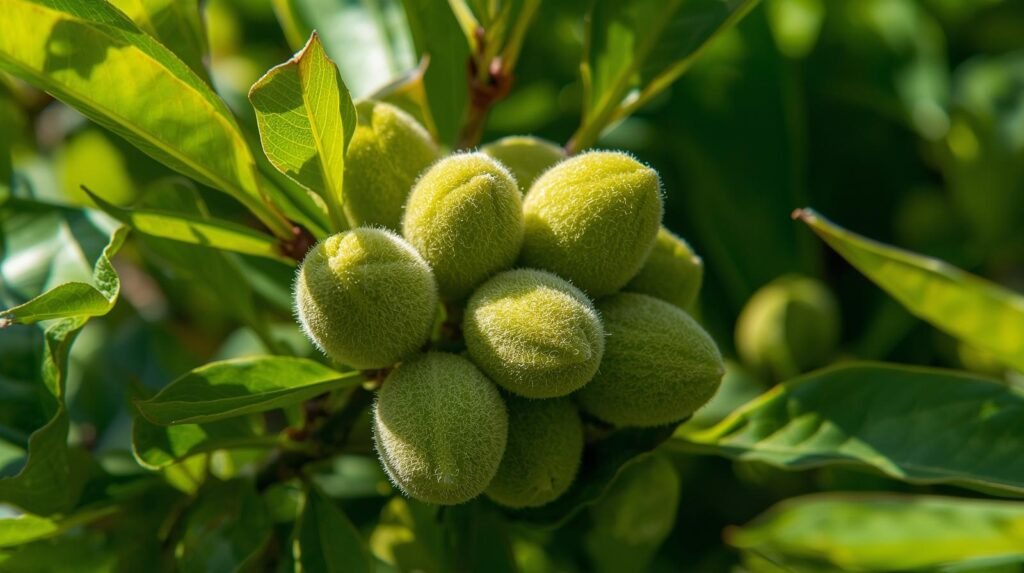
Balanced fertilization with nitrogen, phosphorus, and potassium supports leaf growth, flowering, and nut formation. Micronutrients improve nut quality.
Pruning and Canopy Management
Pruning removes weak, diseased, or overcrowded branches. A well-shaped canopy improves air circulation and sunlight penetration.
Pest and Disease Control
Regular monitoring helps prevent pests like aphids and fungal infections. Organic sprays and good sanitation maintain plant health.
Flowering and Pollination Management
Almond trees require pollination for nut production. Planting compatible varieties or encouraging pollinators improves yield.
Harvesting and Long-Term Care
Almonds are harvested when hulls split open naturally. Consistent seasonal care ensures long-term productivity and healthy growth.
Almond Growing Method Comparison Table
| Method | Fruiting Time | Size Control | Yield |
|---|---|---|---|
| Traditional Seed Method | Late | Difficult | Moderate |
| Grafted Home Technique | Early | Easy | High |