Basil is one of the most popular kitchen herbs grown at home. Many people harvest basil incorrectly and damage the plant. Wrong cutting methods reduce leaf production quickly. Proper cutting encourages bushier growth and longer life. Basil responds strongly to pruning techniques. Learning the right method increases harvest size naturally. Healthy cutting improves aroma and flavor. This guide explains basil cutting step by step.
Understanding Basil Growth Patterns
Basil grows upward with a central stem. Leaves grow in pairs on opposite sides. New branches form where leaves meet the stem. If the top grows unchecked, basil becomes tall and weak. Cutting at the right spot activates side shoots. Understanding this pattern prevents plant stress. Growth knowledge leads to better pruning decisions. Healthy structure ensures continuous leaf supply.
When Is the Best Time to Cut Basil
Timing plays a key role in basil harvesting. Basil should be cut once it reaches sufficient height. Early harvesting encourages faster branching. Morning is the best time to cut basil. Essential oils are strongest early in the day. Avoid cutting during extreme heat. Regular harvesting keeps the plant productive. Proper timing improves regrowth speed.
Tools Needed for Cutting Basil Leaves
Sharp tools are important for clean cuts. Dull tools damage stems and slow healing. Use clean scissors or garden shears. Sterilize tools before cutting. Clean cuts reduce disease risk. Avoid tearing leaves by hand. Proper tools make pruning easier. Healthy cuts promote faster regrowth.
Identifying the Correct Cutting Point
Never cut single leaves randomly. Always cut above a leaf node. A node is where two leaves meet the stem. Cutting above the node encourages branching. This method doubles leaf production. Avoid cutting too close to the soil. Leaving healthy nodes ensures survival. Correct placement determines plant shape.
How Much Basil to Cut at One Time
Never remove more than one-third of the plant. Overharvesting weakens basil. Balanced cutting keeps energy stored. Leave enough leaves for photosynthesis. Gradual harvesting maintains health. Frequent light cutting works best. Overcutting slows regrowth. Moderation ensures long-term yield.
Step-by-Step Method to Cut Basil Correctly
Locate a healthy stem with several leaf pairs. Identify a strong leaf node. Cut just above the node using sharp scissors. Remove the top growth cleanly. Avoid crushing the stem. Repeat on multiple stems evenly. This method shapes the plant evenly. Proper steps ensure consistent results.
Why Cutting the Top Encourages Bushy Growth
Top cutting removes apical dominance. This signals the plant to branch out. Side shoots grow faster after cutting. More branches mean more leaves. Bushy basil produces longer harvests. Tall plants are weaker and flower faster. Proper pruning delays flowering. Bushy growth improves productivity.
Preventing Basil from Flowering Too Early
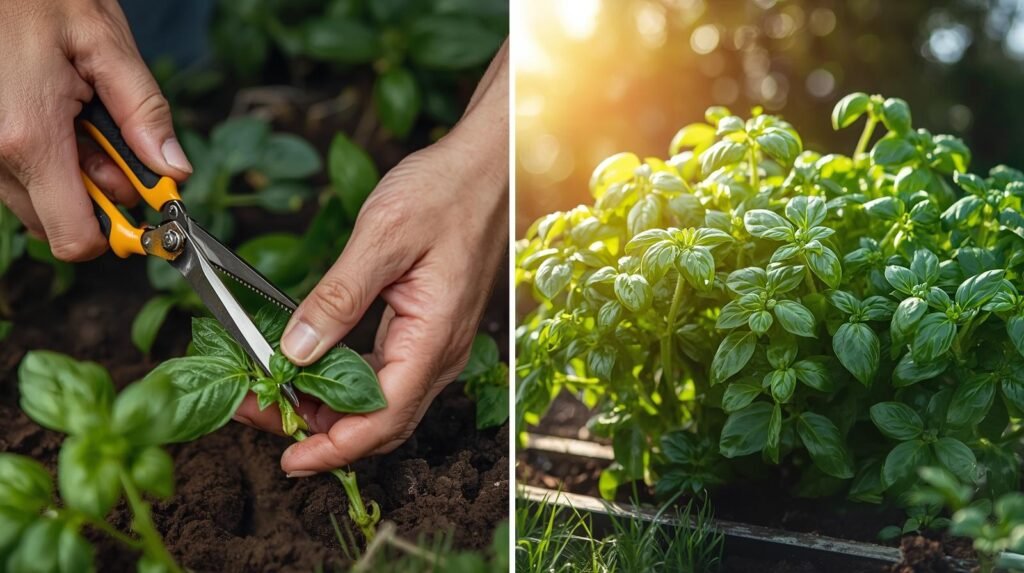
Flowering reduces leaf quality. Once basil flowers, leaf flavor declines. Cutting flower buds early prevents this. Regular pruning delays flowering. Focus on leaf growth rather than flowers. Removing buds redirects energy. This keeps leaves tender and aromatic. Prevention improves harvest longevity.
Common Mistakes While Cutting Basil
Cutting too low damages the plant. Removing too many leaves causes shock. Using dirty tools spreads disease. Ignoring nodes reduces branching. Allowing flowering lowers yield. Cutting during midday heat stresses plants. These mistakes reduce regrowth. Awareness improves harvesting success.
How Often Should You Cut Basil
Basil can be harvested every one to two weeks. Growth speed depends on weather and care. Regular cutting improves productivity. Avoid long gaps between harvests. Consistent pruning keeps plants active. Monitor regrowth before next cut. Balanced frequency ensures health. Overcutting should be avoided.
Watering After Cutting Basil
Water basil lightly after pruning. Moist soil helps recovery. Avoid waterlogging roots. Water early in the day. Hydration supports new growth. Stress-free recovery improves regrowth speed. Proper watering complements cutting. Balanced care ensures success.
Fertilizing to Support Regrowth
Light feeding boosts leaf production. Use organic compost or liquid fertilizer. Fertilize after harvesting. Avoid excessive nitrogen. Balanced nutrients strengthen stems. Healthy soil improves regrowth. Feeding supports continuous harvest. Overfertilizing reduces flavor.
Growing Basil Indoors vs Outdoors
Indoor basil grows slower than outdoor plants. Outdoor basil benefits from sunlight. Indoor plants need bright indirect light. Cutting methods remain the same. Indoor basil needs less frequent cutting. Outdoor basil grows faster. Environment affects regrowth speed. Adapt care accordingly.
Seasonal Considerations for Basil Cutting
Basil grows best in warm seasons. Growth slows in cooler weather. Reduce cutting in late season. Protect basil from cold. Indoor growing extends harvest time. Seasonal awareness prevents stress. Adjust frequency as temperatures change. Proper planning extends basil life.
Table: Correct vs Incorrect Basil Cutting
| Cutting Practice | Effect on Plant | Regrowth Result | Recommendation |
|---|---|---|---|
| Cutting above node | Encourages branching | Fast regrowth | Highly recommended |
| Random leaf removal | Weakens structure | Slow regrowth | Avoid |
| Overharvesting | Causes stress | Poor growth | Limit removal |
| Regular pruning | Keeps plant bushy | Continuous harvest | Best practice |
Health Benefits of Proper Basil Harvesting
Proper harvesting preserves nutrient quality. Leaves remain rich in oils. Flavor stays strong longer. Healthy plants resist pests better. Continuous growth ensures fresh supply. Well-maintained basil improves cooking results. Harvesting technique affects quality. Good care enhances benefits.
Using Harvested Basil Efficiently
Fresh basil should be used quickly. Store stems in water for short-term use. Refrigeration reduces aroma. Drying is an option for storage. Proper cutting ensures long stems. Harvested basil stays fresh longer. Efficient use reduces waste. Quality leaves enhance dishes.
Long-Term Basil Plant Maintenance
Continue pruning throughout the season. Remove damaged leaves regularly. Monitor pests and diseases. Replace soil if needed. Maintain sunlight exposure. Long-term care ensures productivity. Healthy basil plants last longer. Consistent effort brings rewards.
Benefits of Learning Proper Cutting Techniques
Proper cutting saves plants from early death. Harvest size increases naturally. Plants remain attractive. Gardening becomes more enjoyable. Beginners gain confidence. Simple techniques improve success. Knowledge prevents frustration. Results are visible quickly.
Conclusion: Mastering Basil Cutting for Better Regrowth
Cutting basil correctly transforms plant performance. Proper techniques encourage bushy growth. Regular pruning improves yield. Avoiding mistakes protects plant health. Balanced care ensures long-term harvest. Anyone can master basil cutting. This guide simplifies the process. Enjoy fresh basil continuously.