Pothos is one of the most popular indoor plants due to its attractive foliage and low maintenance needs. Many plant owners struggle with watering frequency, which directly affects growth and leaf color. Overwatering and underwatering are common mistakes. Proper watering helps keep pothos plants full and vibrant. Understanding plant needs improves long-term health. Environmental conditions influence watering schedules. This article explains how often to water pothos correctly. With the right approach, pothos remains lush and green.
Understanding Pothos Watering Needs
Pothos plants prefer evenly moist soil but dislike soggy conditions. Their roots require oxygen to function properly. Overwatering leads to root rot. Underwatering causes leaf wilting and yellowing. Pothos stores some moisture in its stems. This makes it tolerant of short dry periods. Watering should depend on soil dryness. Observing plant signals helps adjust watering frequency.
How Soil Type Affects Watering Frequency
Well-draining soil is essential for pothos plants. Loose soil allows excess water to escape easily. Heavy soil retains moisture longer. Soil composition directly affects watering intervals. Potting mix with organic matter works best. Adding perlite improves drainage. Poor soil leads to water stress. Choosing the right soil reduces watering mistakes.
How Often to Water Pothos in Summer
During summer, pothos grows actively and needs more water. Warm temperatures increase evaporation. Watering once every five to seven days is usually sufficient. Soil should be checked before watering. If the top soil feels dry, watering is needed. Overwatering should still be avoided. Indoor humidity also affects frequency. Summer watering supports healthy growth.
How Often to Water Pothos in Winter
In winter, pothos growth slows significantly. Watering frequency should be reduced. Once every ten to fourteen days is often enough. Cooler temperatures reduce water loss. Soil stays moist longer. Overwatering in winter causes root issues. Always check soil dryness before watering. Adjust based on indoor heating conditions.
Signs of Overwatered Pothos
Overwatered pothos shows yellow leaves and soft stems. Soil remains constantly wet. Roots may begin to rot. Leaves can drop suddenly. A foul smell may develop in soil. Growth becomes weak. Fungus gnats may appear. Reducing watering helps recovery.
Signs of Underwatered Pothos
Underwatered pothos displays drooping leaves. Leaf edges may turn brown. Growth slows noticeably. Soil becomes dry and compacted. Leaves lose shine. The plant may look dull. Regular watering restores health. Early signs should not be ignored.
Best Time of Day to Water Pothos
Morning is the best time to water pothos plants. It allows moisture absorption throughout the day. Watering at night may cause prolonged dampness. Morning watering reduces fungal risk. Consistent timing helps plant stability. Avoid midday watering during heat. Gentle watering is recommended. Timing supports healthy roots.
How Pot Size Influences Watering
Larger pots retain moisture longer. Smaller pots dry out faster. Pot size determines watering frequency. Drainage holes are essential. Decorative pots should allow water escape. Root growth depends on container size. Repotting changes watering needs. Monitoring soil is crucial.
Role of Indoor Light in Watering
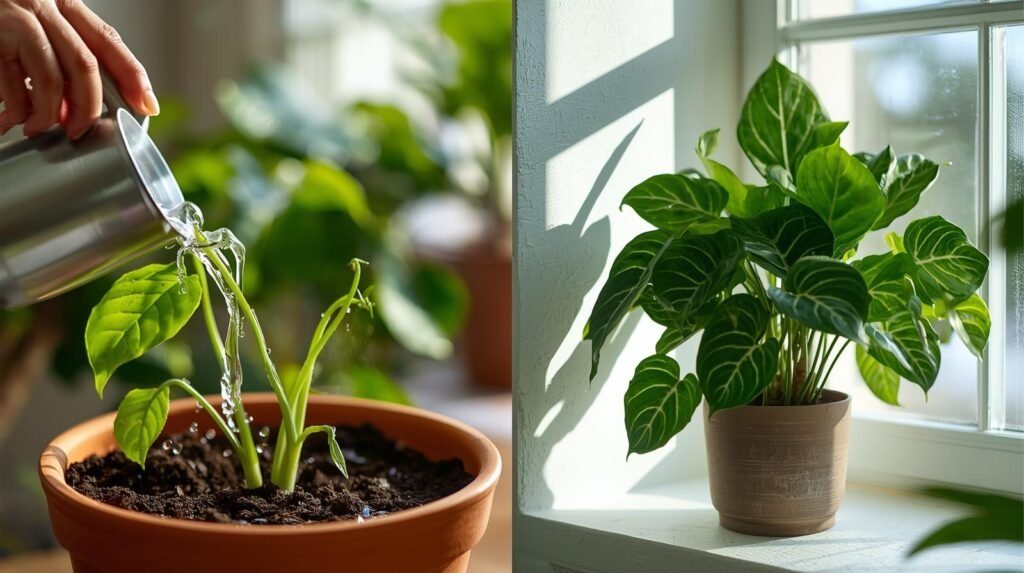
Bright light increases water usage. Low light slows growth and water absorption. Pothos in bright rooms need more frequent watering. Low-light pothos requires less water. Light exposure affects evaporation rate. Adjust watering accordingly. Consistency is key. Light conditions must be considered.
Water Quality and Pothos Health
Clean water improves pothos growth. Chlorine in tap water may cause leaf spots. Allowing water to sit reduces chemicals. Room-temperature water is best. Cold water shocks roots. Mineral buildup affects soil health. Occasional flushing helps. Good water quality supports green leaves.
Humidity and Its Effect on Watering
High humidity reduces watering needs. Dry indoor air increases water loss. Pothos prefers moderate humidity. Grouping plants raises humidity naturally. Humidifiers help in dry climates. Humidity affects leaf health. Balanced moisture is ideal. Environmental control improves results.
Fertilizing and Watering Balance
Fertilizer should be applied to moist soil. Overfertilizing stresses roots. Watering helps distribute nutrients. Fertilizing during growth season is best. Reduce fertilizer in winter. Balanced feeding supports foliage growth. Never fertilize dry soil. Proper timing prevents damage.
Common Watering Mistakes to Avoid
Watering on a fixed schedule causes problems. Ignoring soil moisture leads to stress. Using pots without drainage is risky. Overwatering is more harmful than underwatering. Misting does not replace watering. Cold water damages roots. Learning plant signals is essential.
Pothos Watering Frequency Summary Table
| Condition | Recommended Watering | Key Notes |
|---|---|---|
| Summer season | Every five to seven days | Check soil dryness |
| Winter season | Every ten to fourteen days | Reduce frequency |
| Bright light | More frequent | Faster evaporation |
| Low light | Less frequent | Slower growth |
| High humidity | Reduced watering | Moist air helps |
Long-Term Watering Routine for Healthy Growth
Consistency improves pothos health over time. Monitoring soil prevents mistakes. Adjusting to seasonal changes is important. Healthy roots ensure full foliage. Avoid sudden changes in watering. Observation leads to better care. Long-term balance keeps plants green. Pothos thrives with mindful watering.