Introduction: Why Snake Plant Watering Matters
Snake plants are among the easiest houseplants to grow. Despite their toughness, watering mistakes can harm them. Overwatering is the most common cause of failure. Beginners often struggle to identify watering needs. Snake plants store water in their leaves. They prefer dry soil between watering. Learning signs of thirst prevents damage. This guide explains everything clearly.
Understanding the Snake Plant’s Natural Habitat
Snake plants originate from dry regions of Africa. They evolved to survive drought. Rainfall in their habitat is infrequent. Roots dry out between watering. Thick leaves store moisture efficiently. This adaptation affects care needs. Mimicking natural conditions ensures success. Habitat knowledge prevents mistakes.
Why Snake Plants Need Less Water
Snake plants are succulents in nature. Their leaves retain moisture for long periods. Excess water leads to root rot. They grow slowly and use less water. Low metabolism reduces water demand. Dry soil promotes healthy roots. Overwatering disrupts balance. Less water is always safer.
How Often Snake Plants Typically Need Water
Most snake plants need watering every two to three weeks. Frequency depends on environment. Warm temperatures increase water use. Cooler seasons reduce needs. Indoor humidity affects drying speed. Pot size also matters. Always check soil before watering. Flexibility is essential.
Visual Signs Your Snake Plant Needs Water
Leaves may wrinkle slightly when thirsty. Tips may curl inward gently. Soil becomes completely dry. Plant growth slows temporarily. Leaves lose firmness slightly. These signs indicate dehydration. Early watering corrects stress. Observation is key.
Physical Signs of Overwatering
Overwatered snake plants show yellow leaves. Base becomes soft and mushy. Roots rot under wet conditions. Leaves may collapse suddenly. Soil stays wet for long periods. Foul smell indicates rot. Immediate correction is required. Drainage saves plants.
Checking Soil Moisture Correctly
Insert finger into soil deeply. Dry soil means watering is needed. Moist soil requires waiting. Wooden sticks help test depth moisture. Moisture meters are optional. Surface dryness is misleading. Always check deeper layers. Correct testing prevents overwatering.
Seasonal Watering Adjustments
Snake plants need less water in winter. Growth slows during colder months. Summer increases evaporation. Adjust watering accordingly. Indoor heating dries soil faster. Seasonal awareness prevents stress. Reduce watering during dormancy. Increase gradually in spring.
Pot Size and Drainage Importance
Small pots dry faster. Large pots retain moisture longer. Drainage holes are essential. Poor drainage causes root rot. Terracotta pots absorb moisture. Plastic retains water longer. Pot choice affects watering frequency. Proper containers ensure success.
Soil Type and Water Retention
Well-draining soil is critical. Cactus mix works well. Heavy soil traps water. Perlite improves aeration. Loose soil supports roots. Good drainage prevents rot. Soil quality affects watering schedule. Choose wisely for health.
Humidity and Indoor Environment
Snake plants tolerate low humidity. High humidity reduces watering frequency. Bathrooms may slow drying. Dry rooms need careful monitoring. Air circulation affects evaporation. Indoor environment influences care. Adapt watering to conditions. Flexibility improves results.
Water Quality and Temperature
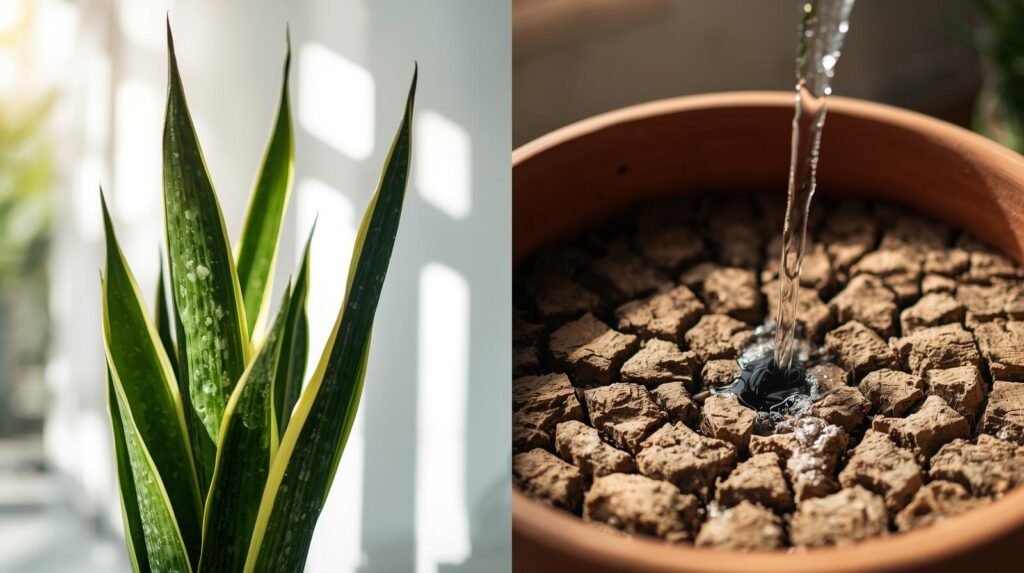
Use room-temperature water. Cold water shocks roots. Avoid chemically treated water if possible. Filtered water is ideal. Water quality affects root health. Consistency matters more than type. Gentle watering prevents stress. Healthy roots grow better.
Encouraging Healthy Growth Through Proper Watering
Proper watering strengthens leaves. Roots grow firm and white. Balanced moisture supports upright growth. Stress-free plants resist pests. Correct care enhances appearance. Healthy plants grow steadily. Watering impacts longevity. Balance is essential.
Table: Snake Plant Watering Guide
| Condition | Watering Frequency | Soil Condition | Care Tip |
|---|---|---|---|
| Summer | Every fourteen days | Fully dry | Increase airflow |
| Winter | Every three to four weeks | Very dry | Reduce watering |
| Low light | Less frequent | Dry | Monitor soil |
| Bright light | Moderate | Dry between watering | Check often |
Common Beginner Watering Mistakes
Watering on a fixed schedule. Ignoring soil moisture. Using pots without drainage. Overwatering in winter. Misreading leaf softness. These mistakes damage plants. Learning signs prevents failure. Awareness improves care success.
Root Health and Water Balance
Healthy roots are firm and pale. Overwatering causes decay. Root health reflects watering habits. Poor roots affect leaves. Checking roots helps diagnosis. Proper balance maintains strength. Roots drive plant health. Water wisely.
Placement and Its Effect on Watering
Bright light dries soil faster. Low light slows evaporation. Window placement increases warmth. Shaded areas reduce water needs. Placement affects care routine. Adjust watering accordingly. Observe plant behavior. Environment matters greatly.
Long-Term Watering Strategy
Allow full dry cycles regularly. Avoid sudden changes. Maintain consistency. Adjust with seasons. Monitor soil and leaves. Long-term strategy ensures longevity. Snake plants thrive with patience. Simple care brings success.
Benefits of Correct Watering
Correct watering prevents disease. Plants look vibrant. Leaves stay upright. Growth remains steady. Maintenance becomes easier. Stress is minimized. Plant lifespan increases. Watering knowledge is essential.
Conclusion: Mastering Snake Plant Watering
Snake plants are forgiving but sensitive to water. Dry soil is always safer. Observing signs ensures proper timing. Seasonal adjustments improve care. Correct watering builds confidence. Beginners can succeed easily. Healthy snake plants last years. Master watering for success.