Walnuts are among the most valuable tree nuts in the world due to their high nutritional value, long shelf life, and wide culinary uses. They are consumed fresh, dried, or processed into oils and bakery products across many cultures. Global demand for walnuts has increased significantly because of growing awareness about healthy fats and plant-based diets. Walnut production requires specific climatic conditions, making only a few countries suitable for large-scale cultivation. Advances in agricultural technology have further increased yields in leading producer nations. Understanding which country leads walnut production provides insight into global agriculture and trade. This article explores current global data to identify the largest walnut-producing country in the world. It also explains why that country dominates walnut production today.
Overview of Global Walnut Production
Global walnut production is concentrated in regions with temperate climates, adequate winter chilling, and well-drained soils. Walnuts require long growing seasons and careful orchard management. Production volumes are measured annually in metric tons and vary depending on weather and farming practices. International organizations regularly track walnut output to assess global supply. Asia, North America, and parts of Europe contribute significantly to production. Technological improvements have increased orchard productivity. Export demand strongly influences production expansion. Global walnut output continues to grow steadily each year.
Key Factors That Determine Walnut Production Leadership
Several factors influence which country becomes the top walnut producer. Climate suitability is the most important requirement. Access to advanced irrigation systems supports higher yields. Availability of skilled labor and mechanization improves efficiency. Government support for agriculture plays a significant role. Strong domestic and export demand encourages expansion. Research and development improve disease resistance. Infrastructure for storage and processing ensures quality. These factors collectively determine global leadership.
Countries Known for Significant Walnut Production
Several countries are known for producing large quantities of walnuts. China, the United States, Iran, Turkey, and Ukraine are major contributors. Each country benefits from suitable climate zones and agricultural traditions. Production volumes differ widely among these nations. Some focus on domestic consumption, while others export heavily. Seasonal conditions impact annual output. Trade data helps compare production accurately. Among these producers, one country stands clearly ahead.
China as the World’s Largest Walnut Producer
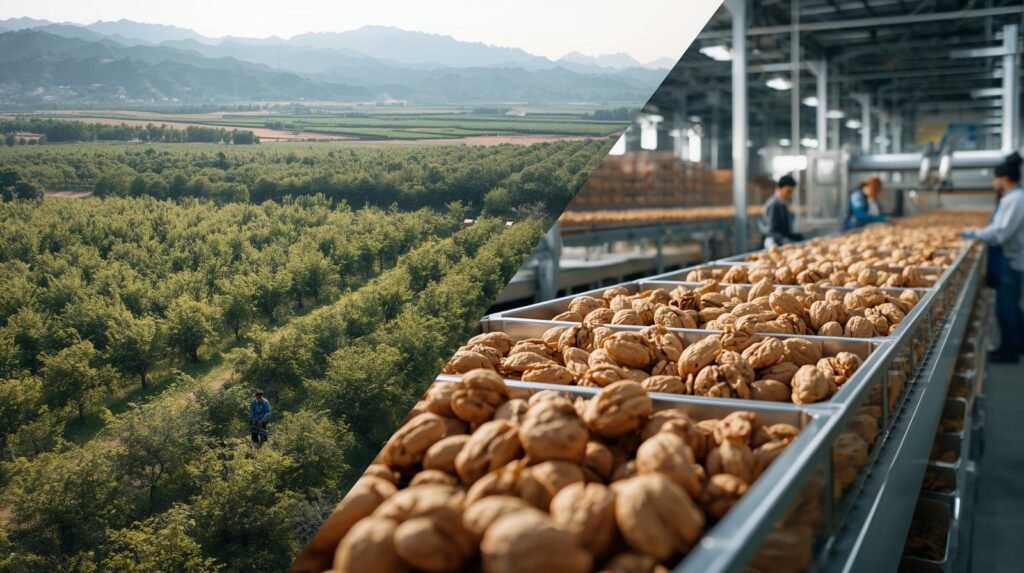
Based on current global agricultural data, China is the largest walnut producer in the world right now. The country produces more walnuts than any other nation annually. China’s vast land area allows extensive walnut cultivation across multiple regions. Favorable climates in northern and western provinces support large orchards. Walnut farming has been practiced in China for centuries. Modern agricultural practices have significantly increased yields. Domestic consumption is high, supporting continuous production growth. Global data consistently places China at the top.
Why China Leads Global Walnut Production
China’s leadership in walnut production is driven by several advantages. The country has abundant suitable land for orchards. Labor availability keeps production costs relatively low. Government investment in agricultural modernization has improved productivity. Research institutions develop improved walnut varieties. Strong domestic demand encourages farmers to expand cultivation. Export markets provide additional incentives. Infrastructure supports efficient harvesting and processing. These factors help China maintain its leading position.
Major Walnut Producing Regions Within China
Walnut production in China is spread across several provinces. Yunnan, Shaanxi, Shanxi, and Xinjiang are major growing areas. These regions offer ideal temperature and soil conditions. Mountainous terrain supports traditional walnut farming. Irrigation projects enhance orchard productivity. Regional specialization improves quality. Local markets absorb large volumes. These regions contribute significantly to national output.
The United States Role in Walnut Production
The United States is the second-largest walnut producer globally. Most production is concentrated in California. Advanced mechanization ensures high-quality output. American walnuts are primarily grown for export markets. Strict quality standards improve global reputation. Production volumes are lower than China but highly efficient. Water availability influences yields. The United States remains a key global supplier.
Comparison Between China and Other Producers
China’s walnut production far exceeds other countries in volume. The United States focuses on premium quality rather than quantity. Iran and Turkey produce moderate amounts mainly for domestic use. European producers have smaller orchards. Population size influences consumption patterns. Export strategies differ significantly. Data comparisons highlight China’s dominance. The production gap remains substantial.
Global Walnut Production Comparison Table
| Country Name | Production Level | Primary Use | Global Rank |
|---|---|---|---|
| China | Very high | Domestic and export | First |
| United States | High | Export focused | Second |
| Iran | Medium | Domestic use | Third |
| Turkey | Medium | Domestic use | Fourth |
| Ukraine | Moderate | Export and domestic | Fifth |
Economic Importance of Walnut Production in China
Walnut farming supports millions of rural households in China. It provides stable income for small farmers. Processing industries create additional employment. Walnuts contribute significantly to agricultural exports. Value-added products increase profitability. Domestic markets remain strong. Government policies encourage orchard expansion. Walnut production supports rural development.
Export Trends and Global Demand
Although China consumes much of its production, exports are increasing. Global demand for walnuts continues to rise. Health-conscious consumers drive consumption. Processed walnut products gain popularity. Export quality standards are improving. Trade partnerships expand market access. Demand stability encourages production growth. China benefits from these trends.
Challenges Facing Walnut Producers
Walnut producers face several challenges worldwide. Climate change affects yields. Pest management requires constant attention. Water availability is a growing concern. Labor costs fluctuate. Market prices can be unstable. Disease outbreaks impact orchards. Sustainable practices are essential. Producers must adapt continuously.
Future Outlook of Global Walnut Production
Global walnut production is expected to increase steadily. Demand for healthy foods will continue rising. China is likely to maintain its leading position. Technological advancements will boost yields. New varieties improve resilience. Export markets will expand further. Sustainability will shape future practices. Data suggests continued growth.