Introduction: Why Pollinator Container Gardens Are Important
Pollinators are essential for food production and ecosystem balance. Even small container gardens can support bees, butterflies, and hummingbirds. Container gardening is perfect for balconies, patios, and small spaces. Pollinator-friendly containers provide nectar and shelter. These gardens help combat habitat loss. They are easy to manage and flexible. Anyone can contribute to pollinator conservation. Container gardens offer beauty with purpose.
Understanding Pollinator Needs
Pollinators need nectar, pollen, water, and shelter. Different pollinators prefer different plants. Bees favor open flowers. Butterflies need flat blooms. Hummingbirds prefer tubular flowers. Containers allow targeted plant selection. Understanding needs improves success. Diversity supports more species.
Choosing the Right Containers
Container size affects plant health. Larger pots hold moisture longer. Drainage holes are essential. Clay, plastic, or ceramic all work. Light-colored pots reduce heat stress. Grouping containers improves attraction. Portable containers add flexibility.
Selecting Pollinator-Friendly Plants
Choose plants rich in nectar and pollen. Native plants perform best. Avoid hybrid flowers bred without nectar. Bright colors attract pollinators. Bloom variety ensures continuous food. Healthy plants attract more visitors. Selection matters greatly.
Best Flowers for Pollinator Containers
Lavender, salvia, zinnias, and cosmos are excellent choices. Petunias attract hummingbirds. Nasturtiums support butterflies. Basil and thyme provide flowers and herbs. Milkweed works well in large containers. These plants thrive in pots. They bloom generously.
Combining Flowers and Herbs
Herbs are powerful pollinator plants. Let herbs flower instead of harvesting all leaves. Basil, oregano, and rosemary attract bees. Herbs add fragrance and function. Mixing herbs and flowers increases diversity. Containers stay productive. This combination is practical.
Sunlight and Placement Considerations
Most pollinator plants need full sun. Place containers where they receive at least six hours of light. Avoid windy areas. Grouping pots helps visibility. Elevated containers attract flying insects. Sunlight enhances nectar production. Placement is critical.
Watering Containers Properly
Containers dry out faster than garden beds. Water consistently but avoid soggy soil. Morning watering is best. Use mulch to retain moisture. Proper watering supports flowering. Healthy plants produce more nectar. Balance is key.
Providing Water Sources for Pollinators
Pollinators need shallow water. Use small dishes with stones. Keep water clean and fresh. Avoid deep containers. Moist soil also helps. Water sources increase visits. Simple features are effective.
Avoiding Pesticides in Container Gardens
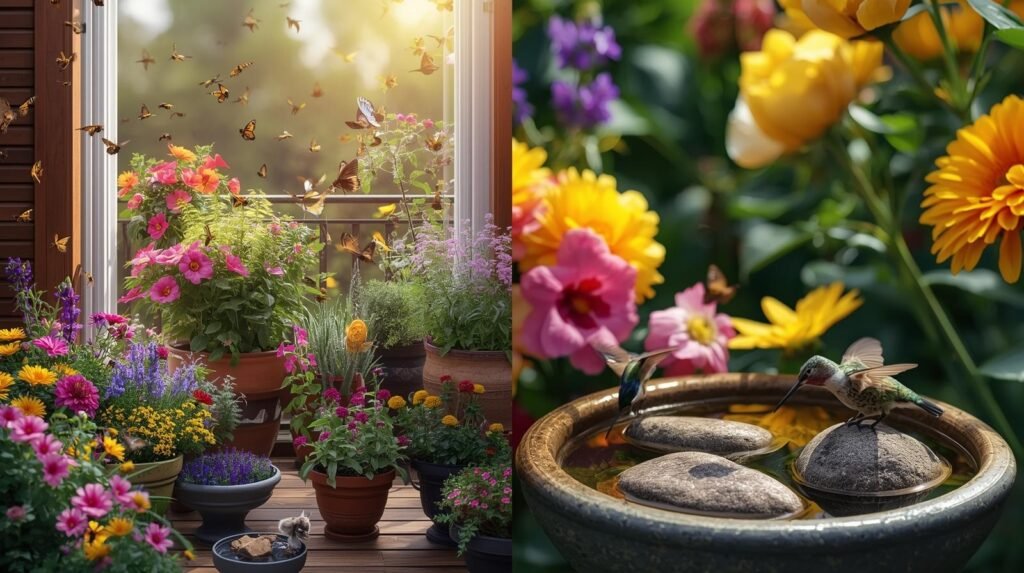
Even small pesticide use harms pollinators. Avoid chemical treatments entirely. Use natural pest control methods. Healthy plants resist pests naturally. Hand-remove insects if needed. Chemical-free gardens are safer. Pollinators thrive naturally.
Designing Attractive Container Arrangements
Use thriller, filler, and spiller plants. Tall plants add height. Medium plants fill space. Trailing plants soften edges. Color coordination improves attraction. Group similar plants together. Good design supports pollinators.
Seasonal Care and Maintenance
Deadhead flowers regularly. Fertilize lightly. Rotate plants if needed. Refresh soil yearly. Monitor for stress. Seasonal care keeps containers productive. Consistency matters.
Supporting Pollinators Year-Round
Plant early and late bloomers. Leave some seed heads. Provide shelter nearby. Containers can be moved seasonally. Year-round support strengthens populations. Planning extends benefits.
Common Container Gardening Mistakes
Overcrowding reduces blooms. Poor drainage causes root rot. Using treated plants harms insects. Too much fertilizer reduces nectar. Ignoring sunlight weakens plants. Avoid these mistakes. Learning improves success.
Benefits of Pollinator Container Gardens
They support biodiversity. They improve food production. They beautify small spaces. They educate and inspire. They require minimal space. They create purpose-driven gardening. Benefits are wide-reaching.
Pollinator Container Plant Table
Plant Name
Pollinator Attracted
Container Size Needed
Sun Requirement
Bloom Season
Lavender
Bees butterflies
Medium
Full sun
Summer
Salvia
Bees hummingbirds
Medium
Full sun
Summer
Zinnia
Butterflies bees
Medium
Full sun
Summer
Petunia
Hummingbirds
Small
Full sun
Summer
Basil
Bees
Small
Full sun
Summer
Final Thoughts on Pollinator Containers
Container gardens can make a real difference. Even one pot helps pollinators survive. With thoughtful choices, gardens thrive. Pollinators reward effort quickly. Beauty and conservation unite. Small actions matter greatly. Everyone can participate.