Introduction: Why Kitchen Scraps Make Great Fertilizers
Kitchen scraps are often discarded without realizing their gardening value. Many everyday food leftovers contain essential nutrients for plants. Using kitchen scraps as fertilizer reduces waste and supports sustainable living. Natural fertilizers improve soil health without chemicals. They are safe for plants, pets, and people. Recycling scraps saves money and benefits the environment. Home gardeners can easily adopt this practice. Kitchen waste becomes a valuable garden resource.
Understanding Nutrients in Kitchen Waste
Plants require nutrients like nitrogen, potassium, and calcium. Kitchen scraps naturally contain these elements. Organic matter improves soil structure. Slow nutrient release supports long-term growth. Unlike synthetic fertilizers, scraps enrich soil biology. Beneficial microbes thrive on organic matter. Healthy soil supports strong plants. Understanding nutrients improves effectiveness.
1. Banana Peels – Potassium Boosters
Banana peels are rich in potassium, which supports flowering and fruiting. They also contain calcium and magnesium. Banana peels help strengthen plant stems. They are especially beneficial for roses and tomatoes. Using peels improves bloom quality. They break down easily in soil. Banana peels are safe and effective. They are easy to use.
How to Use Banana Peels Safely
Chop peels into small pieces before burying. Place them near root zones. Avoid leaving peels on soil surface. Composting peels is also effective. Liquid banana peel water works well. Proper use prevents pests. Banana peels enrich soil gradually. Moderation is key.
2. Coffee Grounds – Nitrogen-Rich Additions
Used coffee grounds provide nitrogen for leafy growth. They also improve soil texture. Coffee grounds attract earthworms. Acid-loving plants benefit the most. Grounds should be used in moderation. Excess use can affect soil balance. Composting is recommended. Coffee waste becomes plant food.
Best Plants for Coffee Grounds
Blueberries, azaleas, and roses enjoy coffee grounds. Leafy greens benefit from nitrogen. Mix grounds with soil or compost. Avoid applying thick layers. Balanced use improves growth. Coffee grounds are widely available. They reduce waste easily.
3. Eggshells – Natural Calcium Source
Eggshells are rich in calcium, which prevents blossom end rot. Calcium strengthens cell walls. Eggshells improve soil structure. They decompose slowly. Crushing them speeds breakdown. Eggshells are ideal for tomatoes and peppers. They reduce soil acidity slightly. Safe and long-lasting.
Preparing Eggshells for the Garden
Rinse shells to remove residue. Dry completely. Crush into fine pieces. Mix into soil or compost. Powdered shells release nutrients faster. Avoid large chunks. Proper preparation increases effectiveness. Eggshells are easy to store.
4. Vegetable Scraps – Balanced Nutrition
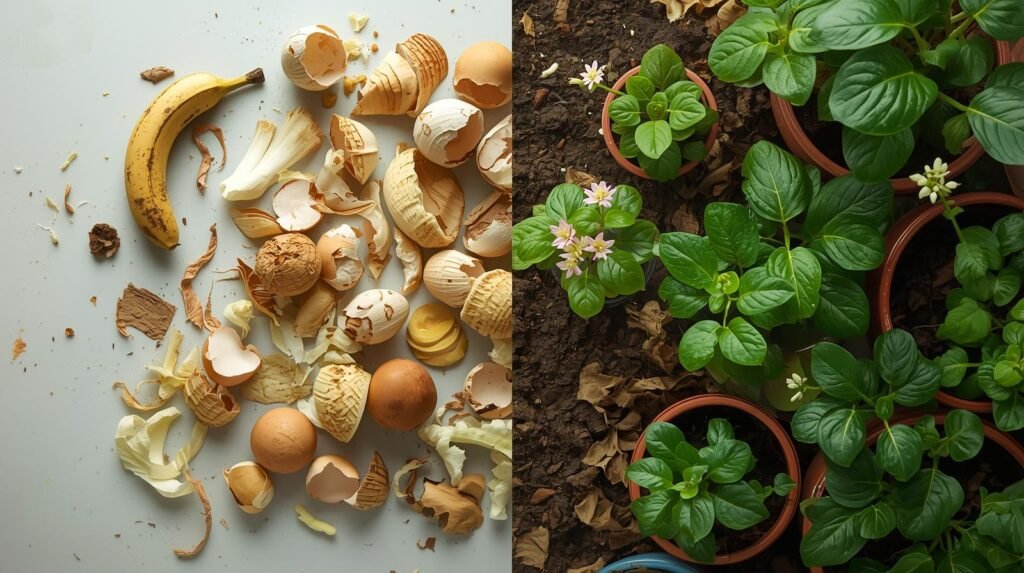
Vegetable peels and trimmings add organic matter. They provide a mix of nutrients. Scraps improve soil texture. Composting is the safest method. Avoid oily or salty scraps. Leafy scraps decompose quickly. Vegetable waste feeds soil microbes. Healthy soil supports plants.
Using Vegetable Scraps Correctly
Compost scraps before applying. Bury small pieces if composting is unavailable. Avoid attracting pests. Mix scraps evenly. Use regularly but moderately. Proper handling prevents odors. Vegetable scraps enrich gardens naturally. Balance is essential.
5. Rice Water – Gentle Liquid Fertilizer
Rice water contains starch and trace minerals. It supports beneficial microbes. Plants absorb nutrients easily. Rice water is safe for most plants. Use cooled, plain rice water only. Avoid salty water. Apply to soil, not leaves. Gentle feeding improves growth.
Best Ways to Apply Rice Water
Use rice water once a week. Pour directly onto soil. Avoid waterlogging. Use fresh rice water only. Store briefly if needed. Rice water supports root health. Simple and effective practice. Safe for indoor plants.
Mistakes to Avoid When Using Kitchen Scraps
Avoid using spoiled or salty foods. Do not overapply scraps. Avoid raw meat or dairy. Prevent pest attraction. Balance different scraps. Compost when possible. Improper use causes issues. Knowledge prevents problems.
Environmental Benefits of Scrap Fertilizers
Using scraps reduces landfill waste. It lowers carbon footprint. It improves soil health naturally. Gardening becomes sustainable. Chemical use decreases. Ecosystems benefit. Waste becomes resource. Environmental impact is positive.
Kitchen Scrap Fertilizer Table
Kitchen Scrap
Main Nutrient
Best Plants
Application Method
Safety Level
Banana Peel
Potassium
Flowering plants
Buried or composted
High
Coffee Grounds
Nitrogen
Leafy plants
Composted mixed
Moderate
Eggshells
Calcium
Tomatoes peppers
Crushed soil mix
High
Vegetable Scraps
Mixed nutrients
All plants
Composted
High
Rice Water
Trace minerals
Houseplants garden
Liquid soil pour
High
Final Thoughts on Natural Scrap Fertilizers
Kitchen scraps offer safe plant nutrition. They support sustainable gardening. Proper use ensures benefits. Small efforts make big differences. Waste reduction helps the planet. Gardens thrive naturally. Anyone can start easily. Nature rewards mindful practices.