1. Introduction to Growing Cherry Trees from Seed
Growing cherry trees from seed is a simple yet patient process. Many gardeners believe it is difficult, but it is actually straightforward when explained properly. Cherry seeds need natural cues to grow. These cues can be recreated at home easily. The method requires minimal tools. Time and care are more important than expertise. Beginners can succeed with basic knowledge. This guide simplifies everything clearly.
2. Why Cherry Seeds Need Special Treatment
Cherry seeds are dormant by nature. Dormancy protects seeds from sprouting during winter. Without treatment, seeds may never grow. Cold exposure triggers internal changes. This process signals spring conditions. Mimicking nature improves germination rates. Understanding this makes the process logical. Seeds respond to environment, not force.
3. Selecting the Best Cherries for Seeds
Choose ripe, healthy cherries for seeds. Avoid damaged or moldy fruit. Fresh cherries contain active embryos. Organic fruit is preferable. Avoid cherries treated for long storage. Fresh local cherries work best. Quality fruit increases success chances. Seed selection matters greatly.
4. Removing and Cleaning the Seeds
After eating cherries, collect the pits. Wash thoroughly under water. Remove all fruit residue. Clean pits prevent mold growth. Allow pits to air-dry briefly. Avoid excessive drying. Clean preparation sets the foundation. Hygiene matters in seed growing.
5. Cracking Cherry Pits – Is It Necessary
Some gardeners crack pits carefully to speed germination. This step is optional. Improper cracking can damage embryos. Natural cracking during stratification is safer. Beginners should avoid forceful cracking. Nature handles this best. Patience is safer than shortcuts.
6. Cold Stratification Explained Simply
Stratification means chilling seeds for weeks. Place pits in moist material. Store in refrigerator. Maintain cold but not freezing conditions. This simulates winter. Most seeds sprout after stratification. This step cannot be skipped. It is essential for success.
7. Simple Stratification Method at Home
Wrap pits in damp paper towel. Place inside a plastic bag. Keep in refrigerator. Check moisture weekly. Remove moldy pits. Keep for two to three months. This method is easy and effective. Consistency matters most.
8. Best Time to Plant Cherry Seeds
Plant seeds in early spring. Warmer temperatures encourage growth. Indoor planting is safer. Outdoor planting depends on climate. Timing affects germination success. Avoid extreme temperatures. Proper timing improves survival.
9. Soil Requirements for Cherry Seeds
Cherry seeds need loose, draining soil. Sandy loam is ideal. Avoid compacted soil. Soil should hold moisture lightly. Drainage prevents rot. Healthy soil supports roots. Good soil equals strong seedlings.
10. Planting Depth and Technique
Plant seeds one inch deep. Cover lightly with soil. Water gently. Avoid compacting soil. Label pots clearly. Proper depth supports sprouting. Shallow planting dries seeds. Correct technique improves results.
11. Watering Schedule for Seedlings
Water when soil feels dry. Avoid daily watering. Overwatering causes disease. Seedlings prefer balanced moisture. Good drainage is essential. Observe soil condition. Adjust watering accordingly.
12. Light Requirements for Young Plants
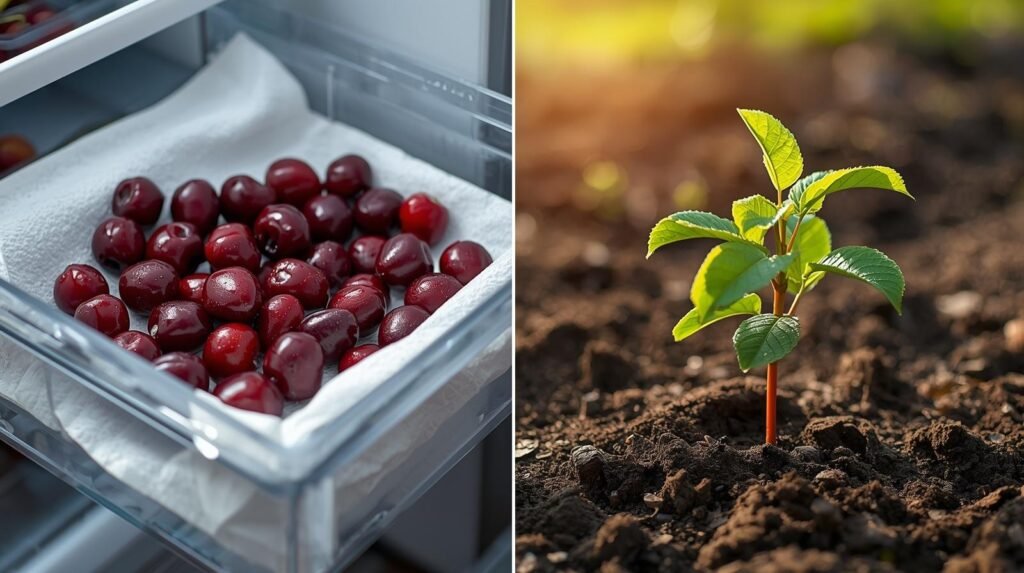
Seedlings need bright light. Indirect sunlight is best initially. Too much sun burns leaves. Gradual exposure strengthens plants. Indoor placement near windows works well. Balanced light encourages growth.
13. Growth Speed and Early Development
Cherry seedlings grow slowly. Do not expect fast results. Focus on healthy leaves. Strong roots form first. Growth accelerates later. Patience is critical. Slow growth is normal.
14. Transferring to Bigger Pots
Once roots fill pots, transplant carefully. Use fresh soil. Handle roots gently. Water after transplanting. Avoid root damage. Gradual pot upgrades support growth. Strong roots ensure survival.
15. Moving Seedlings Outdoors Safely
Harden seedlings gradually. Increase outdoor exposure daily. Avoid sudden sunlight changes. This strengthens stems. Outdoor adaptation prevents shock. Slow transition is essential.
16. Planting in the Garden
Choose sunny location. Ensure good drainage. Dig wide hole. Plant at same depth. Water well. Mulch base. Proper planting supports long-term growth.
17. Fertilizing Young Cherry Trees
Avoid heavy fertilizing early. Use compost lightly. Excess fertilizer burns roots. Natural nutrients work best. Healthy soil feeds trees slowly. Balance is key.
18. Time Needed to Get Cherries
Seed-grown trees take years. Fruiting occurs after maturity. Quality varies. Some trees may never fruit well. The journey matters more. Learning is the reward.
19. Is Growing from Seed Worth It
For hobby gardeners, yes. It is cost-effective. It builds patience. Trees adapt locally. It’s educational and enjoyable. Commercial growers prefer grafted trees. Seed growing is for passion.
20. Final Thoughts for Beginners
Growing cherry trees from seed is simple but slow. Follow steps carefully. Accept unpredictability. Enjoy the process. Success feels rewarding. Every tree begins as a seed. Gardening teaches patience and hope.
📊 Table: Quick Cherry Seed Guide
| Step | Action | Duration |
|---|---|---|
| Cleaning | Wash pits | One day |
| Chilling | Refrigerate seeds | Two to three months |
| Planting | Sow in soil | Early spring |
| Harvest | Fruit production | Several years |