1. Introduction to Growing Citrus Trees in Containers
Citrus trees are among the most rewarding fruit plants anyone can grow at home. They offer fragrant flowers, glossy evergreen leaves, and fresh fruit all from a single plant. Many people believe citrus needs large land, but container growing proves otherwise. With the right variety, citrus trees thrive in pots on balconies, patios, and rooftops. Container citrus is perfect for urban gardeners. It also allows better control of soil and watering. Even beginners can succeed easily. Citrus trees bring beauty and productivity together.
2. Why Citrus Trees Are Perfect for Container Gardening
Citrus trees adapt very well to container life when given proper care. Their root systems are manageable compared to many fruit trees. Containers allow gardeners to move plants easily during extreme weather. This mobility protects trees from frost or heavy rain. Container growing also reduces soil-borne disease risks. Citrus responds well to pruning, keeping plants compact. Home gardeners love citrus for its versatility. Containers make citrus growing accessible to everyone.
3. Key Qualities of a Good Container Citrus Tree
Not all citrus trees perform equally well in pots. The best varieties are naturally compact or dwarf types. Slow growth rate is another important quality. Trees that fruit early are ideal for containers. Disease resistance improves success in limited space. Trees with strong branches handle pot life better. Good container citrus produces fruit without excessive size. Choosing the right tree determines long-term success. Quality selection prevents future disappointment.
4. Dwarf Lemon Tree – The Most Popular Choice
Dwarf lemon trees are the top choice for container gardeners worldwide. They produce fruit quickly and consistently. Lemon trees adapt well to pruning and pot culture. Their flowers are highly fragrant and attractive. Popular varieties include Meyer lemon and Eureka dwarf. Lemons are versatile in cooking and beverages. The tree stays compact with minimal effort. This makes lemons ideal for beginners.
5. Calamondin Orange – The Perfect Balcony Citrus
Calamondin orange is one of the best citrus trees for containers. It naturally stays small and bushy. The tree produces abundant small orange fruits year-round. Its glossy leaves and white flowers are highly ornamental. Calamondin tolerates indoor conditions better than many citrus types. It is often grown as a decorative fruit tree. Fruits are tangy and useful in cooking. This tree combines beauty and productivity.
6. Dwarf Mandarin and Tangerine Trees
Mandarin and tangerine trees are excellent container citrus options. Dwarf varieties remain compact and manageable. Fruits are sweet, juicy, and easy to peel. These trees prefer warm, sunny locations. They produce heavy yields even in pots. Their manageable size makes pruning easy. Mandarin trees are family favorites. Container growth enhances fruit quality.
7. Key Lime Tree – Small Tree with Big Flavor
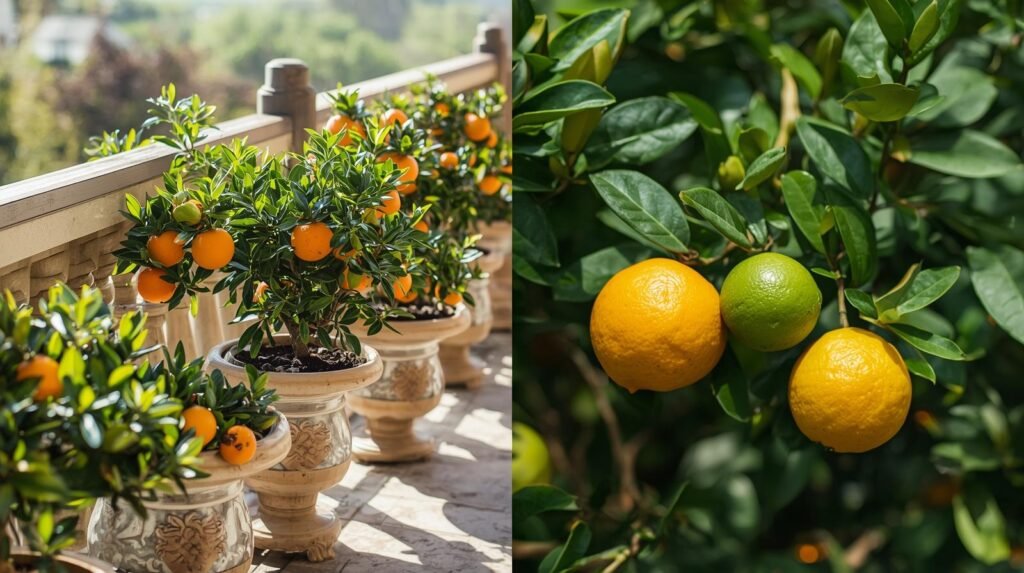
Key lime trees are ideal for container growing. They remain smaller than standard lime trees. Fruits are aromatic and highly flavorful. Lime trees flower and fruit multiple times per year. They prefer warm temperatures and full sun. Container growing allows climate control easily. Key lime trees respond well to pruning. They are perfect for patios and terraces.
8. Kumquat – The Cold-Hardy Container Citrus
Kumquat trees are unique among citrus varieties. They tolerate cooler temperatures better than others. The fruits are eaten whole, skin and all. Kumquats are naturally compact and slow-growing. This makes them ideal for containers. Their bright orange fruits are decorative. Kumquats also flower beautifully. They suit both indoor and outdoor growing.
9. Choosing the Right Container Size
Container size directly affects citrus tree health. Small pots restrict root growth and reduce fruiting. Large pots hold moisture longer and support stability. Start with a medium container and upgrade gradually. Containers must have drainage holes. Heavy pots prevent tipping in wind. Material choice affects temperature control. Proper pot size ensures long-term success.
10. Best Soil Mix for Container Citrus Trees
Citrus trees require well-draining soil. Heavy garden soil causes root rot. A mix of potting soil, sand, and compost works best. Drainage is more important than fertility initially. Soil should retain moisture lightly. Aerated soil promotes root health. Avoid compacting the mix. Good soil prevents common problems.
11. Sunlight Requirements for Healthy Citrus
Citrus trees need abundant sunlight to thrive. At least six to eight hours of direct sun is ideal. Insufficient light reduces flowering and fruiting. Balconies and terraces are ideal locations. Indoor citrus needs bright windows or grow lights. Rotate pots for even exposure. Sunlight directly affects fruit quality. More sun equals better harvests.
12. Watering Citrus Trees in Containers
Proper watering is critical for container citrus. Overwatering is the most common mistake. Water only when the top soil feels dry. Containers dry faster than ground soil. Drainage holes prevent waterlogging. Consistent moisture is important. Avoid letting roots sit in water. Balanced watering keeps trees healthy.
13. Fertilizing Container Citrus Trees
Citrus trees are heavy feeders. Container plants rely completely on fertilizer. Use citrus-specific fertilizers for best results. Feed regularly during active growth. Avoid overfertilizing, which burns roots. Organic compost also improves soil health. Balanced nutrition encourages flowering. Fertilizing supports fruit development.
14. Pruning Citrus Trees for Containers
Pruning keeps citrus trees compact. Remove dead or crossing branches. Shape the tree to allow airflow. Pruning improves light penetration. Container citrus benefits from regular trimming. Avoid heavy pruning during fruiting. Gentle pruning maintains size. Healthy shape supports productivity.
15. Flowering and Fruit Set in Containers
Citrus trees flower when conditions are right. Temperature, light, and nutrition influence flowering. Flowers are self-pollinating in most citrus. Gentle shaking improves pollination indoors. Fruit set depends on plant health. Avoid stress during flowering. Healthy trees hold fruit better. Patience is essential.
16. Common Problems in Container Citrus
Yellow leaves indicate nutrient imbalance. Leaf drop results from stress. Pests like aphids and spider mites may appear. Regular inspection prevents infestations. Neem oil works well organically. Root rot comes from poor drainage. Early action saves trees. Good care prevents most problems.
17. Benefits of Growing Citrus in Containers
Container citrus offers flexibility and control. Trees can be moved for protection. Soil quality is easily managed. Space limitations are no longer barriers. Fresh fruit is available at home. Decorative value is high. Container citrus suits modern lifestyles. It brings nature closer.
18. Indoor vs Outdoor Container Citrus
Outdoor citrus grows faster and fruits better. Indoor citrus needs extra light support. Indoor growing suits colder climates. Outdoor exposure improves flower production. Seasonal movement is beneficial. Containers allow both options. Adaptation improves success. Choose based on climate.
19. Long-Term Care for Container Citrus Trees
With proper care, citrus trees live many years. Repotting refreshes soil and roots. Annual feeding maintains vigor. Pruning keeps size manageable. Seasonal observation prevents issues. Long-term care ensures productivity. Citrus rewards consistency. Healthy trees improve over time.
20. Conclusion – Best Citrus Trees for Everyone
Citrus trees are ideal for container gardening. Dwarf varieties suit small spaces perfectly. With sunlight, proper soil, and care, success is guaranteed. Fresh citrus at home is achievable. Containers remove traditional barriers. Anyone can grow citrus trees. The reward is worth the effort. Citrus brings joy and harvest together.
📊 Table: Best Citrus Trees for Containers
| Citrus Type | Growth Size | Container Suitability |
|---|---|---|
| Dwarf Lemon | Compact | Excellent |
| Calamondin | Very Small | Excellent |
| Dwarf Mandarin | Medium | Very Good |
| Key Lime | Compact | Very Good |
| Kumquat | Compact | Excellent |