1. Introduction to Growing Coconut Trees at Home
Growing a coconut tree at home is a dream for many gardeners living in tropical regions. Coconut trees are not only productive but also highly ornamental. With proper planning, even a home garden can support healthy coconut growth. Coconut trees provide shade, fresh coconuts, and long-term value. Many people believe coconuts need large farms, but this is not entirely true. With enough space and sunlight, coconut trees thrive at home. The key lies in choosing the right variety and care. Understanding basics ensures long-term success.
2. Understanding Coconut Tree Growth and Lifespan
Coconut trees are long-living perennial plants. They can produce coconuts for more than fifty years. Growth is slow in the early years but accelerates with maturity. Coconut trees develop deep root systems for stability. Unlike other fruit trees, coconuts grow from a single growing point. Damage to the crown can stop growth completely. Knowing this helps gardeners protect the tree properly. A healthy start determines future productivity.
3. Climate Requirements for Coconut Trees
Coconut trees thrive in tropical and coastal climates. Warm temperatures between twenty-five and thirty-five degrees Celsius are ideal. High humidity supports leaf and fruit development. Coconut trees do not tolerate frost. Continuous sunlight is essential for high yield. Rainfall should be moderate to high. Dry spells require supplemental watering. Climate suitability directly affects coconut production.
4. Choosing the Right Coconut Variety for Home Gardens
Selecting the right coconut variety is critical. Tall varieties grow very large and take longer to fruit. Dwarf and hybrid varieties are better for home gardens. Dwarf varieties start yielding earlier. Hybrid coconuts offer higher productivity. Choose varieties suitable for your region. Disease resistance is also important. The right variety ensures manageable size and better yield.
5. Selecting Quality Coconut Seed Nuts
Seed selection determines tree strength. Choose mature, healthy coconuts for planting. The husk should be thick and free from cracks. Avoid coconuts with fungal spots or damage. Seed nuts should be fully ripe. Heavy coconuts indicate good kernel development. Proper seed selection improves germination. Strong seeds produce strong trees.
6. Germinating Coconut at Home
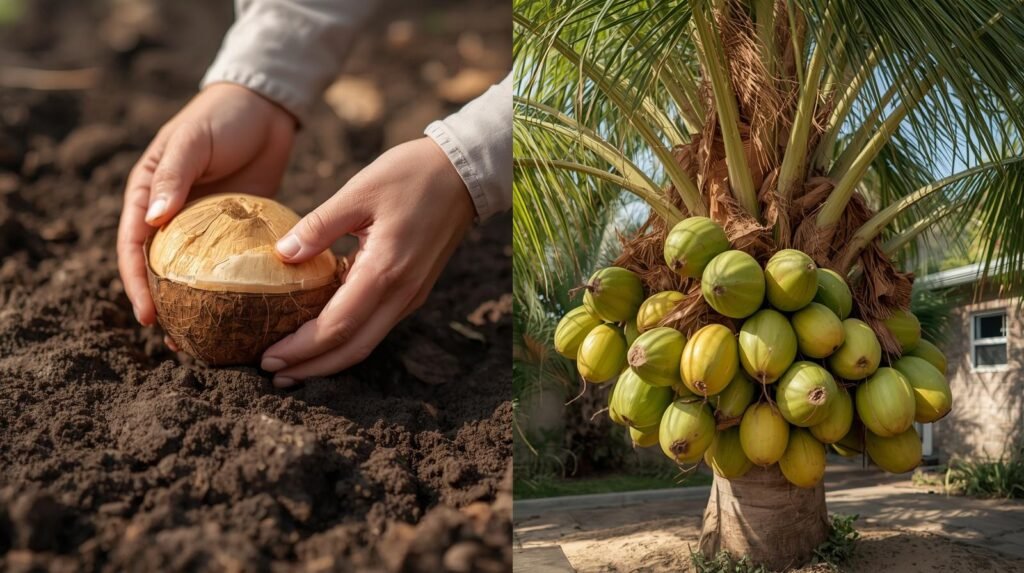
Coconut germination takes patience. Place the coconut horizontally in a shaded area. Keep the husk moist but not soaked. Sprouting usually begins within two to three months. The shoot emerges from one side of the nut. Germinated coconuts should develop strong shoots. Weak sprouts should be avoided. Healthy germination ensures better survival.
7. Best Time to Plant Coconut Trees
The monsoon season is ideal for planting coconut trees. Natural rainfall supports early root growth. Planting during extreme heat should be avoided. Early planting gives seedlings time to establish. Seasonal timing affects survival rates. Proper timing reduces transplant shock. Good planning improves establishment. Seasonal awareness is important.
8. Preparing Land and Soil for Coconut Planting
Coconut trees prefer well-drained sandy or loamy soil. Heavy clay soil causes root problems. Dig large pits to support root growth. Mix organic manure with topsoil. Soil preparation improves aeration and fertility. Good drainage prevents water stagnation. Proper land preparation supports long-term health. Healthy soil equals healthy trees.
9. Proper Planting Method for Coconut Trees
Plant the germinated coconut carefully. The sprout should face upward. The nut should be partially buried. Avoid planting too deep. Firm soil gently around the base. Water immediately after planting. Mulching helps retain moisture. Correct planting reduces stress on the seedling.
10. Spacing Requirements for Coconut Trees
Coconut trees require ample space. Proper spacing allows sunlight penetration. Crowded planting reduces yield. Maintain adequate distance from buildings. Roots spread wide underground. Good spacing improves airflow. This reduces disease risk. Space planning ensures long-term growth.
11. Watering Schedule for Coconut Trees
Young coconut trees need regular watering. Mature trees tolerate short dry periods. Water deeply during dry seasons. Avoid waterlogging the base. Mulching reduces evaporation. Consistent watering promotes nut formation. Irregular watering affects yield. Balanced moisture is essential.
12. Fertilization for Higher Coconut Yield
Coconut trees are heavy feeders. Organic manure improves soil health. Balanced nutrients support flowering and fruiting. Apply fertilizers in split doses. Micronutrients are equally important. Avoid over-fertilization. Proper feeding increases nut size and count. Nutrient balance ensures productivity.
13. Mulching and Soil Care
Mulching conserves moisture and improves soil structure. Use dry leaves or coconut husk. Mulch also controls weeds. Organic mulch decomposes over time. This enriches soil naturally. Mulching protects roots from heat. Soil care improves tree resilience.
14. Flowering and Nut Formation
Coconut trees produce male and female flowers. Pollination occurs naturally by wind and insects. Healthy trees flower regularly. Stress affects flower retention. Proper nutrition improves fruit set. Flowering indicates tree maturity. Observation helps identify problems early.
15. How to Get Higher Yield from Coconut Trees
Higher yield depends on consistent care. Proper watering and fertilization are key. Pest control protects flowers and nuts. Avoid mechanical damage to crown. Remove competing weeds. Maintain soil fertility. Healthy trees produce more coconuts annually.
16. Common Pests and Diseases
Rhinoceros beetle is a major coconut pest. Leaf rot and bud rot are common diseases. Early detection prevents spread. Use organic pest management when possible. Keep crown clean and healthy. Remove infected parts quickly. Preventive care reduces losses.
17. Pruning and Maintenance
Coconut trees require minimal pruning. Remove dried leaves carefully. Avoid damaging the crown. Clean surroundings reduce pest breeding. Proper maintenance improves appearance. Healthy maintenance supports productivity. Safety precautions are necessary. Gentle care is best.
18. Harvesting Coconuts at Home
Coconuts mature within twelve months. Harvest timing depends on usage. Tender coconuts are harvested earlier. Mature coconuts are used for oil and cooking. Use proper tools for safety. Regular harvesting improves productivity. Timely harvest maintains tree health.
19. Benefits of Growing Coconut Trees at Home
Home-grown coconuts are chemical-free. Trees provide shade and beauty. Coconut products are versatile. Trees add property value. Long-term investment benefits families. Coconut trees are eco-friendly. Home gardens become self-sufficient.
20. Conclusion – Coconut Tree as a Lifetime Asset
Growing a coconut tree is a long-term commitment. With proper care, trees reward generously. Coconut trees symbolize prosperity and sustainability. Home gardeners can succeed easily. Patience and consistency are essential. Coconut trees grow with time. They serve generations. A coconut tree is truly a lifetime asset.
📊 Table: Coconut Tree Growth Overview
| Stage | Description | Time Period |
|---|---|---|
| Germination | Sprout emergence | Two to three months |
| Establishment | Root development | First year |
| Flowering | First inflorescence | Three to five years |
| Full Yield | Maximum production | Eight years onward |