Introduction to Growing a Litchi Tree
Litchi is a delicious tropical fruit known for its sweet aroma and juicy flesh. Many gardeners believe litchi is difficult to grow, but with proper methods, it can thrive at home. Litchi trees need patience, care, and the right growing environment. Once established, the tree becomes productive for many years. This guide explains a great and proven way to grow a litchi tree successfully. From planting to long-term care, every step is important. Understanding the plant’s needs increases success. Homegrown litchi tastes far better than store-bought fruit.
Understanding the Litchi Tree Growth Habit
Litchi is a slow-growing evergreen tree with a dense canopy. It develops strong branches and glossy green leaves. The tree prefers warm and humid climates. Litchi trees grow deep roots when planted correctly. Early growth focuses on root establishment rather than height. Understanding this habit prevents unrealistic expectations. Growth improves gradually over time. Knowing how litchi grows helps in better management.
Choosing the Best Method to Grow Litchi
Litchi can be grown from seed, air-layering, or grafting. Air-layered plants are the best option for home gardeners. They fruit earlier compared to seed-grown trees. Grafted plants also ensure fruit quality. Seed-grown trees take many years to fruit. Choosing the right method saves time and effort. The correct planting method determines long-term success. Always select healthy planting material.
Selecting a Healthy Litchi Plant
Healthy plants grow faster and resist disease. Choose plants with green leaves and strong stems. Avoid plants with yellowing or dry leaves. Roots should look fresh and not rotten. Nursery-grown air-layered plants are ideal. Healthy plants establish quickly in soil. Strong starting plants reduce future problems. Quality selection ensures better fruiting.
Best Location for Growing Litchi
Litchi trees need plenty of sunlight and space. Choose a location with full sunlight for most of the day. Protection from strong winds is beneficial. Avoid water-logged areas. Litchi prefers open but sheltered environments. Proper spacing allows canopy expansion. Correct location reduces stress on the tree. A good site ensures healthy growth.
Soil Preparation for Litchi Tree
Litchi grows best in loose and fertile soil. Soil should drain well but retain moisture. Mix garden soil with organic compost. Slightly acidic soil is ideal for litchi. Avoid heavy clay soil. Organic matter improves root development. Proper soil preparation is essential for establishment. Healthy soil supports long-term productivity.
Planting the Litchi Tree Correctly
Dig a wide planting pit for the tree. Place the plant carefully without disturbing roots. Plant at the same depth as nursery soil level. Fill soil gently around roots. Water thoroughly after planting. Do not compact soil heavily. Mulching helps retain moisture. Correct planting reduces transplant shock.
Watering Schedule for Litchi Tree
Litchi trees require regular watering, especially when young. Soil should remain consistently moist. Overwatering causes root problems. Underwatering slows growth. Deep watering encourages strong roots. Reduce watering during rainy seasons. Balanced watering supports flowering later. Water management is crucial for success.
Sunlight and Temperature Requirements
Litchi thrives in warm tropical climates. Full sunlight encourages healthy growth. Young plants need protection from harsh sunlight initially. Moderate humidity benefits the tree. Cold temperatures damage young plants. Temperature stability supports flowering. Proper sunlight improves leaf health. Climate awareness is important.
Fertilizing Litchi Tree Naturally
Organic fertilizers work best for litchi. Compost and well-decomposed manure improve soil fertility. Fertilize during active growth periods. Avoid excess nitrogen. Balanced nutrition supports leaf and root development. Potassium helps future flowering. Organic feeding improves soil health. Consistent feeding ensures growth.
Pruning and Shaping the Litchi Tree
Pruning helps shape the tree and control size. Remove weak or dead branches. Pruning improves airflow within canopy. Avoid heavy pruning. Light pruning after harvest is best. Proper shape allows sunlight penetration. Balanced canopy improves flowering potential. Controlled pruning benefits long-term health.
Mulching and Soil Moisture Control
Mulching helps retain soil moisture. Organic mulch keeps roots cool. Mulch suppresses weeds naturally. Apply mulch around base but not touching stem. Mulching improves soil structure over time. Moisture retention reduces watering frequency. Mulching supports healthy roots. This practice improves growth.
Flowering Stage of Litchi Tree
Litchi flowering depends on age and care. Trees usually flower after several years. Cool and dry conditions trigger flowering. Excess nitrogen reduces flowers. Healthy trees produce panicles of flowers. Flowering occurs once a year. Stress-free plants flower better. Proper care supports blooms.
Fruit Development and Growth
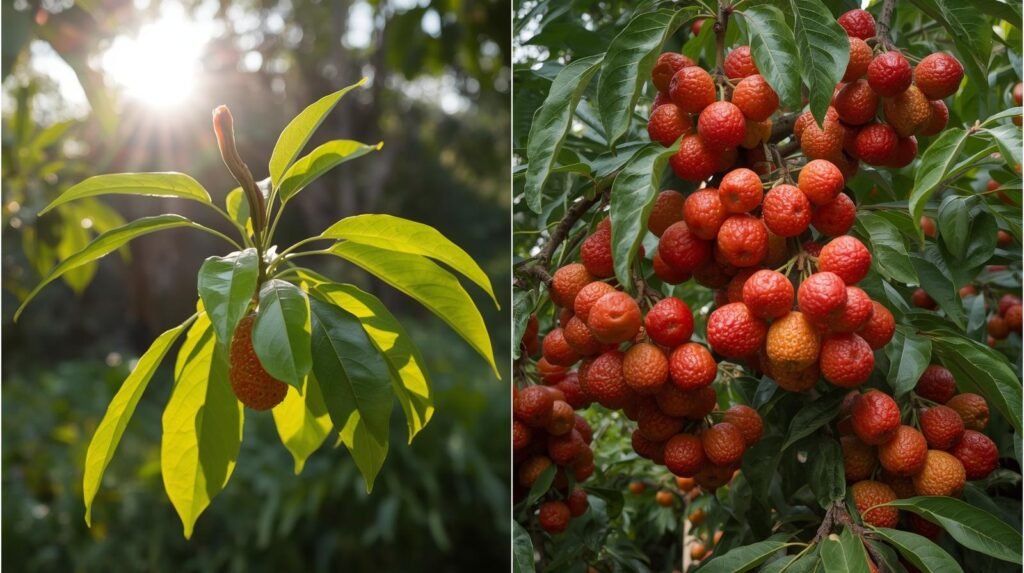
After flowering, fruits develop slowly. Adequate water is essential during fruiting. Nutrient supply supports fruit size. Sudden stress causes fruit drop. Fruits mature over several weeks. Consistent care improves quality. Fruit load increases gradually. Patience is necessary.
Protecting Litchi Tree from Pests
Litchi trees are relatively hardy. Occasional pests may appear. Neem-based sprays work effectively. Keep surroundings clean. Healthy trees resist pests naturally. Avoid chemical pesticides. Early detection prevents damage. Organic protection keeps fruits safe.
Seasonal Care for Litchi Trees
Summer requires frequent watering. Winter needs reduced irrigation. Protect young plants from cold winds. Seasonal adjustments prevent stress. Fertilize according to season. Observe tree response regularly. Seasonal care ensures balanced growth. Adaptation improves productivity.
Table: Litchi Tree Growing Requirements
| Factor | Requirement |
|---|---|
| Climate | Warm and humid |
| Soil | Loose and fertile |
| Sunlight | Full sunlight |
| Watering | Moderate and regular |
| Fruiting time | Three to five years |
Benefits of Growing Litchi at Home
Homegrown litchi is chemical-free. Gardening improves mental health. Trees enhance garden beauty. Fresh fruits taste superior. Growing fruit saves money. Litchi is rich in nutrients. Home gardening promotes sustainability. Long-term rewards are high.
Common Mistakes to Avoid
Overwatering damages roots. Poor drainage causes disease. Excess fertilizer reduces flowering. Wrong location affects growth. Heavy pruning delays fruiting. Lack of patience leads to disappointment. Learning avoids mistakes. Awareness improves success.
Conclusion
Growing a litchi tree successfully requires patience and proper care. Choosing the right plant, soil, and location makes a big difference. Consistent watering and organic nutrition support growth. Avoid common mistakes. With time, litchi trees reward gardeners generously. Homegrown fruits are worth the wait. Start growing your litchi tree today.