1. Introduction
Growing pineapples from a store-bought fruit is surprisingly easy. With minimal tools and care, you can transform a kitchen pineapple into a thriving plant. This method saves money and provides a rewarding gardening experience. Homegrown pineapples are fresh, organic, and chemical-free. Even small spaces or containers can accommodate pineapple cultivation. The process allows gardeners to observe the full plant life cycle. Patience is key, as fruiting can take a year or more. Learning this method encourages sustainable home gardening habits.
2. Pineapple Botanical Background
Pineapples belong to the Bromeliaceae family. They are tropical perennials that grow from a central rosette. The edible fruit forms from fused flowers. Leaves are long, spiky, and arranged in a spiral pattern. Understanding the plant’s biology helps in propagation. Store-bought fruits contain crowns capable of root development. Pineapple roots emerge from the base of the crown. Botanical knowledge aids in optimal growth and care.
3. Choosing the Right Pineapple
Select a ripe, healthy pineapple with a green, firm crown. Avoid soft or brown leaves. Choose fruits with minimal bruising or decay. A healthy crown ensures strong root development. The fruit itself can be eaten or repurposed. Selecting the right pineapple reduces failure risk. Freshness is critical for successful propagation. Proper selection improves early growth and survival.
4. Preparing the Crown
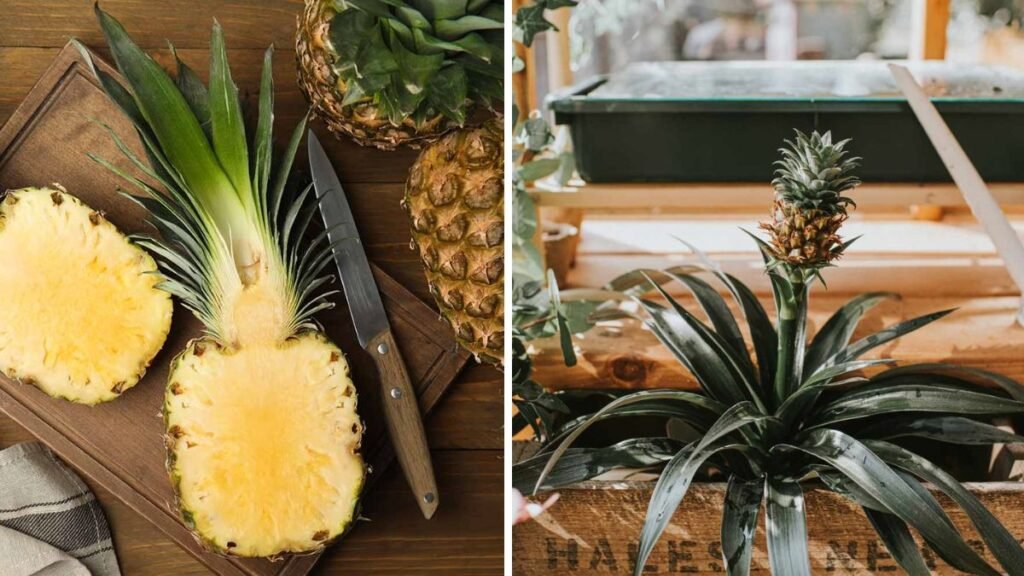
Twist or cut off the leafy crown carefully. Remove any excess fruit flesh to prevent rotting. Strip a few bottom leaves to expose the base. Allow the crown to dry for one to two days. This reduces fungal infection risk. Handle gently to avoid damaging delicate leaves. Preparing the crown correctly is crucial for successful rooting. Clean and dry crowns develop roots more effectively.
5. Rooting in Water (Optional)
Some gardeners prefer water rooting first. Place the crown in a container with shallow water. Ensure only the base is submerged. Change water every two to three days to prevent bacterial growth. Roots appear in two to four weeks. Water rooting allows observation of early root development. Strong roots increase transplant success. Monitor for rot or leaf decay. Water rooting is optional but useful for beginners.
6. Selecting a Container
Choose a container with drainage holes. Medium to large pots accommodate root growth. The pot should allow for aeration and prevent waterlogging. Containers can be plastic, ceramic, or fabric. Place saucers underneath to catch excess water. Ensure stability as the plant grows taller. Proper container selection supports long-term growth. Containers help control soil quality and moisture levels.
7. Soil Preparation
Use well-draining, sandy soil with organic compost. Avoid heavy clay soils that retain water. A slightly acidic to neutral pH is ideal. Mix sand or perlite to improve aeration. Fertile soil encourages strong root and leaf growth. Nutrient-rich soil promotes eventual flowering and fruiting. Good soil reduces disease risk. Healthy soil forms the foundation of successful pineapple growth.
8. Planting the Crown
Plant the crown in the prepared soil. Insert the base about two to three centimeters deep. Firm the soil gently around the base. Water immediately after planting. Position the plant in indirect sunlight initially. Mulch lightly to conserve moisture. Avoid deep planting that may cause rotting. Correct planting ensures strong root development.
9. Sunlight Requirements
Pineapples thrive in bright sunlight. Place near south-facing windows or outdoor areas with at least six hours of sun. Gradual exposure helps prevent leaf burn. Sunlight drives photosynthesis and healthy leaf growth. Container plants can be moved to optimize light. Insufficient sunlight delays flowering and fruiting. Adequate light ensures strong, compact growth.
10. Watering Practices
Water sparingly but consistently. Pineapples store water in leaves, so overwatering causes root rot. Soil should remain slightly moist but not soggy. Drip irrigation or watering at the soil level is recommended. Mulching conserves moisture. Watering frequency may change with climate and season. Correct hydration supports steady growth and flowering. Avoid letting soil completely dry out.
11. Fertilization
Feed with balanced, slow-release fertilizers every six to eight weeks. Nitrogen supports leaf growth, while phosphorus and potassium encourage flowering and fruiting. Organic compost can supplement nutrients. Avoid excessive nitrogen, which delays flowering. Fertilization during the growth stage strengthens leaves and roots. Monitor leaf color for deficiencies. Proper fertilization ensures healthy, fruiting plants. Nutrients directly affect fruit size and flavor.
12. Pest and Disease Management
Common pests include mealybugs, scale, and mites. Fungal infections may occur in overly moist conditions. Organic treatments like neem oil or insecticidal soap work effectively. Keep the planting area clean. Proper spacing ensures airflow to prevent fungal diseases. Monitor leaves and soil for signs of infection. Early detection prevents spread. Healthy care reduces losses and improves fruit quality.
13. Growth Stages
Leaves grow in a spiral pattern, forming a rosette. Roots establish in the first few months. The plant remains in vegetative growth for six to twelve months. Gradually, the plant prepares to flower. Growth depends on light, temperature, and soil quality. Container plants may grow slower than garden-planted pineapples. Observing stages helps predict flowering and harvest. Proper care ensures a strong plant for fruiting.
14. Flower Induction
Pineapples naturally flower after twelve to twenty-four months. Flowering can be induced artificially using ethylene treatments. Warm temperatures and consistent watering promote flowering. Monitor for healthy leaves and absence of stress. Flowering produces the fruit stem from the central rosette. Healthy plants produce more robust flowers. Timely induction accelerates harvest. Flowering stage is critical for fruit quality.
15. Fruit Development
The pineapple fruit forms from the flowering cluster. Small flowers fuse to create a single fruit. Fruit grows gradually over five to six months. Consistent care ensures sweetness and size. Container-grown plants may yield smaller fruits. Adequate sunlight, nutrients, and moisture are essential. Monitor for pests during fruiting. Harvest when fruits turn golden yellow and emit fragrance.
16. Harvesting
Harvest pineapples when fully colored and aromatic. Twist or cut gently to avoid damaging the plant. Regular monitoring prevents overripe fruits. Container plants may produce one to two fruits per year. Harvest timing affects sweetness and flavor. Store fruits in cool, ventilated areas. Avoid mechanical damage. Proper harvesting encourages future flowering.
17. Post-Harvest Handling
Wash fruits lightly before consumption. Store in a cool, dry place. Use fruits fresh, or process into juice or jams. Proper handling prevents bruising. Avoid prolonged exposure to direct sunlight. Handle gently to maintain taste and aroma. Correct post-harvest care enhances shelf life. Fresh homegrown fruits provide superior quality.
18. Benefits of Homegrown Pineapples
Homegrown pineapples are chemical-free and organic. Container cultivation allows year-round growth. Growing from store-bought fruit is cost-effective. Observing the full growth cycle is educational and satisfying. Fruits are fresh and flavorful. Reduces grocery dependence and encourages sustainability. Small-space cultivation suits urban gardens. Growing your own pineapple is rewarding for gardeners of all levels.
19. Troubleshooting
Common issues include slow growth, leaf yellowing, and rotting crowns. Adjust watering, sunlight, or fertilization as needed. Monitor for pests and diseases regularly. Ensure proper soil drainage. Remove damaged leaves. Check for root-bound conditions in containers. Address issues promptly to prevent plant death. Healthy care ensures consistent fruiting and long-term success.
20. Conclusion
Growing pineapples from a store-bought fruit is simple, rewarding, and practical. Proper crown preparation, soil, and sunlight ensure successful rooting. Watering, fertilization, and pest management promote healthy growth. Flowering, fruiting, and harvesting stages require patience and observation. Homegrown fruits are fresh, chemical-free, and flavorful. Container cultivation suits small gardens or terraces. Following these steps ensures a strong, productive pineapple plant.
📊 Table: Pineapple Cultivation Using Store-Bought Fruit
| Aspect | Requirement | Benefit |
|---|---|---|
| Sunlight | At least six hours daily | Promotes leaf growth and flowering |
| Watering | Light, consistent | Prevents root rot and stress |
| Soil | Well-draining, fertile | Supports root establishment |
| Fertilization | Balanced NPK | Encourages healthy growth and fruiting |