Introduction to Modern Eggplant Gardening
Eggplant, also known as brinjal, is a staple vegetable in many home kitchens and traditional recipes. Growing eggplant at home has become increasingly popular as gardeners look for fresh, chemical-free produce. However, traditional methods often result in pest attacks, poor flowering, and low fruit yield. New techniques focus on improving soil health, plant structure, and nutrient balance to ensure consistent production. These modern approaches are easy to follow and suitable even for beginners. Whether grown in pots, grow bags, or backyard beds, eggplant responds very well to improved care. With the right techniques, you can harvest healthy, glossy fruits throughout the season. This guide explains everything step by step.
Why Traditional Eggplant Growing Methods Fail
Many gardeners struggle with eggplant because of improper soil preparation and poor watering practices. Overcrowding plants reduces airflow and encourages pests like aphids and fruit borers. Excess nitrogen causes leafy growth but fewer flowers. Inconsistent watering leads to bitter fruits and flower drop. Lack of pruning results in weak branches that cannot support fruit weight. Soil depletion over time reduces productivity. These common mistakes discourage home growers. Understanding these problems is the first step toward adopting better techniques.
Selecting the Right Eggplant Variety for Home Growing
Choosing the correct variety plays a major role in success. Hybrid varieties offer higher yields and disease resistance, while traditional varieties provide superior taste. Long purple, round, green, and striped varieties are all suitable for home gardens. Compact varieties are ideal for containers and balconies. Always select seeds from reliable sources. Disease-resistant varieties reduce maintenance effort. Climate-appropriate varieties perform best. Proper selection ensures healthy growth from the start.
Seed Preparation and Germination Techniques
Soaking eggplant seeds in water for several hours improves germination. Some gardeners also use natural treatments like cow dung water or compost tea. Use a light seed-starting mix rather than heavy soil. Seeds should be planted at proper depth. Maintain consistent moisture without waterlogging. Germination usually occurs within one to two weeks. Strong seedlings lead to productive plants. Early care makes a noticeable difference later.
Improved Soil Preparation for Higher Yield
Eggplant thrives in rich, well-draining soil. A balanced mix of garden soil, compost, and coco peat works best. Adding neem cake improves pest resistance. Organic matter enhances microbial activity in soil. Avoid compacted soil, as roots need space to spread. Raised beds or large containers improve drainage. Healthy soil supports continuous fruiting. Soil preparation is the foundation of success.
Container vs Ground Growing Techniques
Eggplants grow equally well in containers and ground if space is sufficient. Containers allow better control over soil quality and pests. Grow bags and large pots are excellent choices. Ground planting is suitable for larger gardens. Ensure adequate spacing in both methods. Containers should have drainage holes. Ground soil should be loosened deeply. Choose the method that suits your space.
Sunlight Requirements for Eggplant Plants
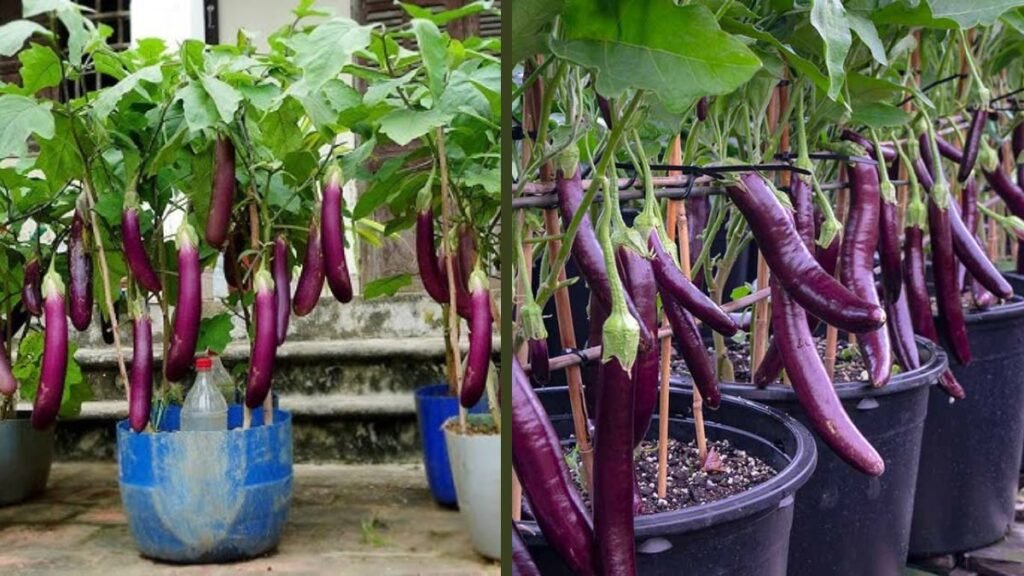
Eggplants require plenty of sunlight for flowering and fruiting. Place plants where they receive strong daily sunlight. Insufficient light results in weak stems and poor fruit set. Rotate containers if necessary. Avoid shaded corners. Sunlight directly influences fruit size and color. Consistent exposure promotes healthy growth. Light management is essential for high yield.
Watering Techniques That Prevent Flower Drop
Eggplants need consistent moisture but hate waterlogging. Deep watering encourages strong roots. Avoid frequent shallow watering. Water early in the morning. Mulching helps retain soil moisture. Irregular watering causes flower drop and bitter fruits. Well-hydrated plants flower better. Proper watering balance improves fruit quality significantly.
New Pruning Technique for Better Fruiting
Modern eggplant growing focuses on selective pruning. Remove lower leaves and weak branches. This improves airflow and reduces pest infestation. Limiting the number of main branches helps the plant focus energy on fruiting. Pruning also allows better sunlight penetration. Strong stems support heavy fruits. Regular pruning leads to larger, healthier eggplants.
Organic Feeding Schedule for Eggplants
Eggplants are heavy feeders and require regular nutrition. Use compost, vermicompost, and liquid organic fertilizers. Avoid excessive nitrogen after flowering begins. Potassium promotes fruit development. Feeding every two weeks improves yield. Natural fertilizers enhance soil health. Balanced nutrition ensures continuous harvesting. Healthy plants resist pests naturally.
Pollination and Flower Management
Eggplant flowers are self-pollinating, but stress can reduce fruit set. Gentle shaking of plants helps pollination. Avoid spraying water directly on flowers. Nutrient deficiency may cause flowers to drop. Healthy plants produce more female flowers. Flower care ensures consistent fruiting. Pollination success improves yield stability.
Supporting Eggplant Plants Properly
As eggplants grow, branches become heavy with fruit. Staking or support prevents breakage. Bamboo sticks or cages work well. Support improves airflow and reduces disease. Upright plants receive better sunlight. Supporting is especially important in containers. This simple step protects your harvest. Strong support equals stronger plants.
Pest Management Using New Natural Methods
Fruit borers are a common eggplant pest. Using neem oil regularly helps control them. Removing affected fruits prevents spread. Yellow sticky traps reduce flying insects. Healthy soil discourages pest infestation. Avoid chemical pesticides. Natural methods protect beneficial insects. Prevention is always more effective than cure.
Eggplant Growth Stages Overview (Table)
| Growth Stage | Time Period | Main Care Required |
|---|---|---|
| Germination | One to two weeks | Moist soil |
| Vegetative Growth | One month | Feeding |
| Flowering | Two weeks | Stable watering |
| Fruiting | Two to three months | Regular harvest |
Harvesting Techniques for Best Flavor
Harvest eggplants while they are glossy and firm. Over-mature fruits become bitter. Use sharp tools to avoid damaging stems. Regular harvesting encourages more flowers. Harvesting at the right stage improves taste. Morning harvest is best. Gentle handling preserves quality. Enjoy fresh, homegrown vegetables.
Common Mistakes to Avoid
Overcrowding plants limits airflow. Overwatering leads to root problems. Ignoring pruning reduces yield. Poor soil preparation causes nutrient deficiency. Avoid these mistakes for better results. Learning from experience improves gardening skills. Simple corrections bring major improvements. Awareness ensures long-term success.
Benefits of New Eggplant Growing Techniques
These techniques increase yield and reduce pest issues. Plants remain healthier throughout the season. Maintenance becomes easier. Fruits grow larger and tastier. Suitable for urban gardeners. Works well in containers. Encourages sustainable gardening. Results are consistent and rewarding.
Why Homegrown Eggplant Is Better
Homegrown eggplant is free from chemicals. Flavor is richer and fresher. You control growing conditions. Harvest only when needed. Gardening reduces grocery expenses. It promotes healthy eating. Growing your own food is satisfying. Eggplant is a perfect choice.
Final Thoughts
Growing eggplant at home using new techniques transforms the gardening experience. With proper care, anyone can achieve abundant harvests. These methods are simple and effective. They suit beginners and experienced gardeners alike. Healthy plants reward you with continuous fruits. Try these techniques today. Enjoy the joy of home gardening.