Introduction: Rooftop Bitter Melon Gardening Made Easy
Bitter melon is a powerful vegetable known for its health benefits and medicinal value. Many people think it needs large farmland to grow successfully. In reality, bitter melon grows exceptionally well in containers on rooftops. With proper sunlight, soil, and support, rooftops can become productive gardens. Container gardening is perfect for urban homes and beginners. This method saves space and provides fresh vegetables. Rooftop cultivation also improves air quality. Anyone can grow bitter melon with confidence using this guide.
Understanding Bitter Melon Plant Growth
Bitter melon is a fast-growing climbing vine. It produces long vines that love vertical growth. The plant develops male and female flowers separately. Fruit appears only after proper pollination. Bitter melon thrives in warm weather and full sunlight. Roots prefer loose, well-drained soil. Understanding growth habits helps maximize yield. Even in containers, vines grow vigorously. Proper care ensures continuous fruiting.
Choosing the Best Container for Rooftops
Large containers help bitter melon grow freely. Use tubs, buckets, or grow bags with drainage holes. Containers should be at least deep enough for roots. Dark-colored containers retain warmth. Drainage prevents root rot. Rooftop containers should be lightweight but sturdy. Proper container selection supports healthy vines. Good containers increase fruit production significantly.
Soil Preparation for High Yield
Use loose, fertile soil for container planting. Mix garden soil, compost, and cocopeat. Soil must drain well while retaining moisture. Organic matter improves soil life. Avoid heavy clay soil in containers. Healthy soil promotes strong roots. Balanced soil ensures flowering and fruiting. Soil quality directly affects yield.
Seed Selection and Germination
Choose high-quality bitter melon seeds. Local varieties perform better in rooftop conditions. Soak seeds overnight before sowing. Germinate seeds in small pots or directly in containers. Maintain warmth and moisture. Healthy germination ensures strong plants. Seed quality influences fruit size. Good seeds bring confidence to beginners.
Transplanting Seedlings Carefully
Transplant seedlings when they reach several inches tall. Handle roots gently. Avoid damaging the stem. Plant one seedling per container. Water lightly after transplanting. Shade for one day if sun is harsh. Proper transplanting prevents shock. Healthy seedlings establish faster.
Watering Routine for Containers
Container-grown bitter melon needs regular watering. Water deeply but avoid waterlogging. Morning watering is best. Mulching helps retain moisture. Rooftop heat dries soil faster. Consistent moisture encourages flowering. Irregular watering reduces yield. Balanced watering is essential.
Providing Vertical Support
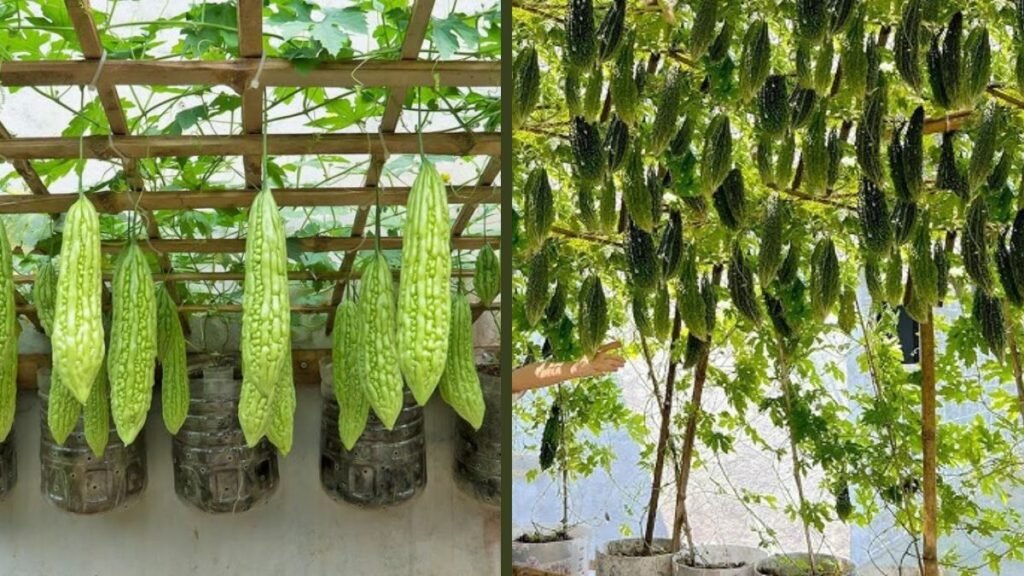
Bitter melon vines need strong support. Use bamboo poles, ropes, or trellis frames. Vertical growth saves space. Fruits hang freely and grow straight. Support improves airflow and light exposure. Strong vines produce more flowers. Proper support increases yield significantly. Training vines is easy and effective.
Nutrient Management with Organic Feeding
Bitter melon benefits from regular feeding. Use compost, vermicompost, or liquid compost tea. Avoid excess nitrogen. Balanced nutrition supports fruiting. Feed plants every two weeks. Organic fertilizers improve soil health. Healthy nutrition produces continuous harvests. Organic care ensures safe vegetables.
Flowering and Pollination Tips
Male flowers appear first, followed by female flowers. Bees help natural pollination. Hand pollination improves fruit set on rooftops. Pollination ensures proper fruit development. Avoid spraying during flowering. Healthy flowers produce more fruits. Observation improves success. Flower care is important.
Fruit Development and Care
Fruits grow rapidly after pollination. Maintain regular watering and feeding. Avoid sudden stress to the plant. Support fruits if needed. Harvest when fruits are tender. Overgrown fruits reduce quality. Regular harvesting encourages more fruits. Gentle care improves yield.
Pest Control Naturally
Common pests include aphids and whiteflies. Neem oil spray works well. Hand removal prevents spread. Healthy plants resist pests better. Avoid chemical pesticides. Organic pest control is safe for rooftops. Regular inspection reduces damage. Simple methods are effective.
Disease Prevention on Rooftops
Good airflow prevents fungal diseases. Avoid overcrowding vines. Remove infected leaves immediately. Do not overwater. Replace soil every season if possible. Healthy plants stay productive longer. Disease prevention saves effort. Clean practices ensure success.
Harvesting Bitter Melon Correctly
Harvest fruits when green and tender. Use scissors or a knife. Avoid pulling fruits from vines. Morning harvest keeps freshness. Frequent harvesting promotes continuous fruiting. Handle fruits carefully. Proper harvesting improves plant life. Timely harvest increases yield.
Post-Harvest Handling
Wash fruits gently if needed. Store in cool, ventilated space. Avoid stacking fruits. Fresh bitter melon tastes best. Proper handling preserves nutrients. Homegrown produce lasts longer. Safe storage is simple. Quality handling maintains freshness.
Pruning and Training for More Fruits
Remove weak lateral shoots. Encourage productive branches. Pruning improves airflow. Focus energy on fruiting vines. Controlled growth increases yield. Avoid excessive pruning. Balanced training supports continuous harvest. Simple pruning makes a big difference.
Comparison Table: Ground vs Container Bitter Melon
| Aspect | Ground Growing | Container Rooftop |
|---|---|---|
| Space | Large land | Small rooftop |
| Soil control | Limited | Full control |
| Water use | High | Efficient |
| Pest control | Moderate | Easy |
| Yield | Moderate | High per plant |
Benefits of Rooftop Bitter Melon
Fresh vegetables at home. Saves money. Improves health. Utilizes unused space. Encourages eco-friendly living. Suitable for beginners. Reduces market dependency. Builds gardening confidence.
Sustainability and Long-Term Value
Container gardening improves soil reuse. Organic methods protect environment. Rooftop gardens cool buildings. Sustainable food production is possible. Long-term savings increase. Healthy lifestyle benefits family. Gardening becomes enjoyable. Productivity continues year after year.
Conclusion
Growing bitter melon in containers transforms rooftops into productive gardens. With proper soil, watering, support, and organic care, anyone can harvest abundantly. This method is perfect for beginners and urban homes. Fresh vegetables grow just steps away. Consistency and patience bring success.