Introduction to Bottle Gardening for White Eggplants
White eggplants are gaining popularity due to their mild taste, tender flesh, and attractive appearance. Many home gardeners hesitate to grow them because they believe they require large garden space. Bottle gardening proves this idea wrong by allowing healthy eggplant growth even in compact areas. Using bottles helps control soil quality, moisture, and pests more efficiently. This method is especially useful for balconies, terraces, and small backyards. White eggplants grow faster in controlled containers because nutrients are not wasted. With proper care, bottle-grown plants can yield surprisingly large and beautiful fruits.
Why Choose White Eggplants Over Purple Varieties
White eggplants are less bitter than purple varieties and have thinner skin. They cook faster and absorb flavors better, making them family-friendly vegetables. Their creamy texture is ideal for curries, grills, and stir-fries. Nutritionally, white eggplants contain fiber, antioxidants, and essential minerals. They are gentle on digestion and suitable for children and elderly people. Growing them at home ensures pesticide-free produce. Their attractive white color also makes your bottle garden visually appealing.
Benefits of Growing Eggplants in Bottles
Bottle gardening saves space and allows gardening even in urban homes. Bottles are easy to move, making sunlight management simple. They prevent soil-borne diseases and reduce weed growth. Water usage becomes efficient because moisture remains confined. Bottles are low-cost and eco-friendly, promoting recycling. This method also makes plant monitoring easier. Overall, bottle gardening gives faster growth and higher success rates for beginners.
Choosing the Right Bottle Size
Large plastic bottles of ten to twenty liters work best. Smaller bottles restrict root growth and reduce yield. Transparent bottles should be painted or wrapped to protect roots from sunlight. Drainage holes must be added at the bottom and sides. Proper bottle size ensures strong roots and healthy foliage. Strong root systems directly affect fruit size and quantity. Always clean bottles before use to avoid contamination.
Best Soil Mix for Bottle Eggplants
A loose and nutrient-rich soil mix is essential. Combine garden soil, compost, and cocopeat in equal parts. Add vermicompost to boost organic nutrients. Sand can be added for better drainage. Avoid compact soil as eggplants need air circulation around roots. Good soil promotes faster flowering and fruiting. Healthy soil directly leads to big and shiny white eggplants.
Seed Selection and Germination
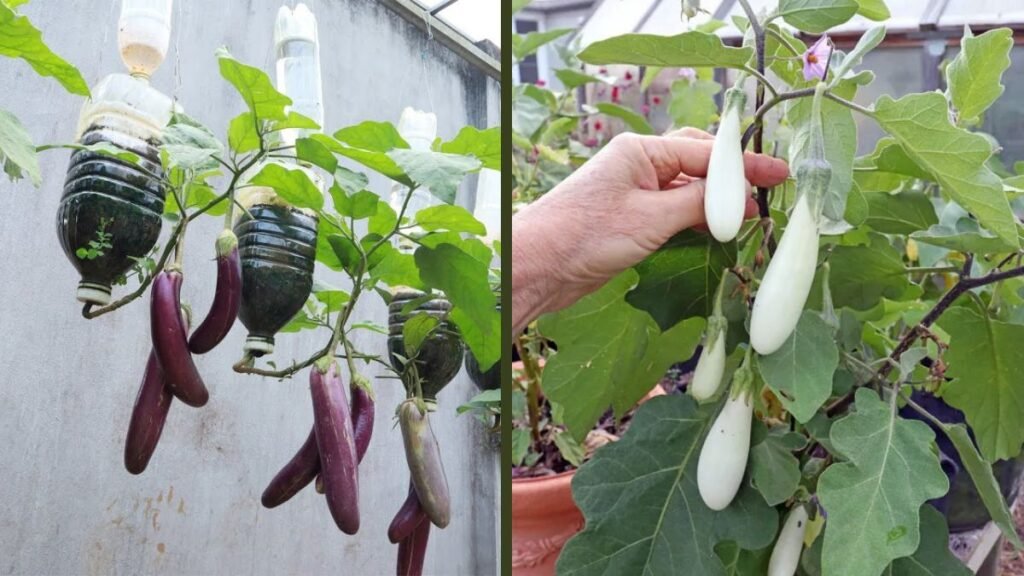
Choose hybrid or high-yield white eggplant seeds from reliable sources. Soak seeds in water for six to eight hours before planting. This improves germination speed. Start seeds in a small nursery tray before transplanting. Healthy seedlings should have three to four true leaves. Strong seedlings adapt better to bottle environments. Good seed quality ensures faster harvest.
Transplanting Seedlings into Bottles
Transplant seedlings carefully without damaging roots. Fill bottles with prepared soil and make a central hole. Place the seedling upright and gently firm the soil. Water immediately after transplanting. Keep bottles in partial shade for two days. Gradual exposure to sunlight prevents transplant shock. Proper transplanting ensures continuous growth without delay.
Sunlight Requirements
White eggplants need six to eight hours of direct sunlight daily. Place bottles near windows, balconies, or terraces. Rotate bottles regularly for even growth. Insufficient sunlight leads to weak plants and fewer fruits. Sunlight boosts flowering and improves fruit color. Adequate light results in strong stems and glossy eggplants.
Watering Schedule for Fast Growth
Water bottles once daily during hot weather and alternate days in cooler seasons. Ensure excess water drains out completely. Overwatering causes root rot and flower drop. Early morning watering is ideal. Consistent moisture helps rapid vegetative growth. Balanced watering leads to continuous fruiting.
Fertilization for Big Harvest
Apply liquid compost or vermiwash every ten days. During flowering, use potassium-rich organic fertilizer. Avoid excessive nitrogen, which increases leaves but reduces fruits. Organic feeding improves soil life and fruit taste. Fertilizing regularly ensures big and heavy eggplants. Healthy nutrition directly increases harvest speed.
Pruning and Plant Support
Remove lower yellow leaves to improve airflow. Pinch excess side shoots if the plant becomes bushy. Use small sticks or strings for support. Supporting stems prevents fruit damage. Pruning helps the plant focus energy on fruit production. Strong structure allows larger fruits to develop safely.
Pollination Tips
Eggplants self-pollinate but benefit from gentle shaking. Lightly shake plants in the morning. Pollination improves fruit set and shape. Poor pollination leads to small or deformed fruits. Healthy flowers mean better yield. Natural pollination increases harvest consistency.
Pest and Disease Control
Common pests include aphids and mites. Spray neem oil weekly for prevention. Remove infected leaves immediately. Good airflow reduces fungal diseases. Bottle gardening already lowers pest risk. Clean surroundings keep plants healthy.
Harvesting White Eggplants
Harvest when fruits are glossy and firm. Do not allow fruits to overgrow as texture becomes hard. Use scissors to cut fruits gently. Regular harvesting encourages new flowers. Timely picking improves taste and yield. Fast harvesting cycles mean more production.
Storage and Usage
Store eggplants in a cool, dry place. Avoid refrigeration for long periods. Use fresh for best flavor. White eggplants are ideal for grilling, curries, and stuffing. Fresh harvest ensures superior nutrition.
Common Mistakes to Avoid
Using small bottles reduces yield. Overwatering causes root problems. Poor sunlight delays fruiting. Ignoring fertilization results in weak plants. Avoid these mistakes for success.
Table: Bottle Eggplant Growing Essentials
Soil type – Loose, compost-rich, well-drained
Sunlight – Six to eight hours daily
Bottle size – Ten to twenty liters
Watering – Moderate and regular
Fertilizer – Organic liquid feed
Harvest time – Sixty to eighty days
Why Bottle Gardening Works So Well
Controlled environment speeds growth. Nutrients stay concentrated. Roots remain healthy. Pests are minimized. Space is optimized. Growth becomes predictable and fast.
Conclusion
Growing white eggplants in bottles is simple, affordable, and productive. With proper soil, sunlight, watering, and feeding, anyone can enjoy a big and fast harvest. This method is ideal for urban homes and beginners. Start today and enjoy fresh white eggplants straight from your bottle garden.