Introduction: Why Soil-Free Lettuce Growing Is Trending
Many people believe vegetables require soil, but lettuce proves otherwise. Lettuce grows extremely well without soil when given water and nutrients. This method is clean, fast, and space-saving. It suits urban homes perfectly. No digging or messy soil is needed. Growth is faster than traditional gardening. Maintenance is simple and beginner-friendly. This guide explains the easiest way.
The Smart Tip That Makes Soil-Free Lettuce Thrive
The secret is shallow root support with constant moisture. Lettuce roots need oxygen and water, not soil depth. Using water with light nutrients speeds growth. Keeping roots cool prevents bitterness. Proper spacing improves leaf size. This tip transforms lettuce growing. Once applied, success is guaranteed. Understanding lettuce behavior is key.
Why Lettuce Grows Well Without Soil
Lettuce has shallow roots. Nutrients absorbed directly from water boost growth. Soil is not essential for structure. Water-based systems reduce disease risk. Clean roots grow healthier. Oxygen availability increases. Growth becomes faster and uniform. This makes lettuce ideal for soil-free methods.
Choosing the Best Lettuce Varieties
Loose-leaf lettuce grows fastest. Butterhead varieties perform well. Romaine adapts easily. Iceberg is less suitable. Baby leaf varieties give quick harvests. Heat-tolerant types suit warm climates. Compact varieties save space. Correct selection improves results.
Materials Required for Soil-Free Growing
You need lettuce seeds or seedlings. A shallow container or tray is required. Clean water is essential. Net cups, sponge, or cloth support roots. Liquid nutrients provide feeding. Sunlight or grow lights are needed. Optional air pumps improve oxygen. Materials are simple and affordable.
Seed Germination Without Soil
Seeds germinate with moisture and warmth. Place seeds on damp sponge or cloth. Keep moist but not flooded. Germination occurs within days. Transfer sprouts carefully. Roots should touch water. Leaves grow rapidly afterward. Germination success is high.
Setting Up the Water Container
Choose a wide shallow container. Fill with clean water. Add diluted nutrients. Place seedlings in net cups. Roots remain submerged. Stems stay dry. Position container in bright indirect light. Change water weekly.
Light Requirements for Healthy Lettuce
Lettuce prefers bright but gentle light. Direct harsh sun causes bitterness. Morning sunlight is ideal. Indoor growers can use grow lights. Provide ten to twelve hours of light. Consistent light improves leaf color. Balanced lighting ensures quality.
Water and Nutrient Management
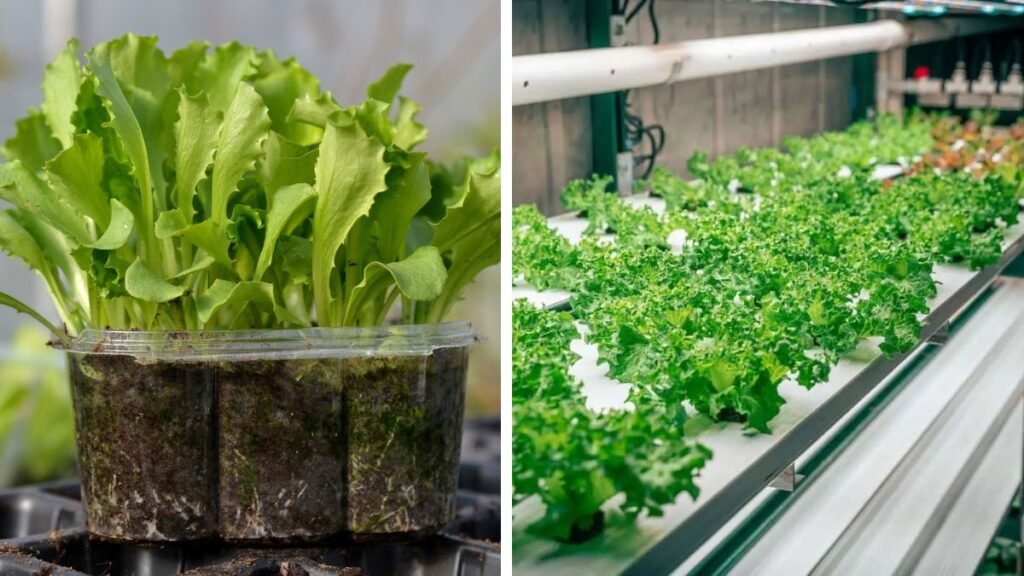
Water should stay clean and cool. Change water regularly. Add nutrients weekly. Avoid overfeeding. Monitor leaf color. Pale leaves indicate deficiency. Balanced feeding improves taste. Proper care ensures fast growth.
Table: Soil-Free Lettuce Growing Guide
| Aspect | Requirement | Recommendation |
|---|---|---|
| Medium | Water | Clean and cool |
| Container | Shallow | Wide tray |
| Nutrients | Mild | Weekly feeding |
| Light | Bright | Indirect |
| Harvest | Continuous | Cut outer leaves |
Harvesting for Continuous Supply
Harvest outer leaves first. Leave the center intact. Cut with clean scissors. Regrowth begins quickly. Harvest every few days. This method extends plant life. Fresh leaves are always available. Continuous harvesting increases yield.
Common Problems and Easy Fixes
Yellow leaves indicate nutrient deficiency. Bitter taste means excess heat. Slow growth suggests low light. Algae growth needs reduced light exposure. Root rot requires better water hygiene. Early correction saves plants. Problems are easy to fix. Maintenance is simple.
Why This Method Saves Space
No soil beds are required. Containers fit small areas. Vertical racks increase capacity. Window sills become productive. Multiple plants grow close together. Urban homes benefit greatly. Space efficiency is excellent. This method suits apartments.
Indoor Lettuce Growing Benefits
Indoor growing avoids pests. Temperature control is easier. Growth continues year-round. Fresh harvests are convenient. Indoor air quality improves slightly. Clean and mess-free gardening is possible. Small spaces become green. Indoor setups are ideal.
Cost and Sustainability Benefits
Initial cost is low. Materials are reusable. No soil purchase is needed. Water usage is efficient. Grocery expenses reduce. Packaging waste decreases. Home food production increases sustainability. Long-term savings are significant.
Scaling Up Lettuce Production
Use multiple trays for more yield. Stagger planting dates. Vertical shelving increases capacity. Simple automation helps. Family needs are easily met. Small businesses can scale. Expansion is flexible. Productivity grows quickly.
Health Benefits of Fresh Lettuce
Homegrown lettuce contains more nutrients. Leaves are crisp and clean. No chemical residues remain. Fresh harvest preserves vitamins. Taste is superior. Healthy eating becomes easier. Nutritional quality improves. Fresh greens support wellness.
Why This Tip Works Perfectly
It matches lettuce root behavior. Water provides direct nutrition. Shallow support prevents stress. Controlled environment improves quality. Simple steps ensure success. Beginners achieve results quickly. This tip is reliable. It works every time.
Final Conclusion
Growing lettuce without soil is surprisingly easy. This method is clean and fast. Space requirements are minimal. Growth is rapid and consistent. Beginners succeed confidently. Fresh lettuce is always available. Sustainable living becomes practical. This method suits every home.