Gardening is a fulfilling hobby, but achieving healthy, vibrant plants often requires attention to soil nutrients and pest management. While commercial fertilizers and chemical treatments are available, nature itself offers simple, eco-friendly alternatives. One of the most overlooked yet highly effective resources in home gardening is eggshells. Often discarded as kitchen waste, eggshells are a powerhouse of nutrients and benefits for plants, making them an excellent organic solution for boosting growth, improving soil health, and protecting crops.
In this comprehensive guide, we’ll explore why eggshells are an excellent organic amendment, how to prepare and use them effectively, and the numerous ways they enhance your garden, all while promoting sustainability and reducing waste.
Why Eggshells Are an Excellent Organic Tool
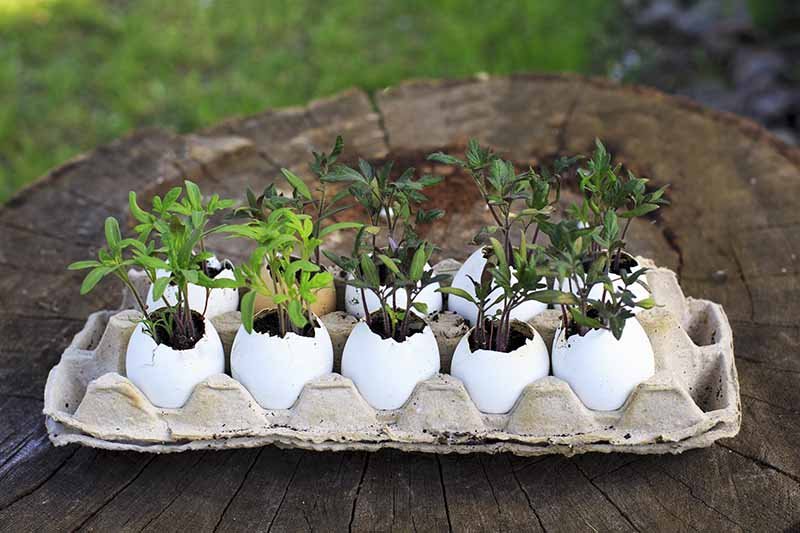
Eggshells are rich in nutrients, especially calcium, which is essential for plant growth. Beyond calcium, they also contain small amounts of magnesium, potassium, and phosphorus, contributing to overall soil fertility.
Key Benefits
- Soil Enrichment: Eggshells gradually break down, releasing nutrients that improve soil structure and fertility.
- Stronger Plants: Calcium supports cell wall development, preventing issues like blossom-end rot in tomatoes and peppers.
- pH Balance: Crushed eggshells can help neutralize acidic soils.
- Natural Pest Deterrent: Sharp edges deter slugs and snails from attacking seedlings.
- Eco-Friendly: Using eggshells reduces kitchen waste and avoids chemical fertilizers.
Step 1: Preparing Eggshells for the Garden
To maximize their benefits, eggshells should be cleaned and prepared properly before use.
Cleaning
- Rinse eggshells with water to remove any egg residue.
- Dry them in the sun or oven at low temperature to prevent mold and odor.
Crushing
- Crush dried eggshells into small pieces for slow-release nutrients.
- For faster nutrient availability, grind them into a fine powder using a blender or mortar.
Tip: Fine powder dissolves more quickly in the soil, providing faster calcium absorption for plants.
Step 2: Using Eggshells as Fertilizer

Eggshells are particularly useful for nutrient-deficient soils or calcium-hungry plants.
Methods
- Direct Soil Application:
- Sprinkle crushed eggshells around the base of plants.
- Work them lightly into the top layer of soil.
- Eggshell Tea (Liquid Fertilizer):
- Boil eggshells in water for 10–15 minutes.
- Allow cooling, then pour the nutrient-rich liquid around plants.
- Compost Additive:
- Add crushed eggshells to your compost pile.
- They enrich compost with calcium and balance the pH.
Ideal Plants
- Tomatoes, peppers, eggplants (prone to blossom-end rot)
- Leafy greens like spinach and lettuce
- Fruit-bearing plants like strawberries and cucumbers
Tip: Combine eggshells with other organic fertilizers like compost or coffee grounds for a well-rounded nutrient boost.
Step 3: Pest Control with Eggshells
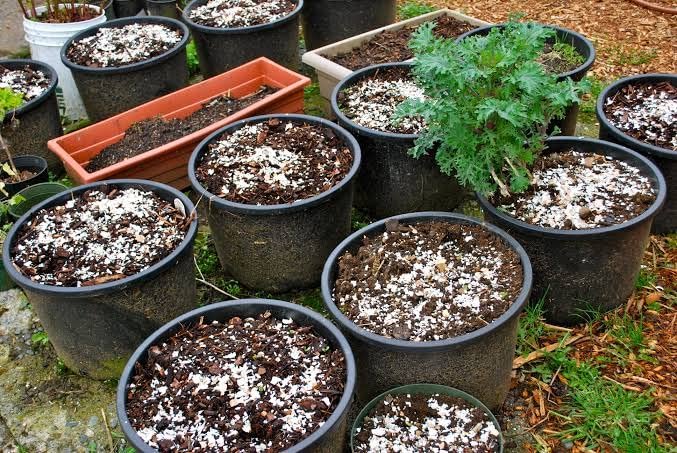
Eggshells are also a natural, safe way to keep pests at bay.
Slug and Snail Barrier
- Scatter crushed eggshells in a ring around seedlings.
- The sharp edges deter slugs and snails from crawling over.
Ant Repellent
- Sprinkle eggshell powder near ant hills or along garden paths.
- The texture and alkaline nature discourage ants from crossing.
Tip: Replace eggshell barriers regularly, especially after heavy rain.
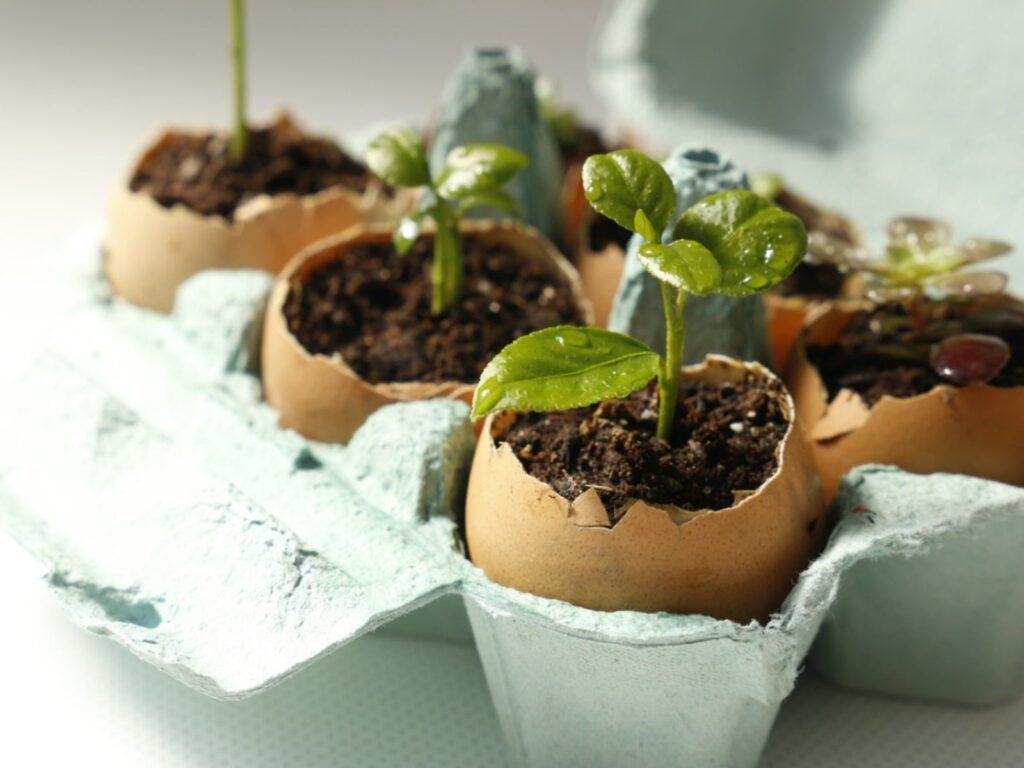
Step 4: Seedling Starter Pots from Eggshells

Eggshells themselves can serve as biodegradable pots for starting seedlings.
Steps
- Carefully crack eggshells in half and remove the contents.
- Fill each half with potting soil.
- Plant seeds (herbs, flowers, or vegetables) directly in the shell.
- When seedlings are ready to transplant, plant the entire eggshell in the garden.
Benefits
- Reduces transplant shock
- Adds nutrients to the soil as the shell decomposes
- Eco-friendly and visually charming
Tip: Poke a small drainage hole at the bottom for excess water.
Step 5: Improving Soil Structure
Eggshells not only supply nutrients but also improve the physical condition of the soil.
Benefits
- Increases aeration and drainage in heavy clay soils
- Helps retain moisture in sandy soils
- Reduces soil compaction over time
Tip: Incorporate crushed eggshells into the soil during planting or tilling for long-term soil health.
Step 6: Preventing Blossom-End Rot in Tomatoes and Peppers
Blossom-end rot is a common calcium deficiency in tomatoes and peppers, causing black, sunken areas at the blossom end of fruits. Eggshells are an effective preventative measure.
How to Use
- Crush eggshells finely and sprinkle them around the base of plants.
- Alternatively, mix eggshell powder into the soil at planting time.
- Regular watering helps transport calcium from the soil to plant tissues.
Tip: Combine with other calcium sources like bone meal for faster results.
Step 7: DIY Eggshell Fertilizer Blends
For a nutrient-rich boost, eggshells can be combined with other organic materials.
Sample Blends
- Eggshell + Coffee Grounds:
- Provides nitrogen, potassium, and calcium.
- Ideal for vegetables and leafy greens.
- Eggshell + Banana Peel:
- High in potassium and calcium, perfect for flowering plants.
- Eggshell + Compost:
- Slow-release, improves soil fertility and structure over time.
Tip: Grind all ingredients into a fine powder for easy mixing and faster nutrient absorption.
Step 8: Sustainability Benefits of Using Eggshells
Using eggshells in gardening promotes environmental responsibility.
Benefits
- Reduces kitchen waste
- Reduces dependence on chemical fertilizers
- Encourages organic gardening practices
- Cost-effective and accessible for home gardeners
Tip: Save eggshells daily, rinse, dry, and store in a jar until ready to use.
Step 9: Safety Considerations
While eggshells are generally safe, there are a few precautions to keep in mind.
Precautions
- Ensure eggshells are clean and dry to avoid attracting pests.
- Avoid using eggshells from spoiled or moldy eggs.
- Store eggshells in a dry, airtight container if not used immediately.
Tip: Crushing eggshells finely prevents potential injuries to gardeners and ensures even nutrient distribution.
Step 10: Creative Uses Beyond Fertilizer
Eggshells have versatile applications in gardening and beyond.
Additional Uses
- Mulch: Sprinkle around plants to reduce weed growth.
- pH Adjustment: Slowly raises soil pH in acidic soils.
- Ornamental Uses: Painted eggshells as garden markers or decorations.
- Bird Feed: Crushed eggshells can provide calcium for backyard birds.
Conclusion: Eggshells as a Garden Superhero
Eggshells are a simple yet incredibly powerful tool for home gardeners. From improving soil fertility and preventing calcium deficiencies to repelling pests and supporting seedling growth, they are an excellent organic alternative to chemical fertilizers. By incorporating eggshells into your gardening routine, you can grow stronger, healthier plants, save money, reduce waste, and contribute to a more sustainable lifestyle.
Next time you crack an egg, remember: the shell that seems like waste could be the secret to your thriving, vibrant garden. With consistent use, proper preparation, and creative applications, eggshells can become a cornerstone of your organic gardening success.