Peppers, whether sweet bell peppers or fiery hot chilies, are among the most versatile and rewarding plants to grow at home. The journey to a bountiful pepper harvest starts with the tiny seed. Germinating pepper seeds properly is crucial for producing strong seedlings, healthy plants, and a prolific crop.
While germination may seem tricky at first, the process is simple with the right care, environment, and techniques. This comprehensive guide will walk you through every step of germinating pepper seeds—from selecting seeds and preparing them to nurturing seedlings and troubleshooting common issues.
🌱 Why Germinate Pepper Seeds at Home?
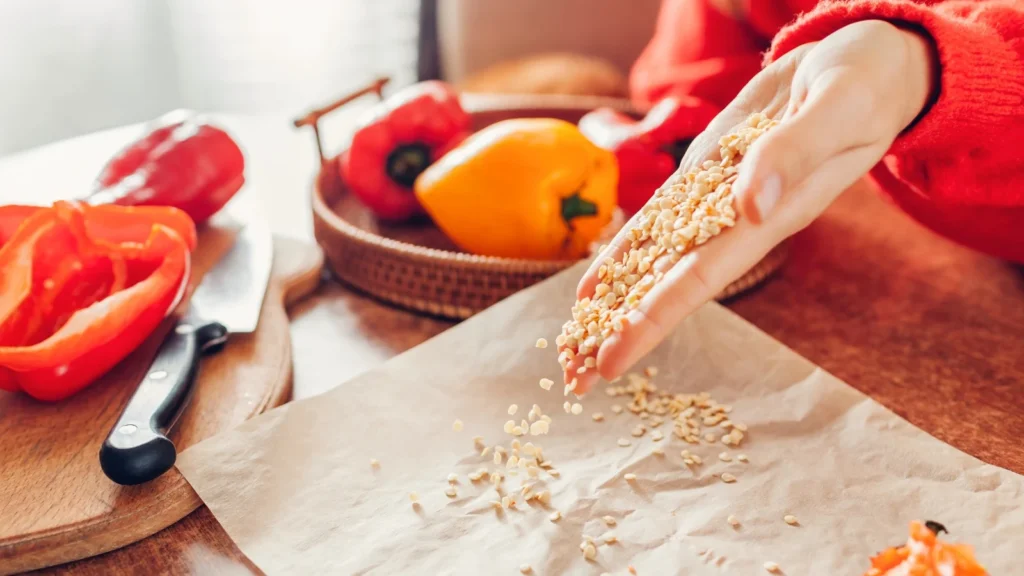
Growing pepper seeds at home offers several benefits:
- Access to more varieties: Grow heirloom, rare, or exotic peppers not available at nurseries.
- Stronger plants: Seedlings adapt to your environment from day one.
- Cost-effective: One packet of seeds can yield dozens of plants.
- Organic control: Grow without chemicals or synthetic treatments.
- Extended growing season: Start seeds indoors before outdoor planting season begins.
By starting seeds at home, you ensure a better foundation for a healthy, productive pepper crop.
🛒 Selecting the Right Pepper Seeds
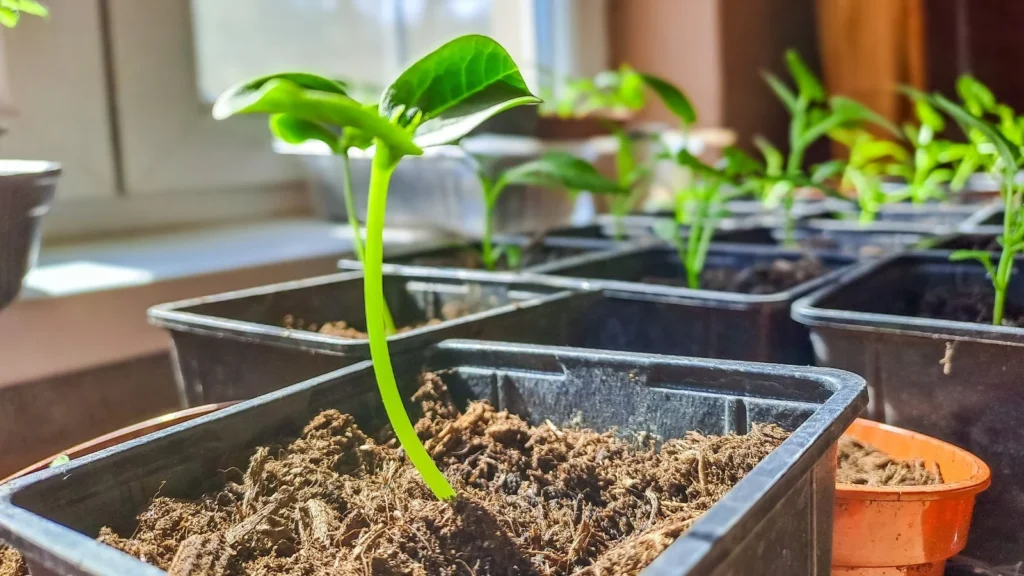
The first step in successful germination is choosing quality seeds.
Tips for Selecting Seeds:
- Purchase from a reputable supplier to ensure high germination rates.
- Choose fresh seeds; older seeds may germinate slowly or fail.
- Decide on the type: sweet peppers, hot chilies, or specialty varieties.
- Organic seeds are preferred for chemical-free growing.
Some varieties are faster to germinate than others. Bell peppers may take longer (2–3 weeks), while smaller hot peppers often sprout in 7–14 days.
🌿 Preparing Pepper Seeds for Germination
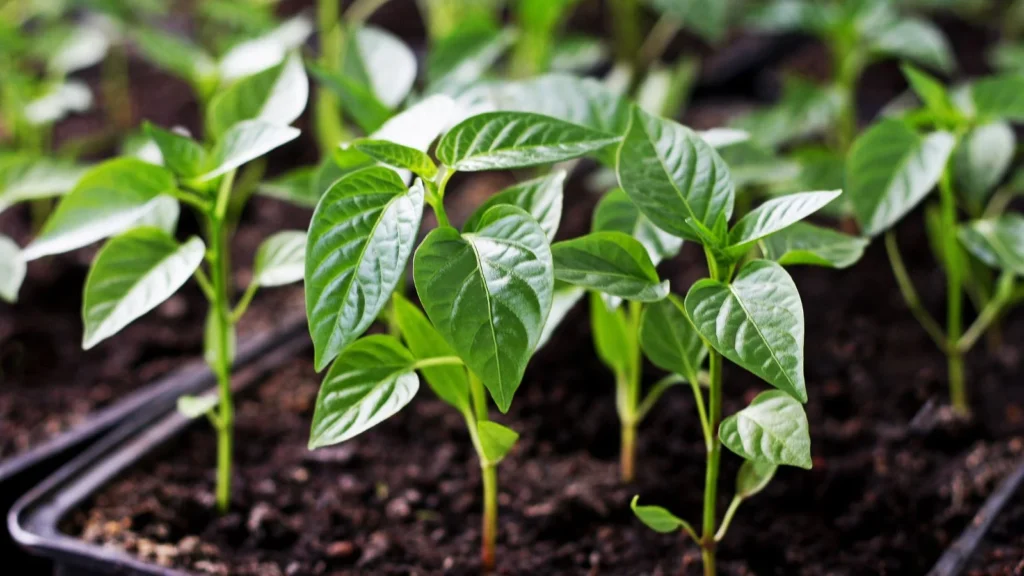
Pepper seeds benefit from pre-treatment to improve germination rates:
1. Soaking Seeds
- Soak seeds in warm water for 6–12 hours.
- This softens the seed coat and speeds up sprouting.
2. Scarification (Optional)
- Gently rub seeds with fine sandpaper if the seed coat is very hard.
- Only recommended for large, old seeds.
3. Pre-Germination in Paper Towels (Optional)
- Place soaked seeds between moist paper towels.
- Keep in a warm, dark location.
- Check daily and transplant once small roots appear.
These steps increase the chances of uniform and faster germination.
🌱 Choosing the Right Germination Medium
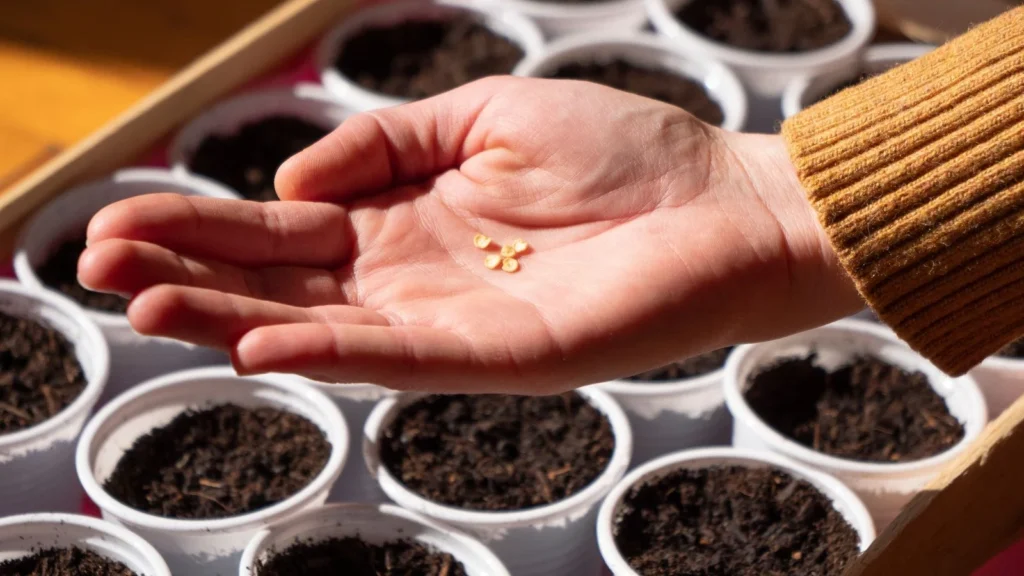
Pepper seeds need a light, airy, and well-draining medium.
Ideal Germination Mix:
- 50% cocopeat or peat moss
- 30% vermicompost
- 20% perlite or sand
Alternative: Commercial seed-starting mix works perfectly. Avoid heavy garden soil, which can retain too much water and cause rot.
🪴 Containers for Germination
Pepper seeds can be germinated in a variety of containers:
- Seed trays with drainage holes
- Small pots or cups
- Recycled containers with holes punched at the bottom
Tip: Ensure containers are clean and sterilized to prevent fungal infections.
🌡 Temperature and Light Requirements
Peppers are warmth-loving plants, and temperature plays a key role in germination.
- Optimal temperature: 24–30°C (75–86°F)
- Minimum temperature: 18°C (65°F)
- Light: Not essential during germination, but seedlings need 12–14 hours of bright light once they sprout
Using a heat mat or placing seeds on a warm windowsill accelerates germination.
💧 Planting Pepper Seeds
Step-by-Step Guide:
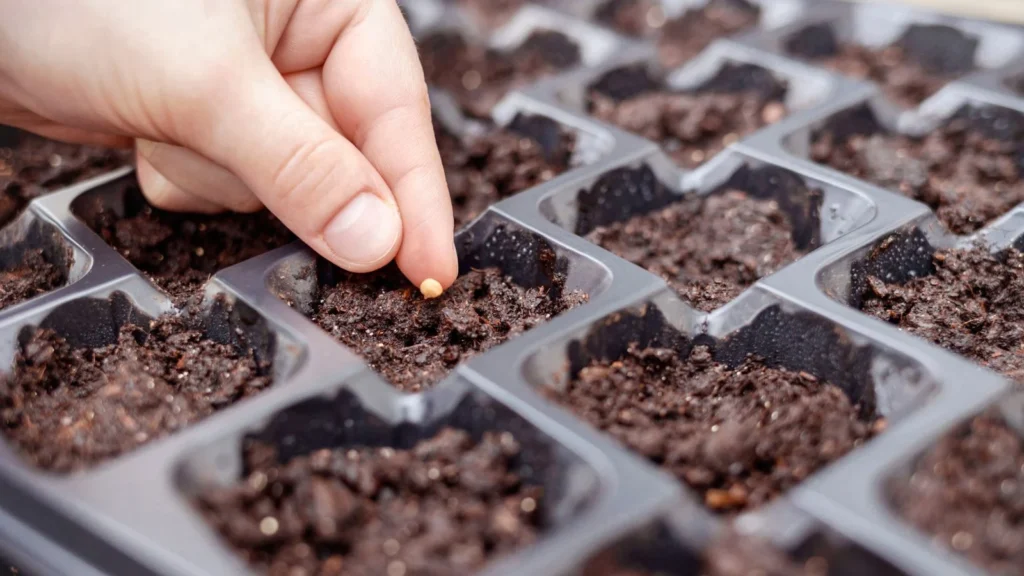
- Fill your container with the germination medium.
- Make small holes about 0.5–1 cm deep.
- Place 1–2 seeds per hole.
- Cover lightly with soil.
- Mist gently with water to moisten the soil.
Important: Do not overwater; seeds need moisture but not soggy conditions.
🌱 Covering and Maintaining Humidity
Pepper seeds germinate best in a humid environment.
- Cover containers with a clear plastic lid or wrap to retain moisture.
- Ensure some ventilation to prevent mold growth.
- Check daily and mist as needed to keep soil consistently moist.
Humidity and warmth combined create the ideal conditions for seeds to sprout.
⏳ Germination Timeline
- Most hot peppers: 7–14 days
- Bell peppers: 2–3 weeks
- Slow germinating varieties: up to 4 weeks
Patience is key. Avoid disturbing seeds during the germination process.
🌞 Caring for Seedlings After Germination
Once seedlings emerge, they require light, warmth, and careful watering.
1. Light:
- Place in bright, indirect sunlight or under LED grow lights for 12–14 hours daily.
- Rotate containers to prevent seedlings from leaning.
2. Watering:
- Keep the soil evenly moist.
- Avoid wetting leaves to prevent fungal diseases.
3. Thinning:
- If multiple seeds sprout in a single hole, thin the weaker seedlings, leaving one strong plant per cell.
🪴 Transplanting Pepper Seedlings
Seedlings are ready for transplanting when they have 2–4 true leaves.
Steps for Transplanting:
- Harden off seedlings for 5–7 days by gradually exposing them to outdoor conditions.
- Prepare the planting area with fertile, well-draining soil.
- Space seedlings 12–18 inches apart, depending on variety.
- Plant at the same depth as they grew in the seed tray.
- Water thoroughly after transplanting.
🛡 Troubleshooting Common Germination Problems
1. Seeds Not Sprouting
- Causes: Old seeds, low temperature, or overly dry soil
- Solution: Use fresh seeds, maintain warmth, keep soil moist
2. Mold or Fungus
- Causes: Poor airflow or excessive moisture
- Solution: Remove plastic cover temporarily, improve ventilation, use sterile medium
3. Leggy Seedlings
- Causes: Insufficient light
- Solution: Move seedlings to brighter area or use grow lights
4. Seedlings Falling Over (Damping-Off)
- Causes: Fungal infection from overwatering
- Solution: Bottom watering, sterile soil, cinnamon powder dusting
🌟 Tips for Faster and Healthier Germination
- Use a heat mat for consistent warmth
- Soak seeds before planting
- Maintain humidity but avoid waterlogging
- Provide adequate light immediately after sprouting
- Monitor daily for pests and mold
🌶️ Conclusion
Germinating pepper seeds is the first and most critical step toward a successful pepper harvest. By selecting quality seeds, providing the right medium, maintaining warmth and humidity, and caring for seedlings properly, even beginners can achieve strong, healthy plants ready for transplanting.
Whether you’re growing mild bell peppers, fiery chilies, or exotic varieties, mastering seed germination ensures a healthy start and sets the stage for a bountiful harvest. With patience, attention, and the techniques outlined in this guide, you can enjoy fresh, homegrown peppers from seed to table.