Growing watermelons at home may seem challenging because people often associate them with large farmlands, sprawling vines, and lots of space. But the truth is beautifully simple—you can grow sweet, juicy watermelons right in your backyard, terrace, balcony, or even in containers, as long as you give them the right conditions. With proper care, sunlight, and smart techniques, watermelon plants can thrive and reward you with refreshing fruits grown by your own hands.
This detailed guide walks you through everything you need to know to successfully grow watermelons at home—seed selection, soil preparation, watering, pollination, pest control, and harvesting.
1. Understanding Watermelon Plants
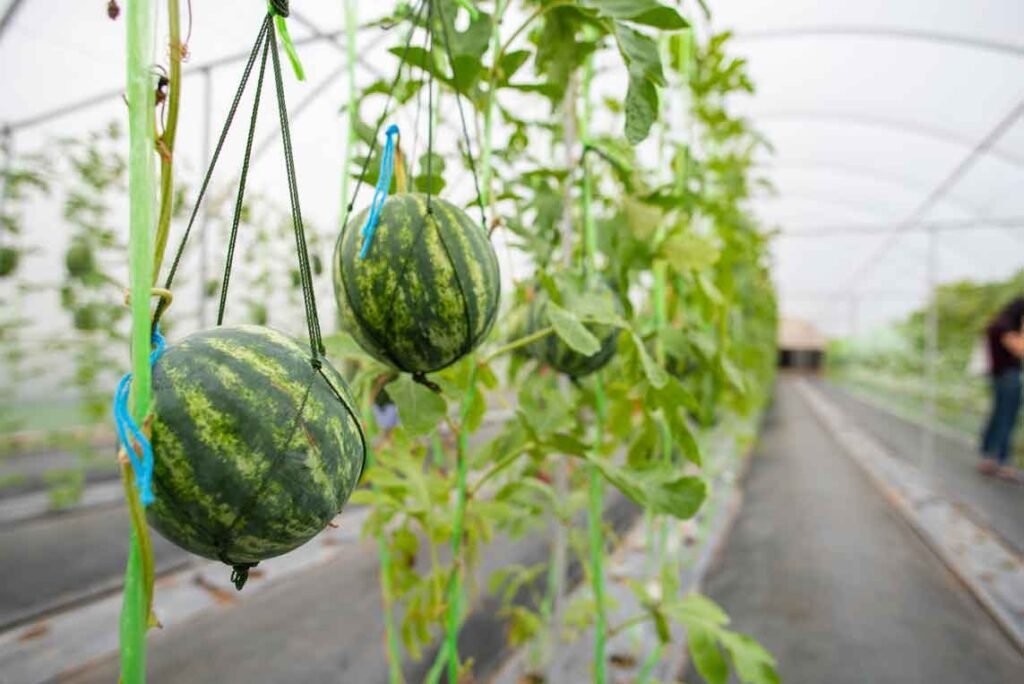
Watermelons are warm-season plants that love:
- Long hours of sunlight
- Loose, fertile soil
- Consistent moisture
- Plenty of space for vines to spread
If you provide these, even a beginner gardener can grow delicious results. Watermelons come in many types—small, medium, and large varieties such as:
- Sugar Baby (small, perfect for containers)
- Crimson Sweet
- Black Diamond
- Charleston Gray
For home gardens, choose compact or early-maturing varieties for the best results.
2. Choosing the Right Growing Spot
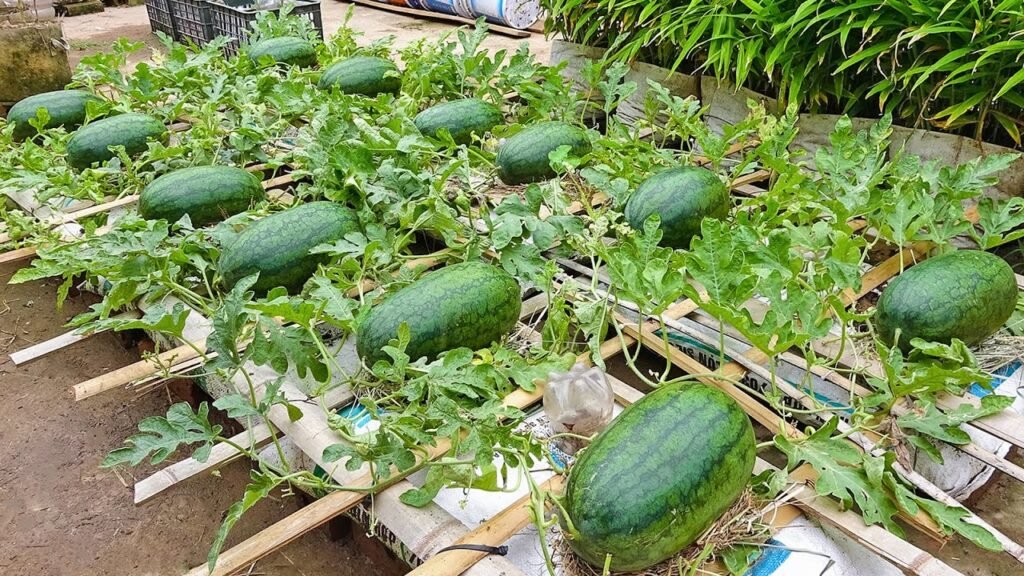
Watermelons require 6–8 hours of direct sunlight daily. Select a spot that meets these conditions:
- Open area with full sun
- Good air circulation
- Space for vines to trail
- Protection from strong winds
If you are growing them in containers on a terrace or balcony, make sure the container gets uninterrupted sunlight.
3. Soil Preparation: The Secret to Sweet Watermelons
Watermelons love soil that is:
- Well-draining
- Rich in compost
- Slightly sandy or loamy
- Neutral to slightly acidic (pH 6.0–6.8)
How to prepare ideal soil:
- Mix 50% garden soil, 30% compost, and 20% sand or cocopeat.
- Add a handful of bone meal or neem cake to improve root health.
- Ensure proper drainage; watermelons dislike waterlogged soil.
Healthy soil results in stronger vines, larger leaves, and sweeter fruits.
4. Planting Watermelon: Seeds or Seedlings?

Watermelons grow best from seeds. Seedlings can also be used, but they are more sensitive to transplant shock.
How to plant watermelon seeds:
- Dig a small mound or hill of soil.
- Plant 2–3 seeds in each mound, 1 inch deep.
- Space each mound 3 to 4 feet apart (if planting on ground).
- Water gently.
Once seedlings grow to about 10–12 cm, keep the healthiest one and remove the others.
Container growing
Choose a large container:
- Minimum size: 40–50 liters
- Depth: 18 inches or more
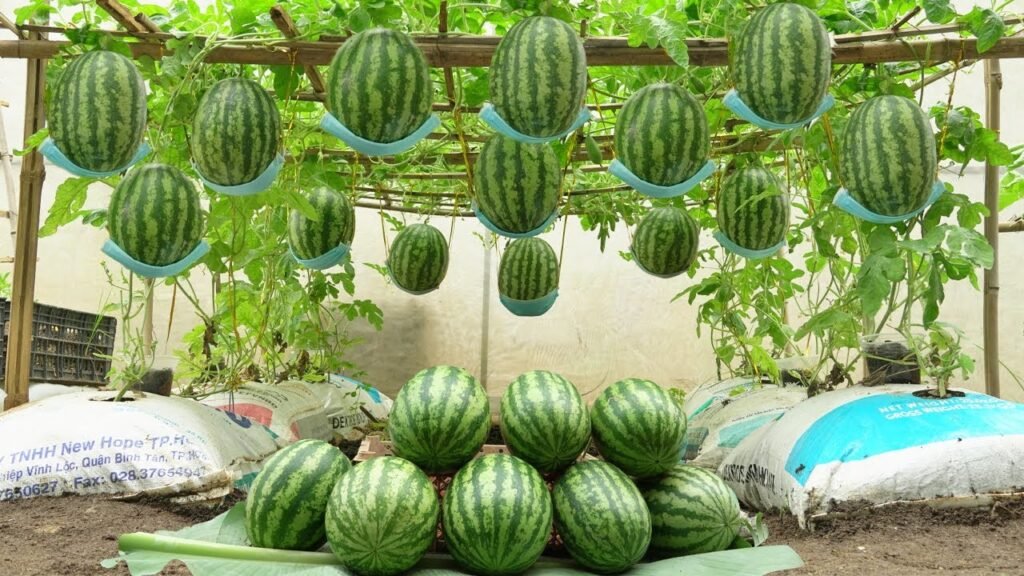
- Use trellises for vertical support if desired.
Container-grown watermelons perform best when vines are supported to keep fruits off the ground.
5. Watering and Fertilizing: Essential Care Tips
Watermelons need regular moisture, especially during early growth.
Watering schedule
- Keep soil consistently moist for the first 4–5 weeks.
- Water deeply 2–3 times a week, depending on heat.
- Avoid water droplets on leaves to reduce disease risks.
- Once fruits start forming, reduce watering slightly to enhance sweetness.
Overwatering during fruiting can dilute sugars and reduce flavor.
Fertilization plan
Watermelons are heavy feeders. Feed them:
- Nitrogen-rich fertilizer during early growth (compost, vermicompost).
- Potassium and phosphorus during flowering (banana peel fertilizer, bone meal).
- Liquid fertilizers like seaweed solution once every 10–14 days help boost fruit development.
Healthy feeding = bigger, juicier melons.
6. Flowering and Pollination: Ensuring Fruit Formation
Watermelons produce both male and female flowers:
- Male flowers appear first.
- Female flowers have a small fruit-like swelling at the base.
For successful fruiting, pollination must occur. Bees and natural pollinators usually do the job.
If pollination is low, hand-pollinate:
- Take a fresh male flower.
- Gently rub its pollen onto the female flower’s center.
- Repeat for 2–3 days.
Hand pollination dramatically increases fruit set.
7. Training Vines and Mulching
Watermelon vines grow quickly and spread wide. Guide them:
- Toward open space
- Away from pathways
- Onto trellises if desired
Mulching benefits:
- Prevents soil from overheating
- Retains moisture
- Reduces weed growth
- Keeps fruits clean
Use straw, dry leaves, or grass clippings as natural mulch.
8. Common Pests and Diseases
Keep an eye out for:
- Aphids
- Whiteflies
- Powdery mildew
- Fruit borers
Natural control methods:
- Neem oil spray (weekly)
- Soap water spray for soft-bodied insects
- Good air circulation
- Avoid wetting leaves while watering
Healthy plants resist pests better and produce quality fruits.
9. Fruit Growth: Supporting Watermelons
Once watermelons reach tennis-ball size:
- Place a thin board or straw underneath to avoid rot.
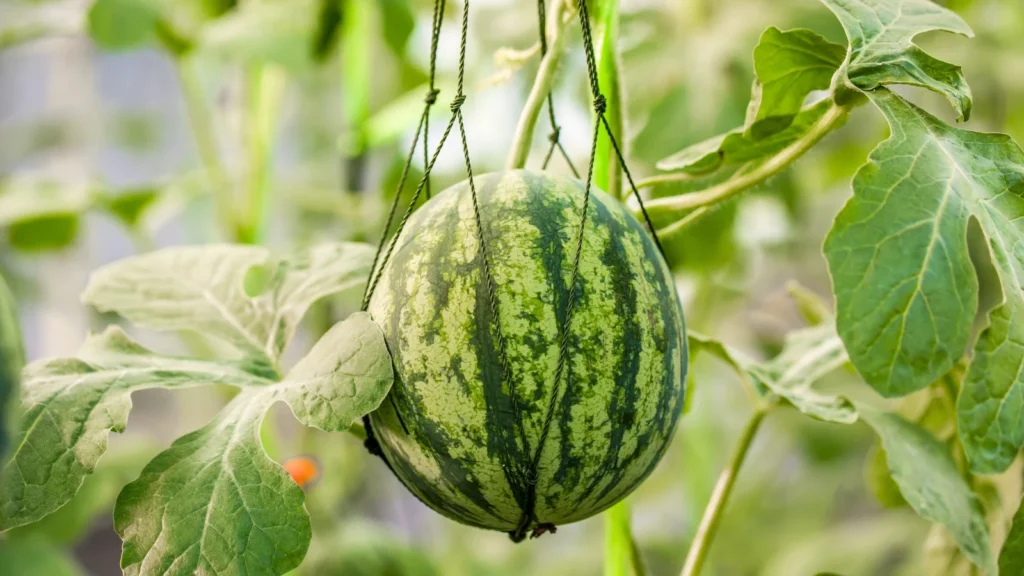
- If growing vertically, use a melon sling (cloth or net bag) to support weight.
Watermelons grow rapidly during the final 2 weeks, so be patient and avoid moving them too much.
10. Harvesting Watermelons: Knowing the Right Time
Picking watermelons too early is a common mistake. Look for these signs:
- The tendril near the fruit turns brown and dry.
- The bottom spot (where the melon touches the ground) turns creamy yellow.
- The fruit sounds hollow when tapped.
- The outer skin becomes dull rather than shiny.
Once harvested, watermelons can stay fresh for 7–10 days in a cool place.
11. Why Growing Watermelons at Home Is Worth It
Growing your own watermelons means:
- No chemicals or pesticides
- Superior sweetness
- Better nutrition
- Satisfaction of home-grown produce
- A fun project for both adults and kids
Even a small garden or terrace can produce 2–5 melons per plant when cared for properly.
Final Thoughts
Watermelons are not difficult to grow at home—all they need is sunlight, space, and consistent care. Whether you’re gardening in your backyard, balcony, or terrace, you can enjoy fresh, juicy fruits grown entirely by your own hands. Start with the right variety, prepare good soil, ensure pollination, and follow the simple care steps mentioned above.
In just a few months, you’ll be slicing into your very own homegrown watermelon—sweet, refreshing, and bursting with flavor.