Tomatoes are among the most rewarding plants to grow at home. Whether you’re gardening on a balcony, backyard, terrace, or in grow bags, a single tomato plant can provide kilograms of fresh, juicy fruit. But if you want truly abundant harvests, bigger tomatoes, and stronger plants, pruning is the secret weapon many gardeners overlook.
Pruning tomatoes is more than just cutting branches. It’s a careful method that directs the plant’s energy toward producing fruit instead of excess leaves. When done correctly, pruning dramatically boosts airflow, reduces disease, and results in a heavier, healthier, and tastier tomato harvest.
In this detailed guide, you’ll learn the complete art and science of tomato pruning—what to cut, when to cut, and how it transforms your plants into super producers.
🍅 Why Pruning Matters: The Science Behind Bigger Harvests

Tomato plants naturally grow vigorously. Left unpruned, they become bushy, tangled, and leafy. While this looks lush, it actually slows fruit production.
Here’s why pruning works:
✔ Better Airflow
Reduces fungal diseases like blight and mildew.
✔ More Sunlight to Fruits
Improves ripening and prevents shaded, underdeveloped tomatoes.
✔ Directs Energy to Fruit
Instead of wasting energy on unnecessary foliage.
✔ Stronger Plant Structure
Prevents breakage and supports heavy tomato clusters.
✔ Earlier and Larger Yield
Pruned plants produce fruit earlier and more consistently.
In short, pruning turns your tomato plant from a wild jungle into a focused fruit-bearing machine.
🌱 Understanding Tomato Types Before Pruning
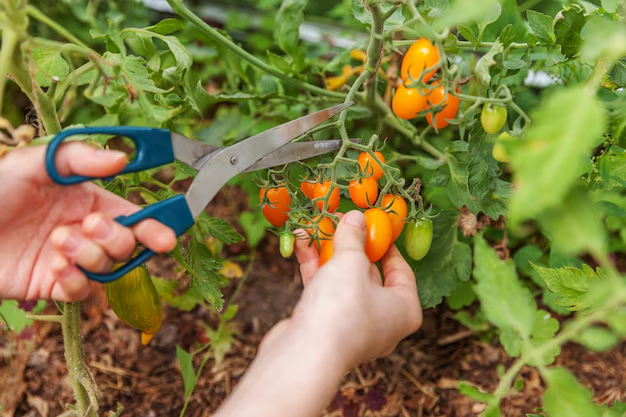
There are two main types of tomato plants, and each requires a different pruning approach.
1. Determinate Tomatoes (Bush Type)
- Grow to a fixed size (3–5 feet)
- Produce fruit all at once
- Great for containers
Pruning needed? Minimal. Only remove damaged leaves and suckers near the base.
2. Indeterminate Tomatoes (Vining Type)
- Keep growing all season
- Can reach 8–12 feet or more
- Produce fruit continuously
Pruning needed? Yes—essential for large harvests.
Most home gardeners grow indeterminate types like cherry, roma, beefsteak, and heirloom varieties. These benefit the most from pruning.
✂️ What Are Tomato Suckers?
Suckers are the small shoots that grow between the main stem and leaf branches—the “V” or “armpit” of the plant.
Why remove suckers?
Left unchecked, suckers turn into full branches, taking energy away from developing fruit. By pruning them, you channel growth where it matters most—flowers and tomatoes.
🌿 When to Start Pruning Tomatoes
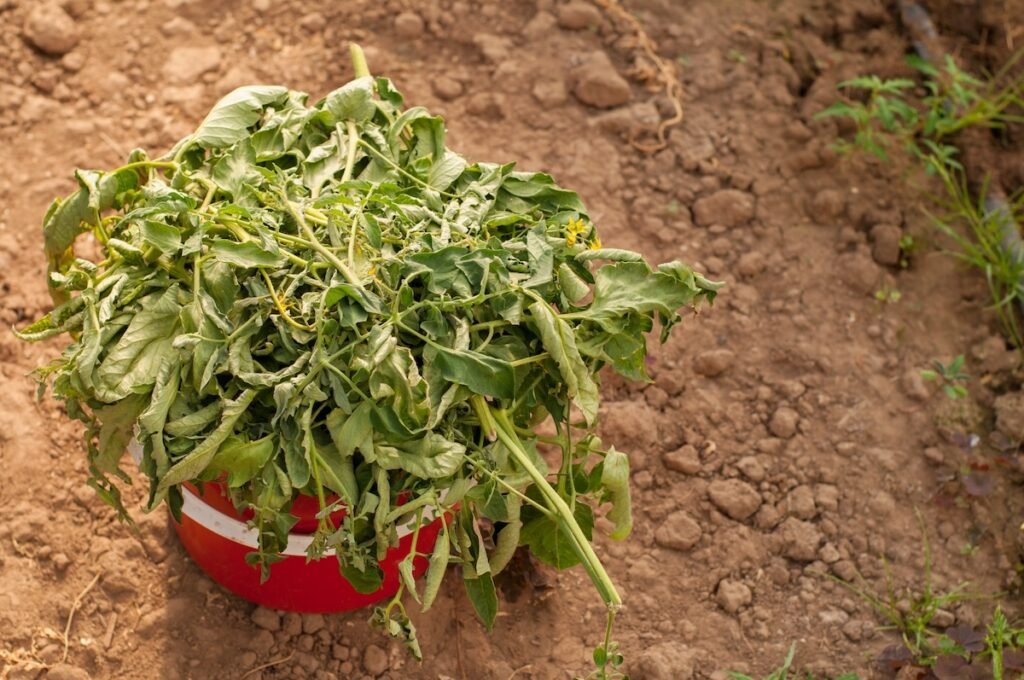
Start pruning when the plant is:
- 10–12 inches tall
- Has at least 4–6 true leaves
- Well-established in its pot or soil
Pruning too early can stress the plant; too late can lead to thick, woody suckers.
✂️ How to Prune Tomatoes: Step-by-Step Guide
🥀 1. Remove the Bottom Leaves
The lower leaves often attract soil-borne diseases and reduce airflow.
Cut these off:
- Leaves touching soil
- Yellowing or diseased leaves
- Branches below the first flower cluster
This prevents fungus and increases fresh air circulation.
🌱 2. Remove Small Suckers Regularly
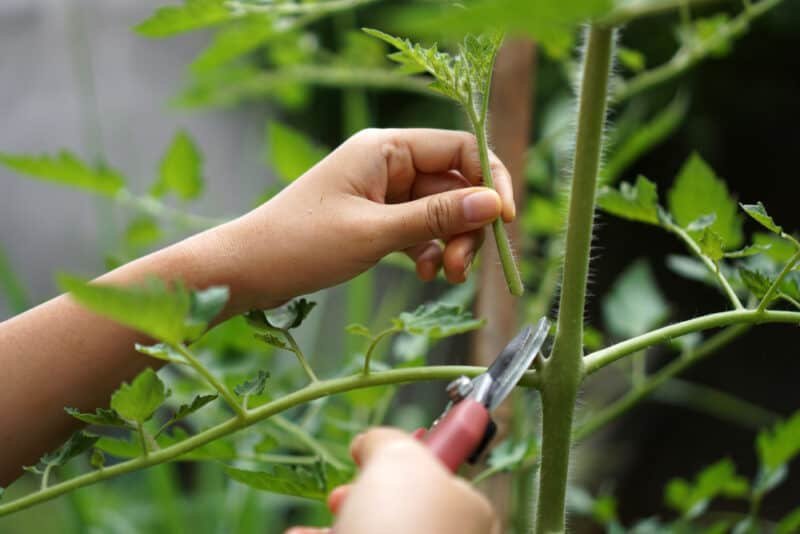
Check your plants every 2–3 days. Suckers grow fast.
How to remove them:
- For tiny suckers (1–3 cm), pinch them with your fingers
- For bigger ones, use clean pruning shears
Removing suckers early is easier and less stressful for the plant.
🌸 3. Keep Only 1–2 Main Stems
This is the biggest secret for heavy yields.
Choose:
- One strong central stem
- One optional secondary stem (for extra fruit)
All other shoots should be removed to maintain a “focused” vine.
🍅 4. Prune Just Above Flower Clusters
When a branch grows above a flower cluster, prune it back lightly. This helps direct more energy into fruit formation.
✂️ 5. Top the Plant (End-Season Pruning)
Toward the end of the season (or when your plant reaches 6–7 feet):
Cut the top of the plant
This prevents new foliage and forces all energy into ripening existing tomatoes.
This technique alone can double your ripe fruit count.
🌞 Light, Water, and Support After Pruning
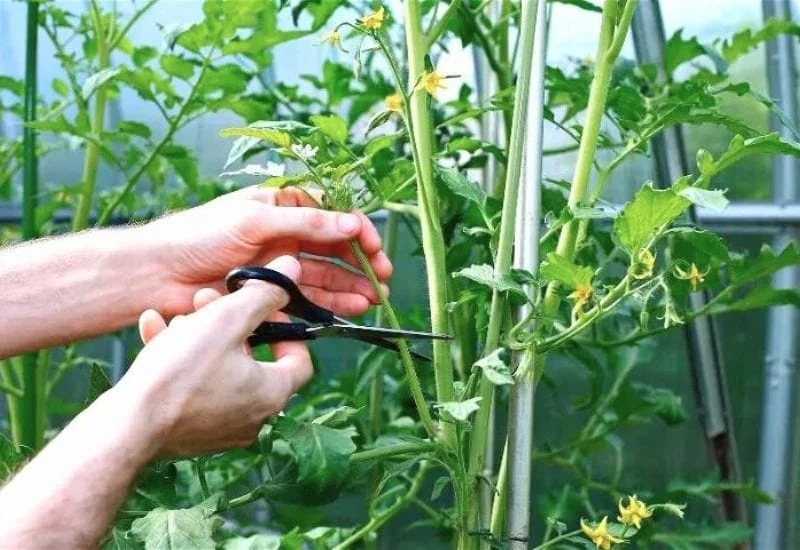
Pruned tomato plants grow faster and need proper support:
🌤 Sunlight
Tomatoes thrive in:
- 6–8 hours of direct sun
More sun = sweeter fruit.
💧 Watering
Always water at the base.
Avoid wetting leaves—prevents fungal diseases.
🪵 Staking or Trellising
After pruning, plants grow upright and require:
- Bamboo sticks
- Tomato cages
- Nylon string supports
- Wall trellises
A well-supported plant bears heavier clusters without collapsing.
🌿 Mulching for Healthier Pruned Tomatoes
Add organic mulch at the base:
- Straw
- Dry leaves
- Coco husk
- Grass clippings
Mulching:
- Maintains moisture
- Reduces soil splash (prevents disease)
- Keeps roots cool
- Encourages better growth
🛡️ Preventing Common Tomato Problems
Pruned tomato plants are naturally healthier, but you can increase protection further.
🍂 Yellow Leaves
Often caused by:
- Nutrient deficiency
- Overwatering
- Poor sunlight
Fix by adjusting water and giving compost or organic fertilizer.
🍄 Fungal Diseases
Common due to moisture and poor airflow.
Pruning helps prevent:
- Early blight
- Late blight
- Leaf spot
- Powdery mildew
You can also spray neem oil weekly as a preventive measure.
🌱 Fertilizing Pruned Tomato Plants
Feed tomatoes regularly for juicy, flavorful fruit.
Best fertilizers:
- Compost tea
- Banana peel fertilizer
- Eggshell-calcium water
- Organic NPK
- Vermicompost
Apply every 10–15 days.
High potassium (K) improves fruiting, while nitrogen (N) should be reduced after flowering begins.
🍅 Secret Pruning Techniques for Maximum Harvest
Here are professional methods used by expert tomato growers:
🌟 1. Single-Stem Method
Remove all suckers and maintain one strong vertical stem.
Perfect for:
- Small pots
- Limited space
- Balconies
Gives fewer but very large tomatoes.
🌟 2. Double-Leader Method
Keep the main stem + one strong sucker as a second stem.
Benefits:
- More fruit production
- Balanced growth
- Ideal for medium-sized containers
🌟 3. Bottom-Up Pruning
Cut all leaves below the first set of fruit clusters.
Benefits:
- Excellent airflow
- Reduces disease
- Focuses energy on fruit
🌟 4. Cluster Pruning
If clusters have too many flowers:
- Pinch off a few
- Leave 4–6 per cluster
Remaining fruits grow bigger and more flavorful.
🍅 Expected Results After Proper Pruning
Once you prune correctly, you’ll notice:
✔ More flowers per stem
✔ Bigger and tastier tomatoes
✔ Faster ripening
✔ Stronger stems and healthier plants
✔ Less disease and fungal attack
✔ A more organized, productive tomato garden
Your plants will produce earlier, longer, and more abundantly—especially indeterminate varieties.
🌻 Final Thoughts
Pruning tomatoes isn’t just an advanced gardening skill—it’s a simple, effective way to unlock the full potential of your plants. With just a few strategic cuts, you transform a leafy plant into a powerful fruit producer. Whether you’re growing cherry tomatoes on a balcony or large heirloom varieties in your garden, pruning will give you a richer, tastier, and more rewarding harvest.
With consistent pruning, proper support, sunlight, and feeding, your tomato plants will thank you with kilograms of delicious fruit all season long.
If you want, I can also create: