Rambutan, with its bright red, spiky shell and sweet juicy flesh, is one of the most loved tropical fruits. While many people grow rambutan from seeds, cuttings are a faster, more reliable, and more productive way to grow this delicious fruit at home. Seed-grown rambutan often takes years to bear fruit and doesn’t guarantee the same quality as the parent plant. Cuttings, on the other hand, produce identical copies of the mother tree—giving you earlier harvests and better fruits.
If you’ve ever dreamed of having your own rambutan tree bursting with fruit, this guide will teach you how to grow rambutan from cuttings easily, even if you’re a beginner. From selecting healthy branches to rooting the cuttings successfully, this complete 1200-word article covers everything you need to know.
🌱 Why Grow Rambutan from Cuttings?

Growing rambutan from cuttings offers many advantages over seeds or seedlings.
✔ Faster Fruiting
Cuttings mature faster, reducing the waiting time from 6–8 years (seeds) to around 3–4 years.
✔ Guaranteed Fruit Quality
Plants grown from cuttings will produce the same fruit taste, size, and sweetness as the parent tree.
✔ Stronger, Disease-Resistant Plants
A healthy mother tree ensures robust new plants.
✔ Perfect for Small Gardens
Cuttings require less space at the beginning and can be grown in pots until mature.
🍃 Step 1: Selecting the Right Rambutan Branch for Cuttings
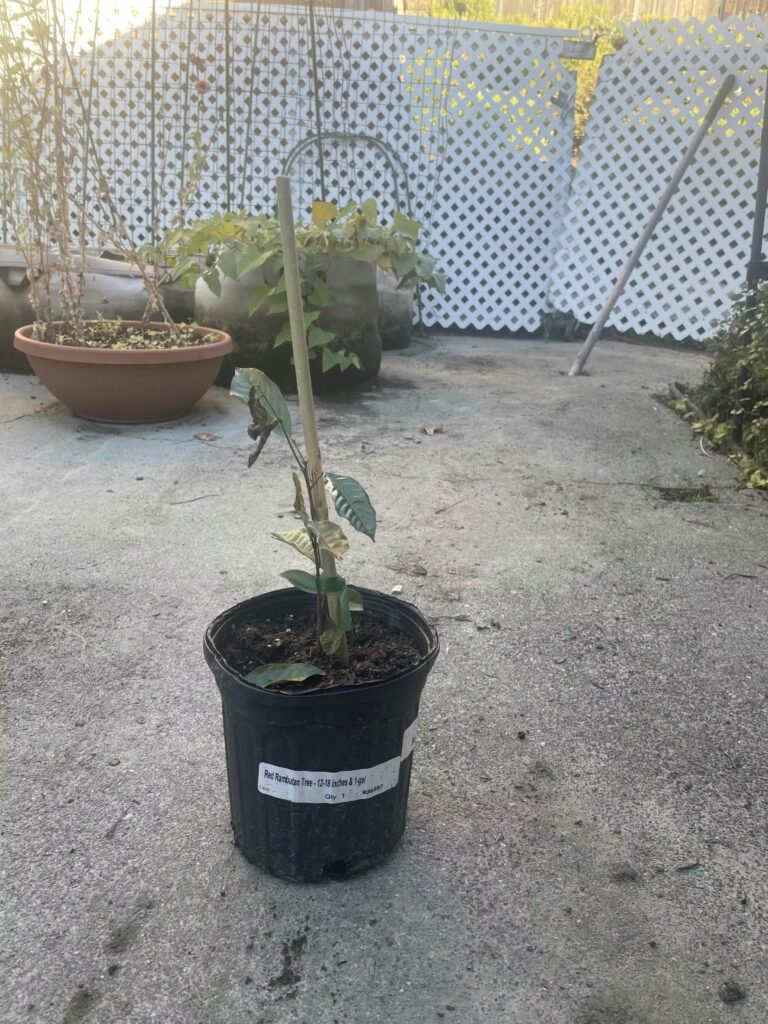
This is the most important step. Choose branches carefully to ensure successful rooting.
🌿 Characteristics of a Good Cutting:
- Comes from a healthy, fruit-bearing tree
- Semi-hardwood stage (not too young, not too old)
- 20–30 cm long
- 1–1.5 cm thick
- Has 2–3 nodes
- Free from pests or diseases
- Flexible but firm
Young green stems rot easily, and old woody stems root poorly. Semi-hardwood stems root best.
🌧 Best Time to Take Cuttings:
- Early rainy season
- Late spring
- When humidity is naturally high
This improves the rooting success rate.
✂️ Step 2: Preparing Your Rambutan Cutting
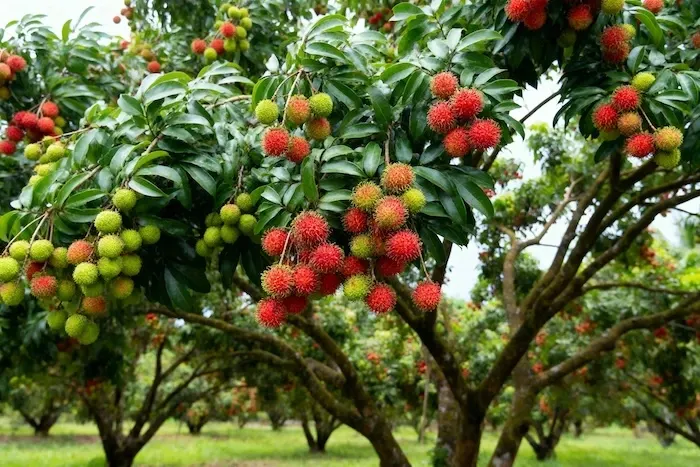
Once you’ve selected the perfect branch, prepare it properly for propagation.
✔ Trim Below a Node
Cut the stem at a 45-degree angle just below a node. This increases the rooting surface area.
✔ Remove Most Leaves
Leave only 1–2 small leaves at the top.
Large leaves lose water too quickly.
✔ Make Small Scratches (Optional)
Gently scrape 1–2 cm of the outer bark near the base.
This exposes the cambium layer and encourages faster root growth.
✔ Apply Rooting Hormone
Dip the cut end into:
- Commercial rooting hormone, or
- Honey + cinnamon mixture (natural alternative)
This prevents fungal problems and encourages new roots.
🪴 Step 3: Preparing the Soil Mix for Rooting

Rambutan cuttings need loose, well-draining, moist media.
🌱 Best Soil Mix for Rambutan Cuttings:
- 40% cocopeat
- 30% river sand or perlite
- 30% compost or garden soil
This mix prevents waterlogging while keeping the stem moist.
You Can Also Root in:
- Rice husk
- Perlite-only
- Sand-only
- Water (harder but possible)
Soil mix rooting has the highest success rate.
🥥 Step 4: Planting the Rambutan Cutting
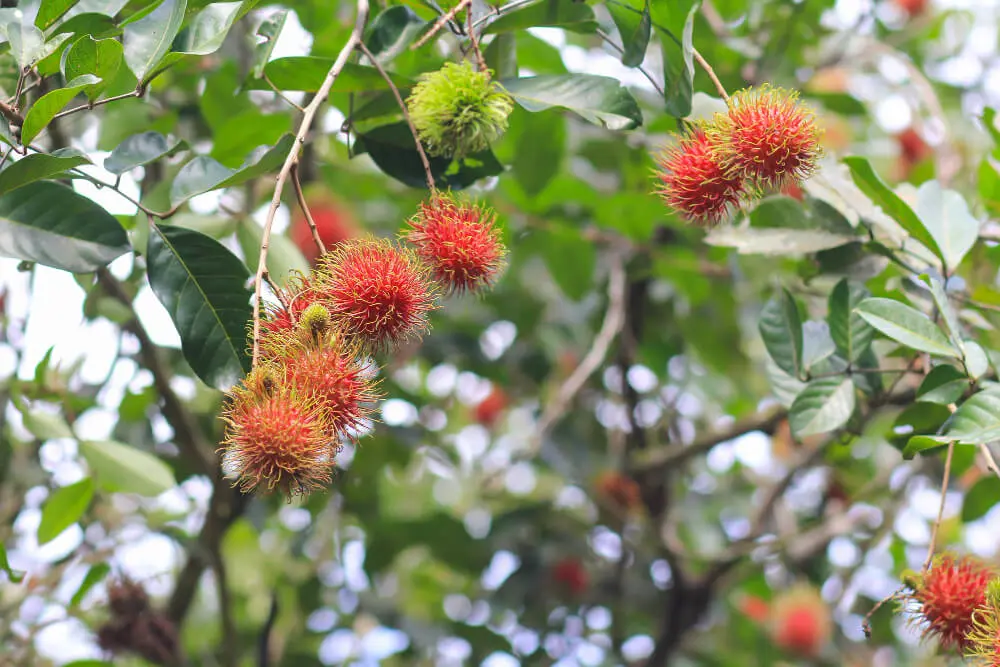
✔ Depth
Insert the cutting 5–7 cm deep, ensuring at least one node is below the soil.
✔ Positioning
Plant upright and firm the soil around the base gently.
✔ Watering
Moisten the soil lightly—not soggy.
✔ Create a Humid Environment
Cover the cutting with:
- A transparent plastic bag
- A plastic bottle
- A small greenhouse box
Humidity is critical for rooting because the cutting has no roots to absorb water yet.
🌤 Step 5: Ideal Growing Conditions for Successful Rooting
✔ Light
Bright, indirect sunlight.
Avoid harsh midday sun—it dehydrates the cutting.
✔ Temperature
Warm conditions: 24–32°C.
✔ Humidity
High humidity: 70%–90%.
✔ Watering
Keep the soil slightly moist.
Do not let it dry out or become waterlogged.
✔ Airflow
Open the plastic bag daily for 10 minutes to prevent fungal growth.
🌿 Step 6: Caring for Your Rambutan Cutting During Rooting
Rooting takes time, especially for woody trees like rambutan. Expect 4–8 weeks for visible signs.
🌱 Signs Your Rambutan Cutting Is Rooting:
- New leaf growth
- Tiny buds forming at nodes
- Stem remains green and firm
- No wilting or browning
If the stem turns black or soft, discard and try again.
You may gently tug the cutting after 5–6 weeks.
If you feel resistance, roots have formed.
🪴 Step 7: Transplanting the Rooted Cutting
Once your cutting has grown a healthy root system:
✔ Gently remove the cutting with its soil
Avoid breaking the tender roots.
✔ Prepare a bigger pot (10–12 inches)
Use nutrient-rich soil with good drainage.
✔ Plant at the same depth
Do not bury the stem too deep.
✔ Water well
Keep in shade for 1–2 weeks until established.
Once stable, gradually expose to more light.
🌳 Caring for Your Young Rambutan Plant
After your cutting becomes a young plant, proper care helps it grow into a healthy tree.
🍃 1. Watering
Rambutan loves moisture.
- Water 3–4 times a week in hot weather.
- Keep soil always slightly moist.
- Avoid stagnant water.
🌞 2. Light Requirements
Rambutan prefers:
- Partial shade when young
- Full sun as it matures
Too much sun early can scorch the leaves.
🌱 3. Fertilizing
Feed every 30–40 days with:
- Compost
- Cow dung manure
- Vermicompost
- Fish amino acid (FAA)
- Banana peel fertilizer
High potassium helps fruit development later.
🍂 4. Mulching
Apply mulch around the base:
- Dry leaves
- Coconut husk
- Grass
Helps retain moisture and regulate temperature.
🛡️ 5. Pest & Disease Protection
Common issues include:
- Aphids
- Scale insects
- Ants
- Fungal leaf spots
Spray neem oil weekly as a preventive measure.
🍒 When Will Rambutan From Cuttings Bear Fruit?
Rambutan grown from cuttings:
- Starts fruiting in 3–4 years
- Produces fruit earlier than seed-grown trees
- Gives higher-quality, sweeter fruit identical to parent
With proper care, one tree can produce dozens of fruits every harvest season.
🌟 Helpful Tips for Higher Rooting Success
✔ Always take cuttings from a mature fruiting tree.
✔ Maintain high humidity during rooting.
✔ Avoid direct sunlight on the cutting.
✔ Keep soil moist but never soggy.
✔ Use rooting hormone for best results.
✔ Do not disturb the cutting frequently.
✔ Be patient—woody plants root slowly.
❤️ Final Thoughts
Growing rambutan from cuttings may sound challenging, but with the right techniques, it becomes a rewarding and achievable project for any home gardener. Cuttings give you a faster-growing, more predictable, and healthier tree that mirrors the quality of the parent plant. From selecting the right branch to creating a humid environment for rooting, each step brings you closer to enjoying fresh, home-grown rambutan fruit.
If you follow this guide carefully, you’ll soon have your own thriving rambutan plant—ready to grow, flourish, and eventually produce delicious tropical fruit right in your backyard or balcony.