Pomelo (Citrus maxima) is one of the most majestic citrus fruits—large, juicy, aromatic, and incredibly refreshing. But growing a pomelo tree from seed can take 6–8 years to bear fruit, and even then, the fruit quality is unpredictable. That’s why professional growers and orchardists always rely on grafting to produce superior, fast-fruiting, and disease-resistant pomelo trees.
If you want to enjoy sweet, seedless, thick-fleshed pomelos in your own garden, grafting is the key. In this complete guide, you will learn why grafting works, which method is best, how to choose scion and rootstock, a step-by-step grafting tutorial, and the essential aftercare for 100% success.
🌟 Why Grafting Is the Best Way to Grow Pomelos
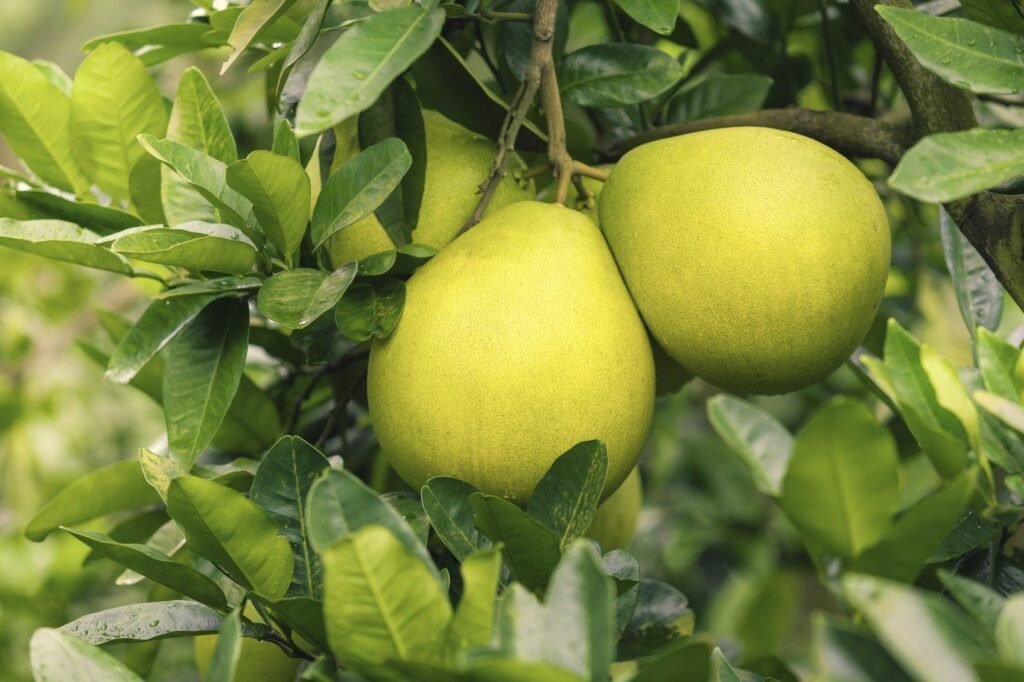
Pomelos grown from seed often result in:
❌ Poor fruit quality
❌ Slow growth
❌ Late fruiting
❌ Unknown variety traits
Grafted pomelos solve all these issues instantly.
✔ Benefits of Grafting Pomelo Trees
- Early fruiting – grafted trees bear in 2–3 years instead of 6–8.
- True-to-type fruit – exact replica of the mother variety.
- Stronger trees – drought and pest-resistant rootstocks.
- Uniform fruit size and taste.
- Ability to grow superior varieties like Honey Pomelo, Red Pomelo, Shaddock, and Bali Pomelo.
Grafting ensures predictability, speed, strength, and yield—everything a grower needs.
🌱 Best Rootstocks for Pomelo Grafting
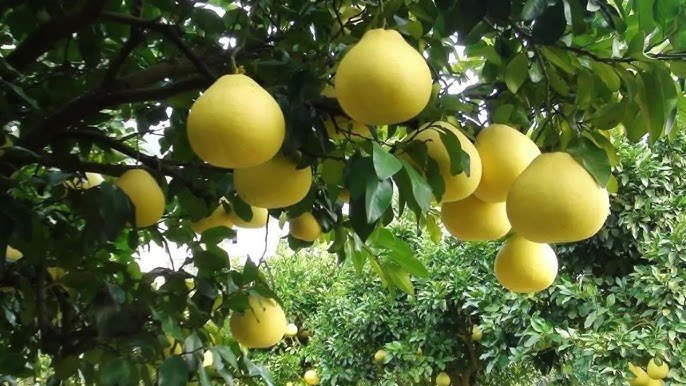
The rootstock forms the foundation of your future pomelo tree, so choose wisely.
✔ Top Rootstock Options
- Rough Lemon (Citrus jambhiri)
- Fast growth
- Highly disease-resistant
- Excellent for tropical climates
- Trifoliate Orange (Poncirus trifoliata)
- Best for colder climates
- Disease-resistant
- Slower but strong growth
- Sour Orange (Citrus aurantium)
- Classic citrus rootstock
- Excellent compatibility with pomelo
- Volkamer Lemon
- Strong and vigorous
- Great for rapid graft growth
These rootstocks ensure strong root systems, vigor, and high productivity.
✂️ Selecting the Perfect Scion Wood
A scion determines your pomelo variety, fruit taste, sweetness, aroma, and texture.
✔ Choose a Scion with These Characteristics:
- Taken from a healthy, mature, fruit-bearing mother tree
- 6–12 months old semi-hardwood
- Pencil-thick, green-brown in color
- 3–4 plump, healthy buds
- Taken early morning for maximum freshness
Wrap scions in a moist cloth if not using immediately. They remain fresh for 24–48 hours.
🌿 Best Time to Graft Pomelo Trees
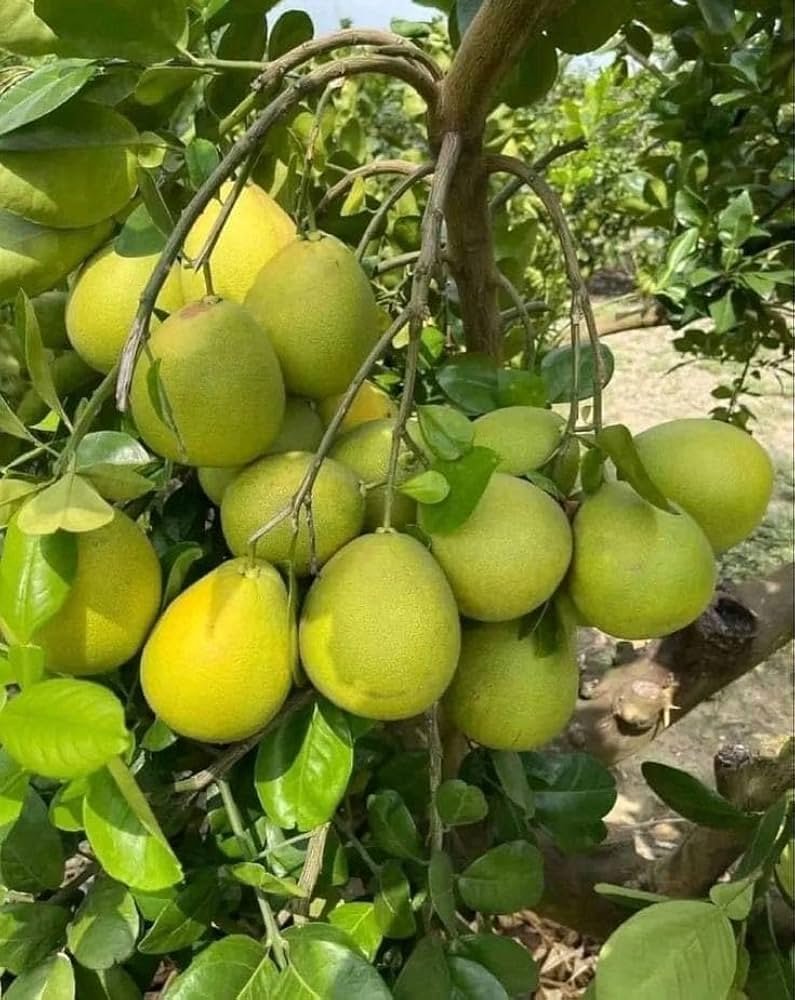
Timing affects the success rate dramatically.
✔ Ideal Season: Late Winter to Early Spring
- February to April (India & Southeast Asia)
- Early sap flow ensures perfect graft union.
- Temperature: 20–32°C
You can also graft in the rainy season if humidity is high.
🔧 Most Effective Grafting Methods for Pomelo
Citrus species, including pomelo, graft very well using a few common techniques. Below are the ones with the highest success rate.
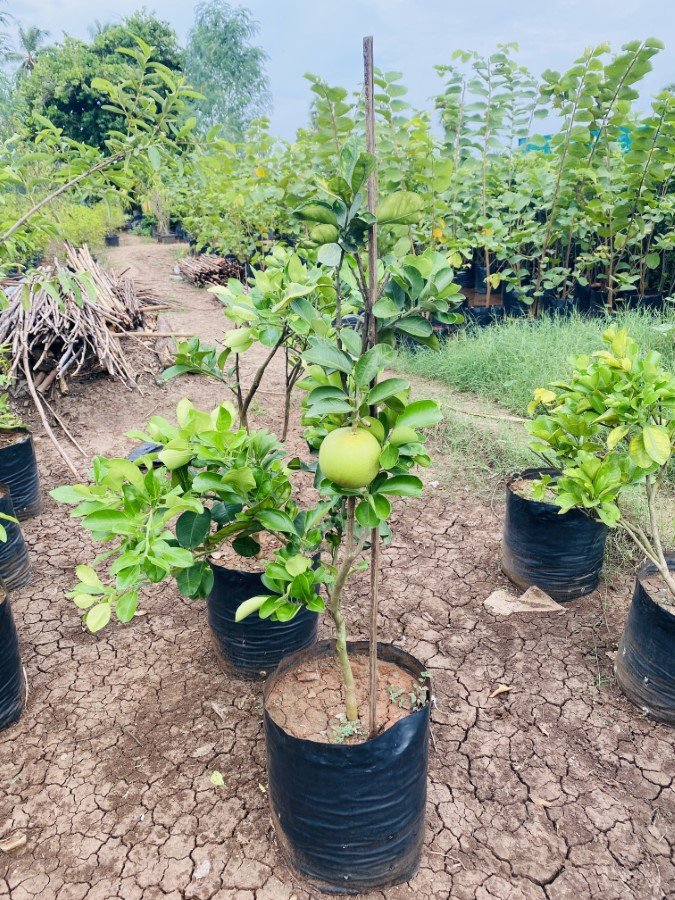
🥇 1. Cleft Grafting (Most Beginner-Friendly)
Perfect for thicker rootstocks and thicker scions.
How to Do It:
- Cut the rootstock horizontally.
- Make a vertical cut in the middle (2–3 cm deep).
- Shape your scion into a wedge.
- Insert it into the cleft so the cambiums align.
- Tie tightly with grafting tape.
- Apply grafting wax to seal.
✔ Very strong and reliable for citrus grafting.
🥈 2. T-Budding (Most Professional Citrus Nurseries Use This!)
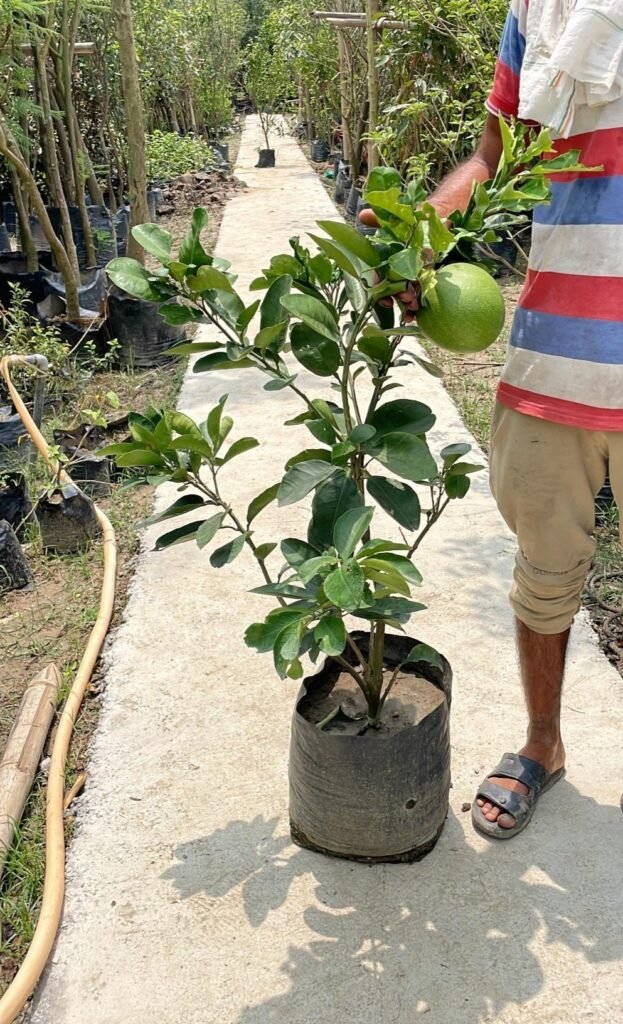
This method works exceptionally well for pomelo because the bark lifts easily during active growth.
How to Do It:
- Make a T-shaped cut on the rootstock.
- Prepare a bud shield from the scion.
- Slide it gently under the bark.
- Tape it, leaving the bud uncovered.
✔ High success rate in warm, humid climates.
✔ Best for large-scale grafting.
🥉 3. Veneer Grafting
Useful when the scion and rootstock are not the same size.
Steps:
- Make a slanted cut on the rootstock.
- Shape a matching cut on the scion.
- Join and wrap tightly.
✔ Great for home growers.
🏅 4. Whip & Tongue Grafting (Strongest Union)
This method creates a very firm joint.
✔ Best when rootstock and scion are exactly the same thickness.
🌿 Step-by-Step Guide: How to Successfully Graft a Pomelo Tree
Here is a simple professional technique for beginners:
Step 1: Prepare Tools
- Sharp grafting knife
- Grafting tape
- Secateurs
- Grafting wax / plastic seal
- Clean cloth
Always sterilize tools to prevent infection.
Step 2: Choose Rootstock & Scion
Select healthy, pest-free plants.
Step 3: Make the Graft Cut
Depending on the method (cleft, T-bud, veneer), make smooth and clean cuts.
Step 4: Join Scion & Rootstock
The MOST important part:
👉 Align the cambium layers
This ensures nutrient exchange and graft union.
Step 5: Wrap & Seal
Wrap tightly with grafting tape.
Seal all cuts with wax to prevent drying.
Step 6: Provide Shade
Place the grafted plant in 50% shade for 2–3 weeks.
Step 7: Monitor Growth
In 2–4 weeks:
- Scion buds begin to swell
- New leaves appear
This means the graft is successful.
🌦 Aftercare for Perfect Results
Proper aftercare is the secret to achieving near 100% grafting success.
✔ 1. Keep Soil Lightly Moist
Avoid overwatering.
Citrus hates waterlogging.
✔ 2. Remove Rootstock Shoots
All new growth below the graft must be removed.
✔ 3. Loosen Grafting Tape
After 30–40 days, loosen or remove the tape.
✔ 4. Support New Shoots
Young grafted shoots are fragile—use a stick for support.
✔ 5. Apply Organic Fertilizer (After 60 Days)
Use:
- Vermicompost
- Cow dung compost
- Neem cake
- A pinch of potash for fruiting
✔ 6. Protect From Pests
Citrus attracts aphids, leaf miners, and scales.
Use neem oil spray every 10–15 days.
🍊 When Will a Grafted Pomelo Tree Start Fruiting?
This is the best part!
A grafted pomelo tree can fruit in just:
✔ 2–3 years
Seed-grown trees may take 6–8 years with unpredictable results.
Grafted pomelos produce:
🍋 Larger fruits
🍋 Sweeter flesh
🍋 More juice
🍋 Consistent shape and color
🚫 Common Mistakes to Avoid
Avoiding these mistakes increases your success rate dramatically.
❌ Using dry or old scions
❌ Grafting during extreme heat
❌ Poor cambium alignment
❌ Leaving graft union exposed
❌ Overwatered soil
❌ Allowing direct sun immediately after grafting
🌳 Conclusion: Grafting Is the Ultimate Shortcut to Growing Perfect Pomelos
If you want to grow beautiful, heavy, juicy pomelos in the shortest time possible, grafting is the way to go. With the right rootstock, healthy scions, correct method, and proper aftercare, anyone can master pomelo grafting—even beginners.
You’ll enjoy:
- Faster growth
- Superior fruit quality
- Strong resistance to pests & diseases
- A productive tree that lasts for decades
Start grafting today and unlock the secret to growing delicious, orchard-quality pomelos right in your backyard! 🍋🌳