Papaya (Carica papaya) is one of the fastest-growing fruit trees in the world. Its sweet, juicy fruits are not only delicious but also packed with nutrients like vitamin C, vitamin A, and digestive enzymes such as papain. Whether for a small home garden or a backyard orchard, growing papaya trees can be highly rewarding, especially when the goal is producing abundant, high-quality fruits.
While papaya is easy to grow from seeds, many gardeners struggle to get high yields. The good news is that with the right techniques, care, and management, you can grow a papaya tree that produces lots of large, juicy fruits consistently. In this guide, we’ll explore step-by-step instructions, expert tips, and tricks for maximizing your papaya harvest.
🍈 Why Papaya Is a Great Choice for Home Gardens
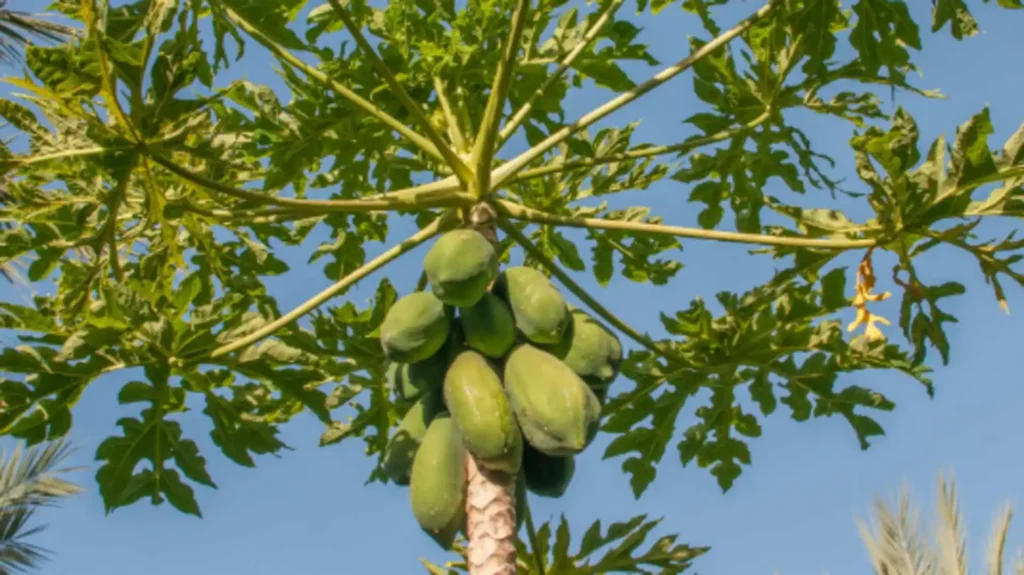
- Fast Growing: Papaya trees can bear fruit in 6–12 months from seed.
- Nutrient-Rich Fruits: High in vitamins, minerals, and digestive enzymes.
- Space Efficient: Can be grown in pots or small backyards.
- Continuous Harvest: With proper care, papayas can produce fruits year-round in tropical climates.
- Easy Propagation: Can be grown from seeds or vegetative cuttings.
🌱 Step 1: Choosing the Right Papaya Seeds
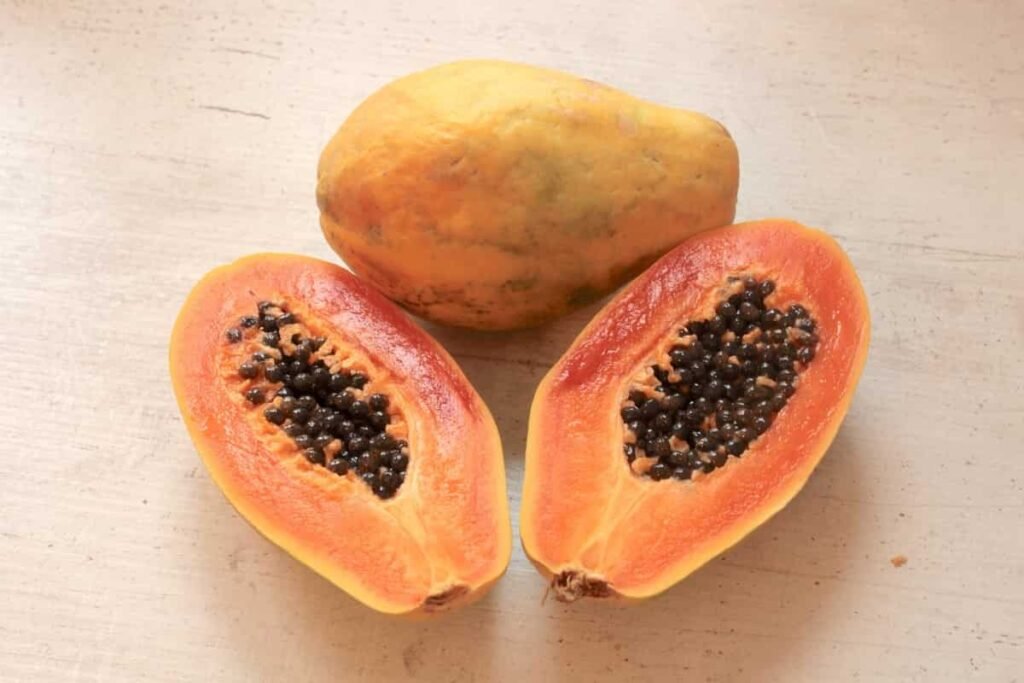
Success begins with selecting high-quality seeds:
- Select seeds from ripe, healthy, and sweet fruits.
- Choose disease-free fruits, avoiding overripe or damaged ones.
- Opt for seeds from high-yielding varieties if available.
Seed Preparation
- Scoop out seeds from a ripe papaya.
- Wash seeds thoroughly to remove the gelatinous coating.
- Dry seeds in shade for 1–2 days. Avoid direct sunlight, which can reduce germination.
Tip: You can also soak seeds in water for 24 hours to speed up germination.
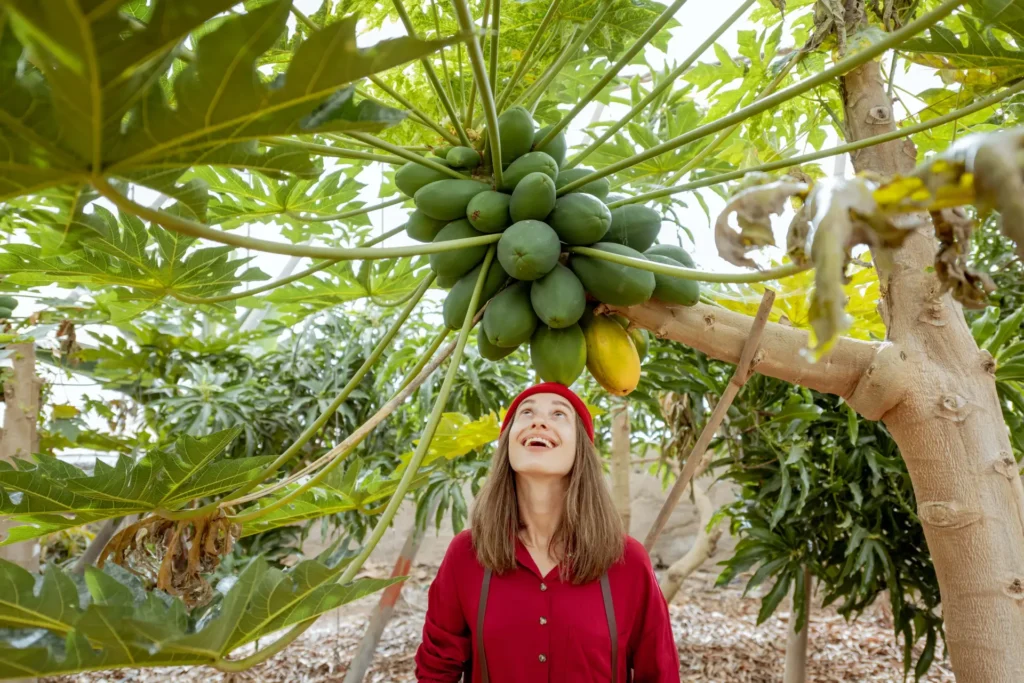
🌱 Step 2: Sowing the Seeds
Papaya seeds can be directly sown in soil or germinated in pots.
Direct Sowing
- Make small holes ½ inch deep in fertile soil.
- Place 1–2 seeds per hole.
- Cover lightly with soil and water gently.
Pot Germination (Recommended for Controlled Growth)
- Fill small pots with a mix of garden soil, compost, and sand.
- Sow 2–3 seeds per pot and cover lightly.
- Keep the soil moist.
- Place in a warm, shaded area until seedlings emerge.
⏳ Germination Time
Papaya seeds usually sprout in 2–3 weeks under ideal conditions.
🌱 Step 3: Transplanting Seedlings
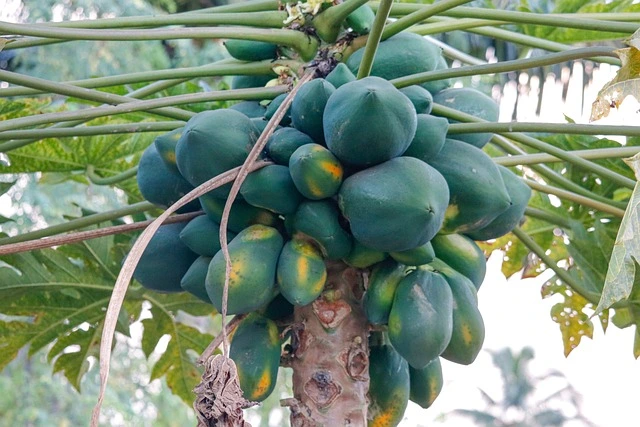
Once seedlings reach 6–8 inches in height and have 4–6 leaves:
- Prepare a planting site with well-draining soil and full sun exposure.
- Dig a pit 12–18 inches deep.
- Mix soil with compost or organic fertilizer to enrich nutrients.
- Carefully transplant the seedling, keeping roots intact.
- Water immediately and add a layer of mulch around the base.
Spacing Recommendation
- Keep 6–8 feet between each tree to allow airflow and sunlight penetration.
🌞 Step 4: Sunlight and Climate Requirements
Papaya trees thrive in tropical and subtropical climates:
- Full Sun: At least 6–8 hours daily.
- Warm Temperatures: 20–30°C is ideal.
- Frost-Free Areas: Papaya trees are sensitive to cold.
Proper sunlight ensures strong growth, flowering, and fruiting.
💧 Step 5: Watering for Maximum Yield
Papaya trees require consistent moisture:
- Water 2–3 times per week, depending on soil type and climate.
- Avoid waterlogging; it can cause root rot.
- Mulching helps retain moisture and reduces soil temperature fluctuations.
Tip: During flowering and fruit development, maintain steady soil moisture for optimal fruit set.
🌱 Step 6: Fertilizing Papaya Trees
Regular feeding is crucial for large yields.
Young Trees (0–6 months)
- Apply organic compost or cow dung every 30–45 days.
- Supports strong root and stem development.
Mature Trees (After 6 months)
- Use balanced fertilizers (NPK ratio 10:10:10 or 12:12:12).
- Increase potassium during fruiting to enhance fruit size and sweetness.
- Foliar sprays of micronutrients like magnesium, zinc, and calcium improve plant health.
🌿 Step 7: Pruning and Plant Management
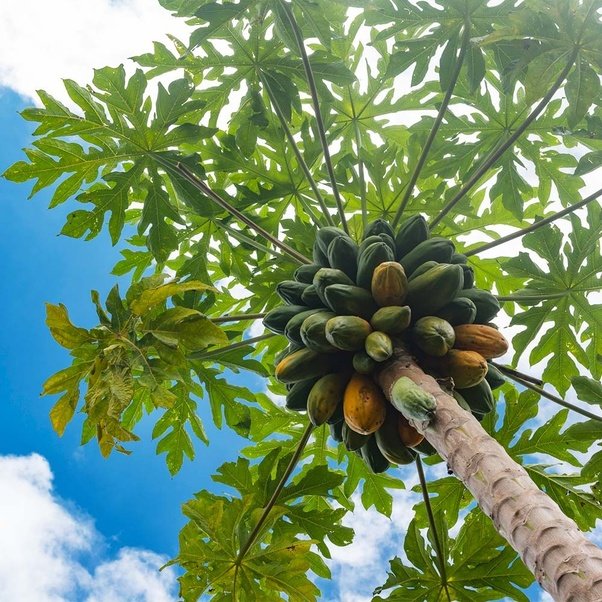
Pruning papaya trees ensures healthy growth and higher fruit yield:
- Remove dead or yellowing leaves to reduce disease risk.
- Cut weak or crowded branches to improve airflow and sunlight penetration.
- Pinch off early flowers on young trees to allow energy to go into vegetative growth for stronger plants.
🌱 Step 8: Pollination
Papaya trees are dioecious, meaning some plants are male and some are female:
- Female trees produce fruits.
- Male trees provide pollen.
- Hermaphrodite varieties can self-pollinate and are ideal for home gardens.
If growing separate male and female trees, ensure at least 1 male for every 8–10 females to increase fruit set.
🐛 Step 9: Pest and Disease Management
Papaya trees are susceptible to:
- Aphids, mealybugs, and whiteflies: Spray neem oil weekly.
- Powdery mildew and leaf spots: Maintain good air circulation and remove infected leaves.
- Root rot: Avoid waterlogged soil and apply organic mulch.
Tip: Regular observation prevents small problems from becoming severe.
🌱 Step 10: Harvesting Papaya Fruits
- Papaya fruits are usually ready 6–12 months after planting, depending on variety.
- Harvest when the skin starts turning yellow and the fruit softens slightly.
- Frequent harvesting encourages continuous flowering and fruiting.
Tip: Avoid letting fruits overripen on the tree; it reduces overall production.
🌟 Expert Tips for Maximizing Papaya Yield
- Use High-Yield Varieties: Choose hybrid or hermaphrodite seeds for abundant fruit.
- Ensure Good Soil Fertility: Healthy soil = healthy trees = more fruits.
- Maintain Consistent Watering: Especially during flowering and fruit set.
- Regular Feeding: Organic and NPK fertilizers boost growth and fruiting.
- Pruning: Improves sunlight, airflow, and reduces diseases.
- Control Pests: Regular neem sprays prevent infestations.
- Provide Support: Young trees may need stakes to prevent wind damage.
🌱 Advantages of Following This Method
- Faster growth and early fruiting
- Higher fruit production per tree
- Larger and sweeter fruits
- Healthier, disease-resistant plants
- Year-round harvest in favorable climates
🌟 Conclusion
Growing a papaya tree that produces lots of sweet, juicy fruits is not difficult if you follow the right steps. From selecting healthy seeds, proper planting, sunlight and watering management, to fertilization and pruning, each step contributes to maximum yield.
With patience, care, and attention to detail, your papaya tree can provide delicious fruits year-round, improve your diet, and even become a source of income if grown in larger quantities. Start today, and enjoy the rewarding experience of homegrown papayas! 🍈🌿