Onions are a kitchen staple worldwide, adding flavor, aroma, and nutrition to countless dishes. While many people buy onions from the market, growing them at home can be highly rewarding, cost-effective, and healthier. The exciting news is that there is now a new technique for growing onions that allows you to get faster, larger, and more productive yields even in limited spaces like home gardens, terraces, or containers. This 1,200-word comprehensive guide will walk you through this modern onion-growing technique step by step, from seed selection to harvesting, ensuring success for beginners and seasoned gardeners alike.
🧅 Why Grow Onions at Home?
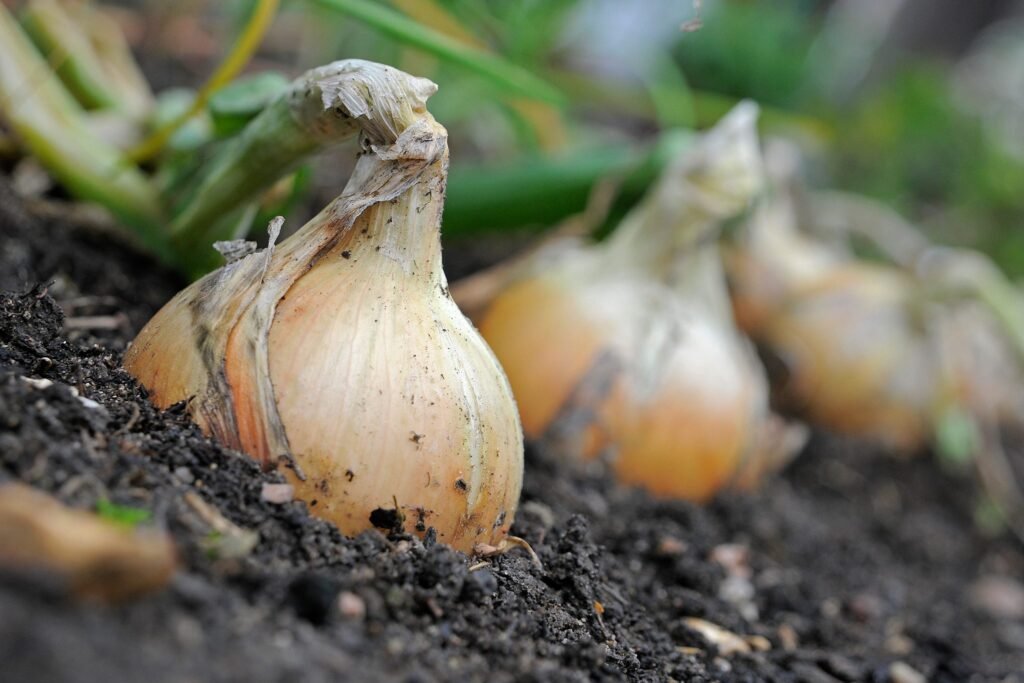
Homegrown onions offer multiple benefits:
- Fresh and chemical-free produce
- Superior flavor and aroma compared to store-bought onions
- Faster growth using innovative techniques
- Space-efficient: Suitable for terrace gardens, balcony planters, or small backyard plots
- Cost-effective: Save money while producing high yields
This new technique is designed to help home gardeners maximize onion production while minimizing effort and space.
🧅 Understanding the Onion Plant
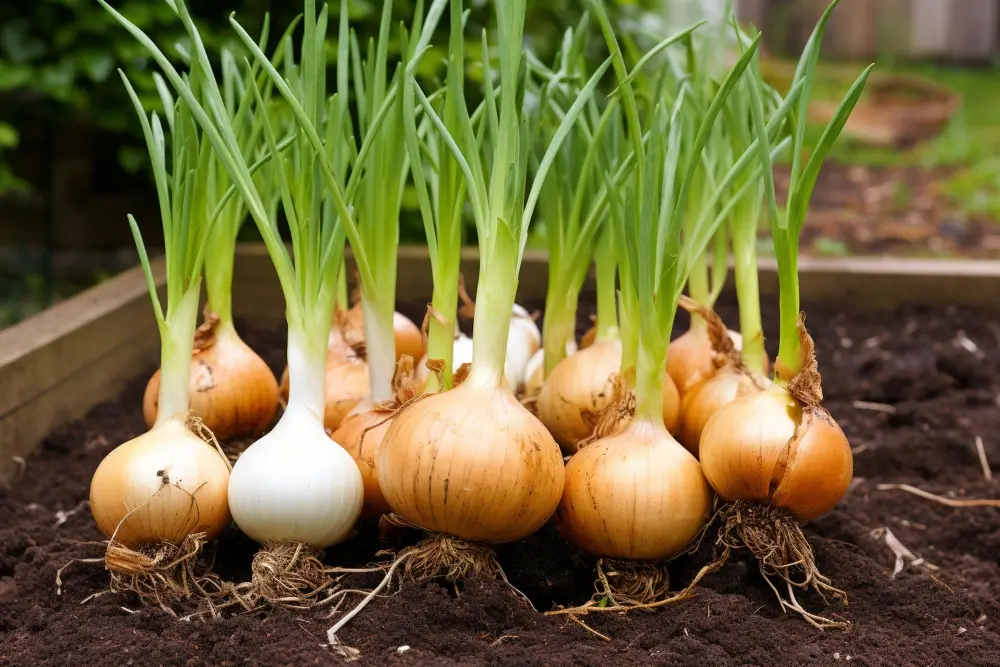
Botanical Name: Allium cepa
Plant Type: Biennial, typically grown as an annual
Growth Habit: Bulb-forming, upright leaves
Sunlight Requirement: Full sun (6–8 hours daily)
Soil Preference: Loose, fertile, well-draining soil with pH 6–7
Onions grow best in cool to moderate climates, and they require proper soil preparation, irrigation, and care to produce large, juicy bulbs.
🧅 Step 1: Choosing the Right Onion Variety
Choosing the right onion variety is crucial for a successful harvest.
Tips for Selection:
- Select varieties suited for your climate (short-day, long-day, or day-neutral types)
- Use certified, disease-free seeds or sets (small bulbs)
- High-yield and fast-growing varieties work best for home gardens
For this new technique, medium-day onions are ideal as they balance growth speed and bulb size.
🧅 Step 2: Preparing the Soil and Containers
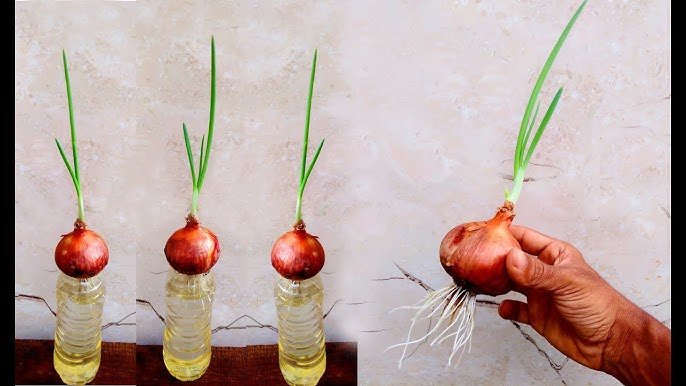
Onions grow best in loose, nutrient-rich soil that allows bulbs to expand.
Soil Preparation:
- Mix garden soil with compost or organic manure (30–40%)
- Add sand or cocopeat (10–20%) for better drainage
- Ensure the soil is well-aerated to promote bulb growth
Container Gardening:
- Use containers 8–12 inches deep with drainage holes
- Terraces, raised beds, and pots work well for home cultivation
This method ensures that onions get the optimal root environment for faster and larger bulb formation.
🧅 Step 3: The New Technique – Seed Tape and Germination Method
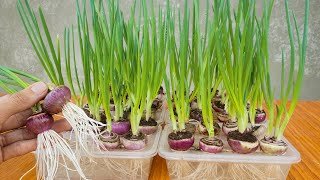
Traditional onion sowing can be slow and inconsistent. The new technique combines pre-sprouting seeds with seed tape planting for uniform growth.
Steps:
- Pre-sprout seeds in a damp paper towel for 3–5 days until tiny roots emerge.
- Prepare a biodegradable seed tape or use thin strips of newspaper with soil.
- Place sprouted seeds 1 inch apart on the tape.
- Cover lightly with soil in containers or garden beds.
- Water gently to maintain moisture.
This method ensures faster germination, uniform seedlings, and higher survival rates compared to direct sowing.
🧅 Step 4: Watering Your Onion Plants
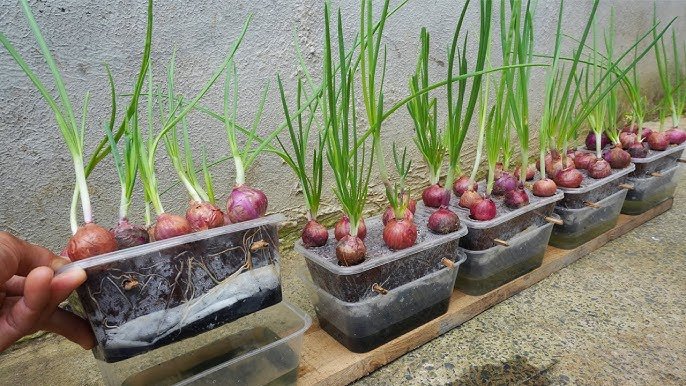
Proper irrigation is critical for onion growth:
Watering Guidelines:
- Keep soil consistently moist but not waterlogged
- Use gentle watering to avoid disturbing seedlings
- Reduce watering slightly as bulbs mature to prevent rot
Consistent moisture ensures healthy leaves, which are essential for large, juicy bulbs.
🧅 Step 5: Sunlight and Temperature Requirements
Onions require adequate sunlight and moderate temperatures for optimal growth:
- Sunlight: Minimum 6–8 hours daily
- Optimal temperature: 13–25°C for bulb development
- Avoid high heat during early growth stages to prevent bolting
For indoor or terrace gardening, place containers in a sunny spot to maximize photosynthesis.
🧅 Step 6: Fertilizing Onions
Fertilization is key to promoting leaf growth and bulb formation.
Organic Fertilizer Options:
- Vermicompost or well-decomposed cow dung at sowing
- Liquid compost tea every 10–15 days
Mineral Fertilizers:
- Nitrogen-rich fertilizer during early leaf growth
- Phosphorus and potassium as bulbs start to form
- Avoid excessive nitrogen during bulb formation to prevent leafy growth at the expense of bulbs
🧅 Step 7: Supporting Uniform Growth – Mulching Technique
The new method includes organic mulching, which helps retain moisture, regulate temperature, and suppress weeds:
- Use straw, dried leaves, or grass clippings
- Apply a 2–3 inch layer around seedlings
- Mulch reduces water evaporation and encourages even bulb growth
Mulching is especially beneficial for terrace and container-grown onions.
🧅 Step 8: Thinning and Spacing
Proper spacing is critical for large, healthy bulbs:
- Thin seedlings to 3–4 inches apart once they reach 2–3 inches tall
- Crowded plants produce small, underdeveloped bulbs
- Maintain airflow to reduce disease risk
This step ensures each onion gets enough space to grow big and juicy.
🧅 Step 9: Pest and Disease Management
Onions are hardy but can face common pests and diseases:
Pests:
- Onion maggots
- Thrips
- Aphids
Organic Solutions:
- Neem oil or garlic spray every 10–15 days
- Remove affected leaves by hand
- Crop rotation and clean soil prevent recurring pest problems
Diseases:
- Downy mildew and onion rot
- Prevent with proper drainage, sunlight, and mulching
Healthy care ensures maximum bulb yield without chemicals.
🧅 Step 10: Harvesting Onions
Onions are ready to harvest when leaves start yellowing and falling over:
Harvesting Steps:
- Gently lift bulbs with a fork or hands
- Leave them in the sun for 2–3 days to dry
- Brush off excess soil and store in a dry, ventilated area
The new technique ensures larger, more uniform bulbs, ready for storage or immediate use.
🧅 Step 11: Continuous Production
For a steady onion supply:
- Stagger planting every 2–3 weeks
- Use containers or raised beds for rotating crops
- Fertilize lightly after each harvest
- Mulch to retain soil fertility and moisture
Continuous planting ensures fresh onions year-round, even in small spaces.
🧅 Why This New Technique Works So Well
This modern method is designed to:
✔ Accelerate germination and growth with pre-sprouting
✔ Promote uniform, large bulb development with seed tape planting
✔ Retain moisture and regulate temperature with mulching
✔ Reduce pest and disease risk with proper spacing and organic care
✔ Maximize yield even in small spaces like terraces and containers
Home gardeners can now grow juicy, flavorful onions faster and with minimal effort.
🧅 Final Thoughts
Onion cultivation at home has never been easier or more efficient. With this new technique, you can grow onions that are bigger, juicier, and faster-growing than traditional methods. By combining pre-sprouting, seed tape planting, proper watering, mulching, and organic care, home gardeners can enjoy fresh, healthy onions all year round.
Start today, and transform your garden, terrace, or balcony into a thriving onion patch full of flavor and nutrition.