Have you ever heard of a fruit that tastes like chocolate pudding but grows naturally on a tree? Meet black sapote (Diospyros digyna), a tropical wonder that’s been captivating gardeners, chefs, and food lovers around the world. Often called the “chocolate pudding fruit”, black sapote is not only delicious but also packed with nutrients, easy to grow in the right climate, and surprisingly versatile.
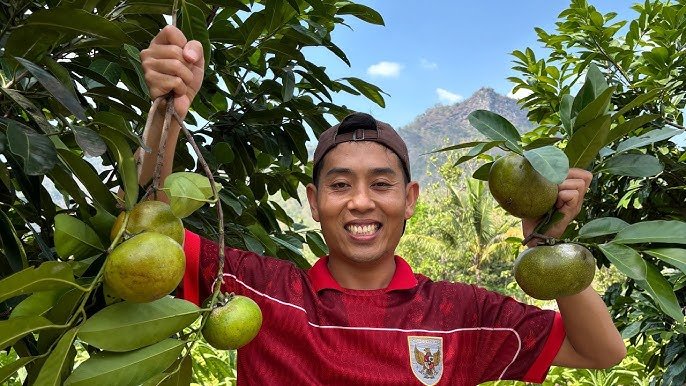
But did you ever see a black sapote like THIS? One that’s unusually large, super sweet, or grown in a way that maximizes its flavor and yield? In this article, we’ll explore everything about black sapote—from its unique characteristics, growing techniques, and care tips to creative ways to enjoy it.
🌱 What Makes Black Sapote So Unique?
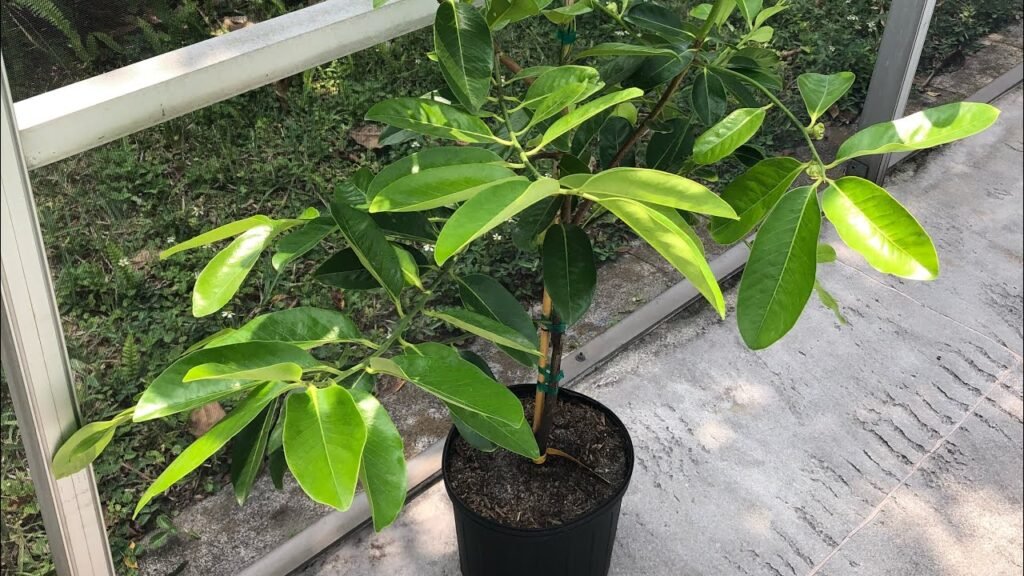
Black sapote is native to Mexico, Central America, and the Philippines, and it’s part of the persimmon family. Its most striking features include:
- Bright green fruit when unripe
- Dark brown to black flesh when ripe
- Smooth, creamy texture that resembles chocolate pudding
- Sweet, mild flavor with a hint of vanilla
- High vitamin C content, fiber, and potassium
Unlike most fruits, black sapote is eaten fully ripe, when its flesh is soft, sweet, and almost custard-like. Many people are surprised when they first taste it, expecting something sour like persimmons, but finding a naturally sweet dessert instead.
🍫 Did You Ever See a Black Sapote Like This?
Some black sapote trees produce average fruits, while others give extraordinary results:
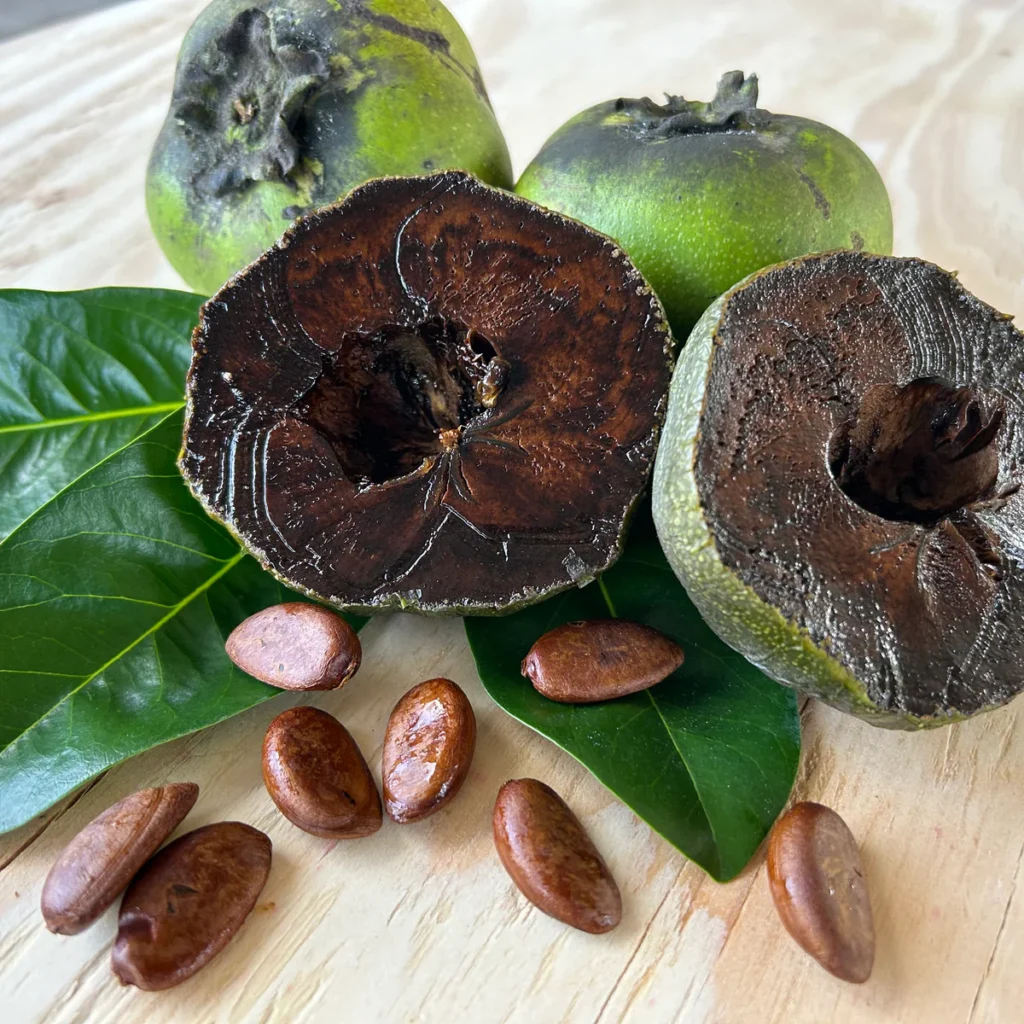
- Fruits weighing up to 1 kg (2 lbs)
- Flesh so creamy it can be scooped with a spoon
- Sweetness levels rivaling chocolate desserts
- Skin so thin that it ripens faster
These exceptional varieties usually come from grafted trees, where the best scion is grafted onto a hardy rootstock. Grafting ensures:
- Stronger trees
- Better disease resistance
- Consistent fruit quality
- Larger fruit size
If you want a black sapote like this, grafting is the secret professional growers swear by.
🌴 How to Grow Black Sapote Successfully
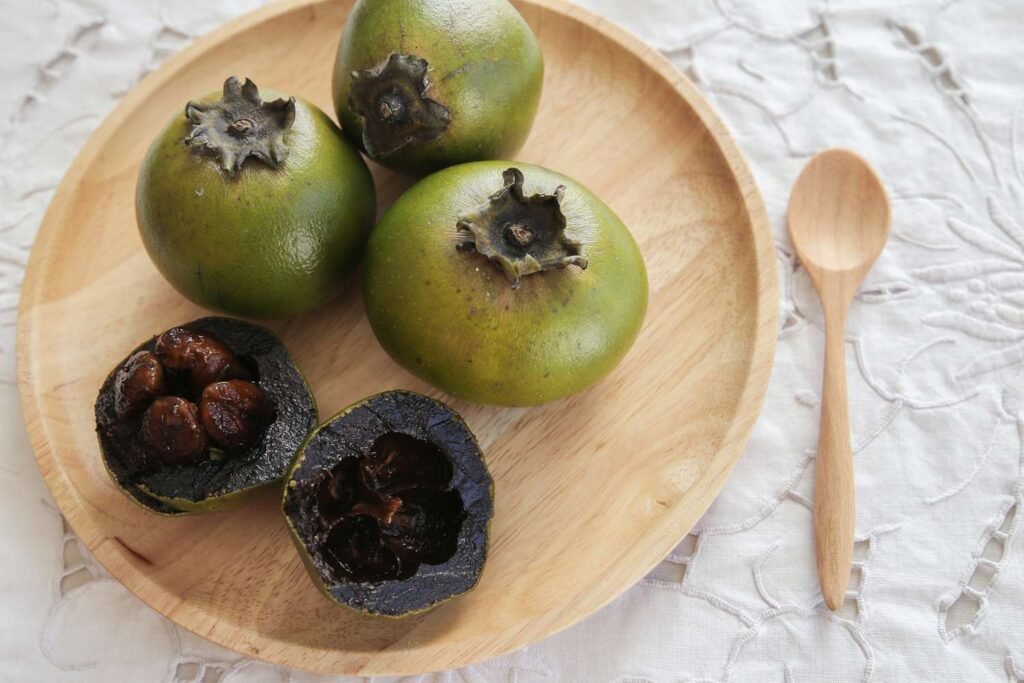
Black sapote is tropical and prefers warm, humid conditions. Here’s a guide to growing this “chocolate pudding fruit” in your garden.
1. Choosing the Right Location
- Full sun for at least 6–8 hours daily
- Well-drained soil; avoid waterlogging
- Slightly acidic to neutral pH (6–7)
- Protection from strong winds
2. Selecting the Plant
- Seedlings: Can take 6–8 years to fruit
- Grafted sapote: Fruits in 2–3 years, produces larger fruits
3. Planting Technique
- Dig a hole twice the size of the root ball
- Add compost and organic matter
- Plant slightly above soil level for good drainage
- Mulch around the base to retain moisture
💧 Watering and Fertilizing
Watering
- Young trees: Keep soil consistently moist
- Mature trees: Water deeply once or twice per week, depending on rainfall
Fertilizing
- Balanced NPK fertilizer every 2–3 months
- Organic options: compost, seaweed extract, or fish emulsion
- Add calcium and magnesium for better fruit quality
✂ Pruning for Maximum Fruit Production
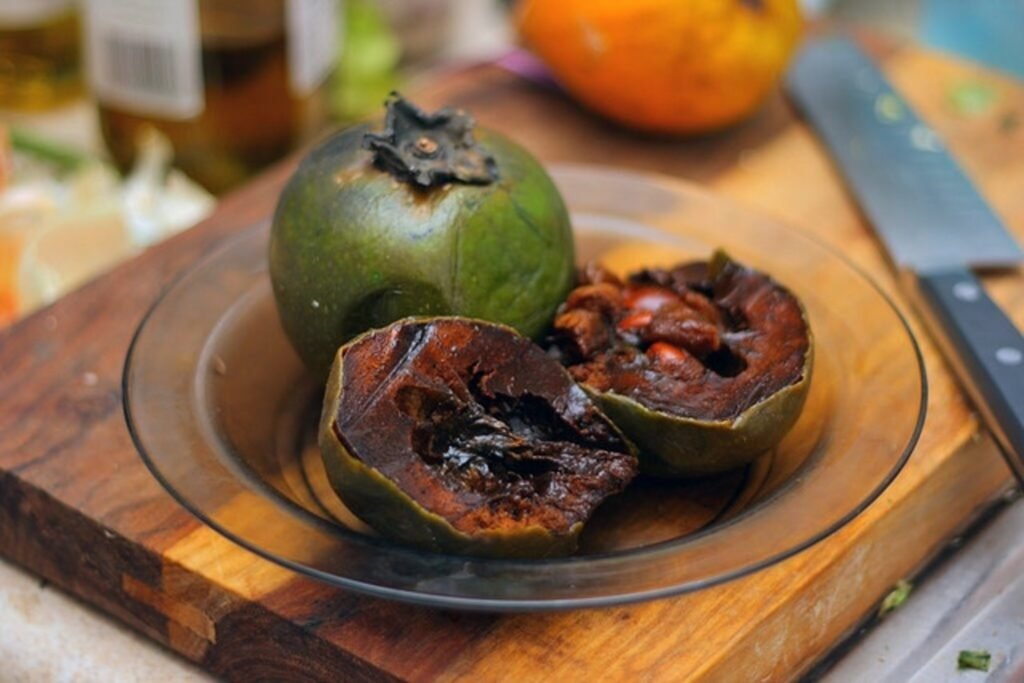
- Remove dead or crossing branches
- Maintain an open canopy for sunlight penetration
- Thin out fruits to allow larger fruits to develop
Pruning also encourages healthy growth and stronger branches to hold the heavy, pudding-like fruits.
🐛 Pest and Disease Management
Black sapote is generally hardy, but watch for:
- Fruit flies: Use traps or cover young fruits
- Scale insects: Spray with neem oil or insecticidal soap
- Root rot: Avoid overwatering and improve soil drainage
Healthy trees produce larger, sweeter fruits—exactly the type that makes people say, “Did you ever see a black sapote like this?”
🍽 How to Enjoy Black Sapote
Ripe black sapote is soft, sweet, and chocolatey. Here are some ways to enjoy it:
1. Eat Fresh
- Scoop out the flesh with a spoon
- Serve chilled or at room temperature
2. Smoothies and Shakes
- Blend with banana, milk, or coconut water
- Naturally sweet, creamy, and healthy
3. Baking and Desserts
- Use as a substitute for chocolate in cakes, brownies, or puddings
- Mix with nuts or coconut for tropical desserts
4. Ice Cream or Frozen Treats
- Freeze the flesh and blend for a creamy sorbet
- Combine with other tropical fruits for exotic flavors
Black sapote is naturally low in fat and sugar, making it an excellent dessert alternative.
🌿 Secrets to Bigger, Better Black Sapote Fruits
If you want black sapote like the extraordinary varieties:
- Graft the best scions onto strong rootstocks
- Provide consistent moisture during flowering and fruiting
- Use potassium-rich fertilizers to boost sweetness
- Thin excess fruits to allow remaining fruits to grow larger
- Protect from pests to prevent blemishes and fruit drop
With these techniques, you can grow fruits that weigh 1 kg or more, with creamy chocolate-like flesh that will wow anyone.
🌎 Where Black Sapote Thrives
- Mexico, Central America, and the Philippines
- Tropical and subtropical regions
- USDA zones 10–11 for outdoor growth
- Can be grown in large containers in cooler areas if protected from frost
Container growing allows hobbyists to enjoy black sapote even in non-tropical climates, though flowering and fruiting may take longer.
🌟 Why Black Sapote Is Called the Chocolate Pudding Fruit
The texture, color, and taste are unlike any other fruit:
- Dark brown to black flesh
- Sweet, mild flavor
- Soft, creamy consistency
It’s a natural dessert—healthy, indulgent, and exotic. People who taste a perfectly ripe black sapote often say it tastes better than any chocolate pudding they’ve had.
🍫 Final Thoughts: Did You Ever See a Black Sapote Like This?
Black sapote is truly one of the most unique fruits in the world. Whether eaten fresh, blended into smoothies, baked into desserts, or grown in your backyard, it offers a chocolatey experience straight from nature.
With the right variety, grafting techniques, care, and fertilization, you can grow extraordinary black sapotes—big, sweet, and creamy fruits that will amaze anyone. This is not just a fruit; it’s a conversation starter, a garden centerpiece, and a healthy treat all in one.
So the next time someone asks, “Did you ever see a black sapote like this?”, you can proudly point to your tree—and taste the magic for yourself.